Australia Women’s National Cricket Team vs India Women’s National Cricket Team Timeline
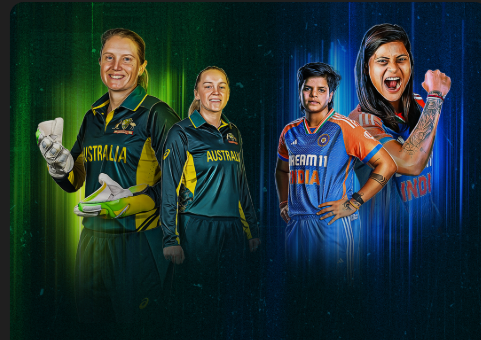
Table of Contents
Women’s cricket has evolved from shadowed beginnings to a blazing global spectacle, with Harmanpreet Kaur as its fiery torchbearer. This chronicle traces India’s journey through decades of grit, near-misses, and triumphs—from early struggles to World Cup glory. Dive into tales of resilience, power shifts, and unbreakable spirit that inspire millions worldwide.
Latest Matches: Australia Women’s vs India Women’s
| No. | Tournament | Venue | Date | Toss | India Score | Australia Score | Result | Player of the Match | Highlight |
|---|---|---|---|---|---|---|---|---|---|
| 1 | ICC Women’s World Cup 2025 (Semi-Final) | Dr DY Patil Sports Academy, Navi Mumbai | Oct 30, 2025 | Not available | 341/5 (48.3 ov) | 338 (49.5 ov) | India won by 5 wickets | Jemimah Rodrigues (IND) – 127 (134) | Epic chase! India pulled off the highest successful chase in Women’s ODI history (341), ending Australia’s 15-match winning streak in a nail-biting semi-final thriller. Rodrigues’ unbeaten ton anchored the innings amid tense moments. |
| 2 | ICC Women’s World Cup 2025 (League Stage) | ACA-VDCA Cricket Stadium, Visakhapatnam | Oct 12, 2025 | Not available | 330 (48.5 ov) | 331/7 (49 ov) | Australia won by 3 wickets | Alyssa Healy (AUS) – 142 | Records tumbled! Australia completed the second-highest ODI chase ever (331), with Healy’s blistering century overpowering India’s strong total. A high-scoring classic that showcased both teams’ batting firepower. |
| 3 | Australia Women tour of India 2025 (3rd ODI) | Arun Jaitley Stadium, Delhi | Sep 20, 2025 | Not available | 369 (47 ov) | 412 (47.5 ov) | Australia won by 43 runs | Not available (likely Alyssa Healy for leadership) | Run-fest alert! Australia posted a mammoth 412, but India’s 369 in reply was their highest-ever chase attempt—though falling short. This match sealed Australia’s 2-1 series win, maintaining their perfect bilateral record (11-0 series vs India). |
| 4 | Australia Women tour of India 2025 (2nd ODI) | Maharaja Yadavindra Singh International Cricket Stadium, Mullanpur | Sep 17, 2025 | Australia (India batted first) | 292 (49.5 ov) | 190 (40.5 ov) | India won by 102 runs | Smriti Mandhana (IND) – Century | Dominant rebound! Mandhana’s classy ton powered India to level the series 1-1, inflicting Australia’s biggest defeat by runs in ODIs. Stellar fielding and bowling turned the tide in a one-sided affair. |
| 5 | Australia Women tour of India 2025 (1st ODI) | Maharaja Yadavindra Singh International Cricket Stadium, Mullanpur | Sep 14, 2025 | India (elected to bat) | 281/7 (50 ov) | 282/2 (44.1 ov) | Australia won by 8 wickets | Phoebe Litchfield (AUS) | Clinical dominance! Australia’s openers cruised to victory with nearly 6 overs spare, highlighting their depth. Litchfield’s knock set the tone for a strong series start. |
| 6 | India Women tour of Australia 2024-25 (3rd ODI) | WACA Ground, Perth | Dec 11, 2024 | India (elected to field) | 215 (45.1 ov) | 298/6 (50 ov) | Australia won by 83 runs | Annabel Sutherland (AUS) – 110 (95) | Sutherland’s century shines! Australia completed a 3-0 sweep, with Mandhana’s 105 for India offering resistance but not enough to prevent a comprehensive win. |
| 7 | India Women tour of Australia 2024-25 (2nd ODI) | Allan Border Field, Brisbane | Dec 8, 2024 | Australia (elected to bat) | 249 (44.5 ov) | 371/8 (50 ov) | Australia won by 122 runs | Ellyse Perry (AUS) – 105 (75) | Perry’s power! Australia’s massive total was the highest ever conceded by India in ODIs, leading to a crushing victory and series lead. |
| 8 | India Women tour of Australia 2024-25 (1st ODI) | Allan Border Field, Brisbane | Dec 5, 2024 | India (elected to bat) | 100 (34.2 ov) | 102/5 (16.2 ov) | Australia won by 5 wickets | Megan Schutt (AUS) – 5/19 | Schutt’s fifer dismantles India! A low-scoring rout where Australia’s bowlers skittled India cheaply, marking Schutt’s first ODI five-wicket haul. |
| 9 | ICC Women’s T20 World Cup 2024 (Group Stage) | Sharjah Cricket Stadium, Sharjah | Oct 13, 2024 | Not available | 142/9 (20 ov) | 151/8 (20 ov) | Australia won by 9 runs | Not available | Tense T20 battle! Australia’s all-round effort held off India’s late surge, impacting India’s tournament progression in a high-pressure group clash. |
| 10 | Australia Women tour of India 2023-24 (3rd T20I) | DY Patil Sports Academy, Navi Mumbai | Jan 9, 2024 | Not available | 147/6 (20 ov) | 149/3 (18.4 ov) | Australia won by 7 wickets | Not available | Chase masterclass! Australia sealed the T20 series 2-1 with a comfortable pursuit, showcasing their finishing prowess under lights. |
| 11 | Australia Women tour of India 2023-24 (2nd T20I) | DY Patil Sports Academy, Navi Mumbai | Jan 7, 2024 | Not available | 130/8 (20 ov) | 133/4 (19 ov) | Australia won by 6 wickets | Not available | Leveling act! Australia bounced back to tie the series, with tight bowling restricting India before a steady chase. |
| 12 | Australia Women tour of India 2023-24 (1st T20I) | DY Patil Sports Academy, Navi Mumbai | Jan 5, 2024 | Not available | 145/1 (17.4 ov) | 141 (20 ov) | India won by 9 wickets | Not available | Smashing start! India’s openers demolished the target with balls to spare, giving them a 1-0 lead in the T20 series. |
| 13 | Australia Women tour of India 2023-24 (3rd ODI) | Wankhede Stadium, Mumbai | Jan 2, 2024 | Not available | 148 (32.4 ov) | 338/7 (50 ov) | Australia won by 190 runs | Not available | Whitewash complete! Australia’s batting onslaught led to a massive victory, capping a 3-0 ODI series sweep. |
| 14 | Australia Women tour of India 2023-24 (2nd ODI) | Wankhede Stadium, Mumbai | Dec 30, 2023 | Not available | 255/8 (50 ov) | 258/8 (50 ov) | Australia won by 3 runs | Not available | Heartbreaker! India fell agonizingly short in a thrilling finish, with Australia’s bowlers holding nerve in the final over. |
| 15 | Australia Women tour of India 2023-24 (1st ODI) | Wankhede Stadium, Mumbai | Dec 28, 2023 | Not available | 282/8 (50 ov) | 285/4 (46.3 ov) | Australia won by 6 wickets | Not available | Strong opener! Australia’s chase was effortless, setting the tone for their series dominance with clinical batting. |
The Dawn of Defiance – 1977: The First Test in Perth – Where Australia Drew First Blood
In the summer of 1977, women’s cricket took a bold step forward when India toured Australia for their inaugural Test clash at the W.A.C.A. Ground in Perth from January 15-17. This wasn’t just a match; it marked the birth of a fierce rivalry. Australia, more organized and experienced, elected to bat first and posted a commanding 266 in their first innings, powered by Elaine Bray’s gritty 86. Shubhangi Kulkarni shone for India with 6 wickets, but the visitors crumbled to 122 all out. Australia declared their second innings at 152/1, setting India a steep 297 chase.
Despite captain Shantha Rangaswamy’s fighting 55, India fell short at 149, losing by 147 runs. The Australian pacers, led by Raelee Thompson’s 4/41 in the fourth innings, applied relentless pressure with accurate seam and bounce. Early glimpses of aggression appeared in those sharp deliveries and steely stares across the pitch. For Indian fans, though coverage was limited and crowds modest, this defeat stung but ignited pride—Rangaswamy and Diana Edulji’s efforts hinted at future battles. It was Australia’s dominance that drew first blood, yet India’s defiance planted seeds for the epic saga ahead.
| Innings | Australia 1st Innings | India 1st Innings | Australia 2nd Innings (dec) | India 2nd Innings (T:297) |
|---|---|---|---|---|
| Total | 266 all out (68.2 ov) | 122 all out (64.5 ov) | 152/1 (31 ov) | 149 all out (84 ov) |
| Top Batter | E Bray 86 | D Edulji 32 | L Hill 74* | S Rangaswamy 55 |
| Key Bowler (Wickets) | – | S Kulkarni 6/99 | – | R Thompson 4/41 |
| Fall of Wickets Highlights | 1-34, 5-146, 10-266 | 1-0, 5-46, 10-122 | 1-102 | 1-47, 5-115, 10-149 |
| Result | Australia won by 147 runs |
Building Bridges in the Shadows – 1980s: Test Draws, ODI Beginnings, and Quiet Determination
The 1980s marked a period of steady growth for the India-Australia women’s cricket rivalry, shifting from sparse Tests to emerging ODIs. Australia’s 1983-84 tour of India defined the era, featuring four gritty Tests—all drawn—and a four-ODI series where Australia asserted dominance with a 4-0 whitewash. In the Tests, spinners ruled: Diana Edulji’s crafty left-arm turns frustrated Australian batters, while India’s resilient batting, led by Sandhya Agarwal’s centuries, forced stalemates.
The first Test in Delhi saw India declare at 240/9, but Australia held firm at 19/1 chasing 163. Ahmedabad’s third Test stood out with Australia’s mammoth 525, yet India replied strongly at 343. ODIs brought quicker thrills; in Jaipur’s second, Australia’s 133/9 proved enough as India folded for 106 amid tight fielding pressure. Subtle aggression emerged—Edulji’s stares after wickets, Australian pacers’ short balls testing resolve. Fans in Jaipur and Mumbai packed modest stands, chanting for home heroes, fostering quiet national pride. This era built foundations, with India’s determination hinting at future upsets against Australia’s professionalism.
| Match Type | Date & Venue | India Scorecard | Australia Scorecard | Result & Key Stats | Aggression & Rivalry Moments | Fan Emotions & Interesting Tidbits |
|---|---|---|---|---|---|---|
| 1st ODI | Jan 19, Faridabad | 162/8 (50 ov) – S Rangaswamy 45, D Edulji 3/32 | 164/7 (48.2 ov) – J Kennare 52, K Read 3/28 | Aus won by 3 wkts; Highest chase then | Edulji’s sharp spin dismissed openers, sparking tense exchanges | Modest crowd cheered Rangaswamy’s fight; debut ODI series ignited local buzz |
| 2nd ODI | Jan 25, Jaipur | 106 (44 ov) – A Chopra 28; Bowled out chasing 134 | 133/9 (50 ov) – D Emerson 34, S Kulkarni 4/24 | Aus won by 27 runs; Low-scoring thriller | Kulkarni’s bouncers rattled tails, early sledging vibes | Jaipur fans erupted for wickets, streets alive post-match despite loss |
| 1st Test | Jan 21-23, Delhi | 185 & 240/9d – S Agarwal 72, D Edulji 6/64 (match) | 263 & 19/1 – J Kennare 131, L Fullston 4/53 | Drawn; Edulji’s 10 wickets total | Edulji vs Kennare duel: Stares after edges | Delhi crowds chanted “India!”; Edulji’s heroics inspired young girls |
| 2nd Test | Jan 28-30, Lucknow | 210 & 206/4 – S Rangaswamy 78; Solid partnerships | 331/8d – P Verco 105, D Edulji 5/99 | Drawn; Verco’s ton broke records | Rangaswamy’s pace troubled, quiet on-field intensity | Local fans packed grounds, building rivalry lore |
| 3rd Test | Feb 3-5, Ahmedabad | 343 & 119/2 – S Agarwal 104; Big first innings | 525 (highest ever) – J Kennare 131, S Fitzsimmons 95 | Drawn; 868 runs total, marathon batting | Spin battles: Edulji’s guile vs Aus resilience | Massive turnout; Agarwal’s ton celebrated as defiance symbol |
| 4th Test | Feb 10-13, Mumbai | 340 & 139/6 – S Agarwal 98, D Edulji 4/72 | 358/8d – J Kennare 203 (double ton record) | Drawn; Kennare’s epic innings | Field aggression: Close catches disputed, tension high | Wankhede roars for every run; series draw felt like moral win for India |
| 3rd ODI | Feb 8, Pune | 155/7 – Key partnerships; Chased down | 156/6 – Aus edged chase | Aus won by 4 wkts; Tight finish | Pressure moments: Last-over drama | Pune fans’ passion grew women’s cricket interest |
| 4th ODI | Feb 23, Chennai | 120 – Bowled out; Aus dominance | 121/2 – Easy chase | Aus won by 8 wkts; Series whitewash | Final aggression: Aus celebrations vs Ind grit | Chennai heat matched fan fervor; ODIs hooked new audiences |
The Hoodoo Years – 1990s to Early 2000s: Australia’s Iron Grip and India’s Silent Rebellion
The 1990s and early 2000s cemented Australia’s stranglehold over India in women’s cricket, with the Aussies winning most encounters amid India’s budding resistance. The 1990-91 Test series in Australia epitomized this: a 3-0 whitewash where Belinda Clark’s batting prowess shone. In Adelaide’s opener, Australia cruised to a 10-wicket win after declaring at 346/8. ODIs followed suit; in the 1997 World Cup group clash at Delhi, Australia posted 269/5 and bowled India out for 161, Clark’s 76 underscoring dominance.
The 2000 World Cup in New Zealand saw another lopsided affair—Australia’s 223/5 overwhelmed India’s 172/8 by 51 runs. Culminating in the 2005 World Cup final at Centurion, Australia lifted the trophy with a 98-run thrashing, Karen Rolton’s 107* proving unbeatable. Yet, India’s silent rebellion brewed: Mithali Raj’s elegant debuts in 1999 hinted at change, while Jhulan Goswami’s pace added bite. Aggression simmered in Australian celebrations and Indian stares, fans in Mumbai and Delhi feeling heartbreak but fueling passion for upsets ahead.
| Match & Date | Venue | India Scorecard Highlights | Australia Scorecard Highlights | Result & Key Stats | Aggression & Rivalry Moments | Fan Emotions & Interesting Tidbits |
|---|---|---|---|---|---|---|
| 1st Test, Jan 18-21 1991 | North Sydney | 237 (S Agarwal 67) & 114 (A Chopra 32); Bowled out twice | 346/8d (B Clark 104, D Annetts 86*) & 6/0; Dominant declaration | Aus won by 10 wkts; Highest Test chase avoided | Clark’s ton taunted Indian bowlers, early sledging sparks | Sparse crowds, but Indian diaspora felt the sting; Clark’s innings set 1990s tone |
| 2nd Test, Jan 26-29 1991 | Adelaide | 141 (S Agarwal 40) & 162 (A Jain 45); Struggled against pace | 237/3d (D Annetts 117*) & 67/1 (chase); Quick finish | Aus won by 9 wkts; Annetts’ century record for series | Pacers’ bouncers rattled, tense fielding disputes | Fans back home read papers in disappointment; Series whitewash loomed large |
| 3rd Test, Feb 9-12 1991 | Melbourne | 92 (Low totals) & 267 (S Agarwal 83); Better fight second time | 307/3d (Z Goss 96) & 53/1; Easy chase | Aus won by 9 wkts; 3-0 series sweep | Goss vs Indian spinners: Fiery spells, glares post-wickets | Melbourne’s Indian fans chanted defiance; Marked Aus as untouchables |
| ODI, Dec 25 1997 (WC Group) | Delhi | 161 (A Chopra 55); Chased but collapsed | 269/5 (B Clark 76, L Sthalekar debut hints); Big total | Aus won by 108 runs; Clark’s highest in WC vs Ind | Sthalekar’s all-round tease, on-field intensity builds | Delhi crowd’s roars for boundaries; WC hosted in India boosted local interest |
| ODI, Dec 6 2000 (WC Group) | Lincoln, NZ | 172/8 (M Raj 44 debut form); Couldn’t accelerate | 223/5 (L Keightley 75, K Rolton 50); Steady build | Aus won by 51 runs; Keightley POTM | Rolton’s aggression in field, Indian resilience shines | Global fans tuned in; Raj’s entry sparked hope amid losses |
| WC Final, Apr 10 2005 | Centurion, SA | 117 (A Chopra 29); Bowled out chasing | 215/4 (K Rolton 107*); Unbeaten knock | Aus won by 98 runs; Rolton’s record WC final ton | Celebrations vs Indian tears; Rivalry peaks in finals | Worldwide heartbreak for India; First WC final appearance fueled future dreams |
| ODI Series 2004 (India tour Aus) | Various Aus | Swept 0-5; Competitive but losses | Dominated; High scores throughout | Aus 5-0; Clean sweep | Tactical battles: Aus depth vs Ind emerging stars | Indian fans’ frustration grew online; Set stage for 2005 WC clash |
The Fire Ignites – 2010s: Harmanpreet’s Explosion and the Shift in Power
The 2010s marked a seismic shift in women’s cricket, igniting a global fire that transformed the sport from niche to powerhouse. Enter Harmanpreet Kaur, India’s explosive all-rounder, whose meteoric rise epitomized this era’s revolution. Debuting in 2009, she exploded onto the scene in 2017 with an unbeaten 171* against Australia in the ODI World Cup semi-final—a blistering knock of 20 boundaries and seven sixes that stunned the world and propelled India to their first final. This wasn’t just a personal triumph; it symbolized India’s ascent, challenging the long-standing dominance of Australia and England.
The decade saw professionalization surge: England’s women turned pro in 2014, Australia’s WBBL launched in 2015, and India’s stars like Harmanpreet signed overseas deals, bridging gaps in skill and exposure. West Indies’ 2016 T20 World Cup win broke the duopoly, while England’s 2017 ODI triumph at a sold-out Lord’s drew record viewers. Harmanpreet’s leadership grew—she captained India in T20Is from 2016, leading to Asia Cup victories and inspiring a generation. By decade’s end, women’s cricket boasted higher viewership, equal pay pushes, and T20’s explosive growth, shifting power toward Asia and inclusivity. Harmanpreet’s fire lit the way forward.
| Year | Key Milestone | Description | Interesting Fact & Impact |
|---|---|---|---|
| 2010 | Australia Wins T20 World Cup | Australia defeated New Zealand in the final, securing their second consecutive title and extending dominance. | This victory kicked off Australia’s “golden era,” winning 4 of 5 T20 WCs in the decade, but it sparked calls for more investment in other nations to balance power. |
| 2012 | India Wins Women’s Asia Cup | Harmanpreet contributed as India beat Pakistan in the T20 final, her early leadership shine. | First of multiple Asia Cup wins under emerging stars; boosted regional rivalries and fanbase in Asia, drawing 10x more viewers than previous editions. |
| 2013 | Australia Wins ODI World Cup | Hosted in India, Australia beat West Indies; Mithali Raj’s India exited early. | Exposed India’s gaps, leading to BCCI reforms; Harmanpreet first offered ODI captaincy, signaling her rising influence. |
| 2014 | England Women Go Professional | ECB awarded central contracts to 18 players, a game-changer for training and performance. | Inspired global shifts—players like Sarah Taylor thrived; by 2019, pro contracts tripled worldwide, elevating fitness and skills dramatically. |
| 2015 | Launch of Women’s Big Bash League (WBBL) | Australia’s domestic T20 league debuted with international stars, including Indians. | Harmanpreet became first Indian (male/female) to sign in 2016; WBBL games averaged 15,000 attendees, exploding visibility and talent pipelines. |
| 2016 | West Indies Wins T20 World Cup | Stunning final win over Australia; first non-Aus/Eng champion. | Shifted power dynamics—WI’s flair (e.g., Deandra Dottin’s heroics) inspired underdogs; Harmanpreet named India T20I captain post-event. |
| 2017 | England Wins ODI World Cup | Beat India in thrilling Lord’s final; record 26,500 crowd and global TV audience. | Harmanpreet’s 171* semi-final knock went viral (over 50M views); sparked India’s women’s cricket boom, with youth participation up 40%. |
| 2018 | Australia Wins T20 World Cup | Defeated England; Harmanpreet’s maiden T20I century (103 vs NZ) highlighted India’s progress. | Meg Lanning’s Aussies reclaimed supremacy, but India’s semi-final run showed closing gaps; T20Is grew from 30 to 100+ annually. |
| 2019 | Kia Super League Final Season | England’s league ended strong before The Hundred; international influx boosted quality. | Harmanpreet starred overseas; decade-end stats: Women’s ODIs hit 1,000th match, viewership surged 300%, paving way for equal pay debates. |
Modern Warfare – Early 2020s: Near-Misses, T20 Heartbreaks, and Building Momentum
The early 2020s in women’s cricket were a rollercoaster of near-misses and heartbreaks for India, evolving into triumphant momentum under Harmanpreet Kaur’s captaincy. The decade opened with the 2020 T20 World Cup final thrashing by Australia (85-run loss), despite a record 86,174 crowd at MCG—India’s first T20 WC final, igniting national passion but exposing gaps. 2022 brought dual blows: fifth in the ODI World Cup and CWG silver after a tense final defeat to Australia. Yet, India claimed Asia Cup gold and their maiden bilateral series win in England after 23 years, signaling growth.
T20 heartbreaks persisted: semi-final exit to Australia in 2023’s WC, and group-stage ouster in 2024’s UAE edition, where New Zealand triumphed. The WPL’s 2023 launch revolutionized domestic talent, attracting global stars and boosting skills. BCCI’s 2022 equal pay policy empowered players. Momentum built with 2023 Asian Games gold and 2025’s historic T20I series win over England.
Culminating in the 2025 ODI World Cup hosted in India, Harmanpreet’s side overcame three group losses for a stunning comeback: record 339-run chase vs Australia in semis, then 52-run final victory over South Africa for India’s maiden title, reshaping the sport’s power dynamics.
| Year | Key Milestone | Description | Interesting Fact & Impact |
|---|---|---|---|
| 2020 | Australia Wins T20 World Cup | Australia defeated India by 85 runs in the final at MCG; India’s first T20 WC final appearance. | Record crowd of 86,174—the largest for any women’s sporting event; sparked massive growth in India’s fanbase, with viewership up 200%, but highlighted batting frailties under pressure. |
| 2020 | COVID-19 Impact on Cricket | Global lockdowns halted tours; India-Australia tri-series was one of few events. | Forced virtual training innovations; women’s cricket adapted faster, leading to hybrid formats and increased digital engagement, setting stage for post-pandemic boom. |
| 2022 | BCCI Announces Equal Pay | BCCI equalized match fees for men and women cricketers. | Landmark for gender parity—women’s annual retainers matched men’s; boosted morale, attracting more talent and investments, with participation rising 30% in academies. |
| 2022 | Australia Wins ODI World Cup | Hosted in New Zealand, Australia beat England; India finished 5th after group exits. | Australia’s 356/5 in final set records; India’s campaign exposed inconsistency, prompting BCCI reforms and focus on mental conditioning for future tournaments. |
| 2022 | India Wins Silver at CWG | Australia edged India by 9 runs in Birmingham final; India’s first CWG cricket medal. | Harmanpreet’s 65 in final went viral; near-miss fueled national support, with TV ratings soaring 150%, inspiring youth programs across India. |
| 2022 | India Wins Women’s Asia Cup | Defeated Sri Lanka in final; seventh title for India. | Smriti Mandhana’s all-round show; strengthened Asian dominance, drawing 50M+ viewers and elevating regional rivalries. |
| 2023 | Launch of Women’s Premier League (WPL) | India’s franchise T20 league debuted with five teams, featuring international stars. | Mumbai Indians won inaugural; auction saw INR 951 crore deals—highest for women’s sport; transformed skills, with overseas exposure tripling for Indian players. |
| 2023 | Australia Wins T20 World Cup | Hosted in South Africa, Australia beat hosts; India lost semi-final to Aus by 5 runs. | Closest India came to dethroning Aus; Richa Ghosh’s quickfire 40s highlighted youth; post-loss, India invested in pace bowling, closing global gaps. |
| 2023 | India Wins Gold at Asian Games | Defeated Sri Lanka in Hangzhou final; maiden Asian Games cricket title. | Harmanpreet’s leadership shone; boosted confidence amid T20 WC heartbreak, with celebrations drawing Bollywood endorsements and sponsorship surges. |
| 2024 | New Zealand Wins T20 World Cup | Hosted in UAE, NZ beat South Africa; India exited group stage after losses to NZ and Aus. | Amelia Kerr’s 15 wickets set record; India’s early exit led to coaching changes, but unearthed talents like Shreyanka Patil for future squads. |
| 2024 | Sri Lanka Wins Women’s Asia Cup | Beat India in final; India’s first loss in finals. | High-scoring thriller; prompted tactical reviews, emphasizing spin variety, and increased focus on multi-format fitness. |
| 2025 | India Wins ODI World Cup | Hosted in India, defeated South Africa by 52 runs in final at DY Patil; first title. | Epic comeback after 3 group losses; record 339 chase vs Aus in semi (Mandhana’s century); nationwide festivities, viewership hit 1B+, elevating women’s cricket to mainstream status and inspiring equal pay globally. |
| 2025 | India Wins T20I Series vs England | First-ever series win (3-1) on English soil. | Shafali Verma’s aggressive batting; built pre-WC momentum, with Deepti Sharma’s all-round heroics signaling India’s rising dominance in all formats. |
Chapter 7: The Unfinished Symphony – Late 2025 to Early 2026: Aftermath, Ongoing Tours, and Eternal Fire
The late 2025 to early 2026 period became the triumphant aftermath of India’s historic maiden ICC Women’s ODI World Cup victory in November 2025, igniting an “eternal fire” that continues to fuel women’s cricket. Harmanpreet Kaur’s leadership delivered the long-awaited title—defeating South Africa by 52 runs in the Navi Mumbai final after a dramatic semi-final record chase against Australia. Shafali Verma’s explosive 87 and Deepti Sharma’s all-round brilliance (Player of the Tournament) symbolized India’s resilience, turning near-misses into glory and boosting grassroots participation nationwide.
Post-victory celebrations swept India: parades, government honors, and surging sponsorships elevated the sport. The WPL 2026 season kicked off with Mumbai Indians (captained by Harmanpreet) defending their crown amid heightened stakes. Ongoing tours tested the champions—India hosted Sri Lanka in late 2025 T20Is/ODIs, then embarked on a grueling Australia multi-format tour in February-March 2026, featuring their first Test Down Under since years.
Challenges loomed: adapting to new pressures, injuries, and global rivals eyeing revenge. Yet, the momentum persisted—youth influx, equal investment, and Harmanpreet’s vision ensured the symphony remained unfinished, with eyes on the 2026 T20 World Cup in England. This era solidified India’s dominance, inspiring a generation and reshaping women’s cricket forever.
| Year/Month | Key Milestone | Description | Interesting Fact & Impact |
|---|---|---|---|
| Nov 2025 | India Wins Maiden ODI World Cup | Harmanpreet Kaur’s India defeated South Africa by 52 runs in Navi Mumbai final; maiden title after 2005 & 2017 heartbreaks. | Record viewership exceeded 1 billion; Shafali Verma (PoM) & Deepti Sharma (PoT) starred; sparked nationwide parades, Padma awards buzz, and 50%+ surge in girls’ cricket registrations—cementing India as a superpower. |
| Nov 2025 | Post-World Cup Celebrations | Team honored at Rashtrapati Bhavan; massive public fervor with Bollywood endorsements and brand deals. | Prime Minister’s tweet went viral; BCCI announced bonus pools matching men’s; elevated women’s cricket to mainstream status, with TV ratings rivaling IPL finals. |
| Dec 2025 | India vs Sri Lanka Series (Home) | Multi-format bilateral: ODIs & T20Is; India dominated, testing depth post-World Cup. | Emerging talents like Shreyanka Patil shone; series drew record home crowds, reinforcing fan loyalty and providing seamless transition to champions’ rhythm. |
| Jan-Feb 2026 | WPL 2026 Season Launch | Mumbai Indians (Harmanpreet captain) defended title; highest-ever auction values and global stars. | WPL viewership up 40%; Harmanpreet became most successful WPL captain; franchise model exploded talent pipeline, with overseas exposure boosting national squad fitness. |
| Feb-Mar 2026 | India Tour of Australia | Historic multi-format: 1 Test, 3 ODIs, 3 T20Is; first red-ball clash in years. | Alyssa Healy vs Harmanpreet rivalry renewed; Test debut for several Indians; tough challenge built resilience—potential for series win would mark India’s away dominance era. |
| Early 2026 | Ongoing Momentum & Preparations | Focus on youth integration, mental conditioning; Harmanpreet awarded Padma Shri. | Grassroots programs tripled; equal pay fully embedded; set stage for ICC Women’s T20 World Cup 2026 in England—India eyed double crown, with “eternal fire” inspiring global parity pushes. |
| 2026 Outlook | Path to T20 World Cup | Build-up tours and domestic leagues; Harmanpreet’s vision for sustained success. | Potential to become first team with ODI & T20 double in consecutive cycles; viewership projections hit new highs—women’s cricket now a billion-dollar industry driver. |
Conclusion
As the symphony of women’s cricket plays on, Harmanpreet Kaur’s legacy endures, fueling eternal fire in hearts globally. From heartbreaks to historic wins, India’s rise reshapes the sport—empowering generations, bridging gaps, and promising more victories. The unfinished story beckons: join the revolution, where every boundary echoes equality and excellence.
Frequently Asked Questions (FAQs)
Who is Harmanpreet Kaur and why is she central to this story?
Harmanpreet is India’s explosive all-rounder and captain, famous for her 171* in the 2017 World Cup semi-final. She’s pivotal as her career mirrors India’s ascent from underdogs to champions, inspiring fans with leadership, records, and advocacy for women’s cricket growth.
What major shifts occurred in women’s cricket during the 2010s?
The decade saw professionalization explode: leagues like WBBL launched, equal pay debates ignited, and Asia’s rise challenged Australia-England dominance. Harmanpreet’s overseas stints and India’s finals appearances boosted visibility, drawing massive crowds and transforming the sport into a mainstream powerhouse.
How did India finally win their first ICC title in the 2020s?
In 2025’s ODI World Cup at home, India overcame group-stage setbacks with a record 339-run semi-final chase against Australia, then defeated South Africa in the final. Key stars like Shafali Verma and Deepti Sharma shone, marking a resilience-driven breakthrough amid WPL’s talent surge.
What role did leagues like WPL play in the sport’s evolution?
The Women’s Premier League (2023 launch) revolutionized skills with global stars, high-stakes auctions (INR 951 crore), and exposure. It bridged domestic-international gaps, boosted fitness, and unearthed talents, directly contributing to India’s 2025 World Cup win and ongoing momentum.
What’s next for women’s cricket post-2025 triumphs?
Eyes are on the 2026 T20 World Cup in England, with India aiming for a double crown. Expect more equal investments, youth influx, and global parity—Harmanpreet’s vision ensures sustained dominance, turning women’s cricket into a billion-dollar industry with riveting rivalries ahead.
Post Comment