England Women’s National Cricket Team vs India Women’s National Cricket Team Timeline
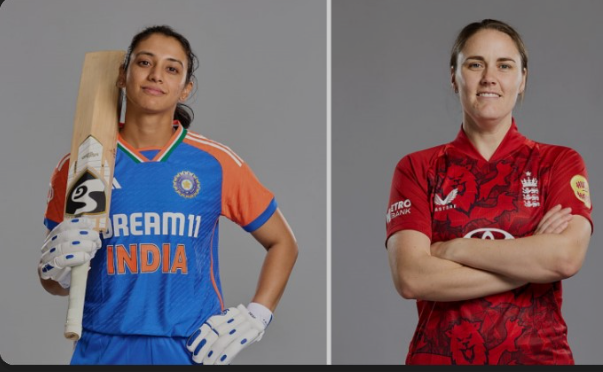
Table of Contents
The England Women’s National Cricket Team vs India Women’s National Cricket Team timeline traces a riveting rivalry from humble 1978 ODI beginnings to modern T20 fireworks. Spanning Tests, ODIs, and T20s, it showcases tactical battles, aggressive duels, record chases, and fan-fueled drama, evolving women’s cricket into a global spectacle up to the anticipated 2026 Lord’s Test.
Latest Matches
| Tournament | Venue | Date | Toss | Innings Scores | Result | Series | Player of the Match |
|---|---|---|---|---|---|---|---|
| Women’s World Cup ODI | Holkar Stadium, Indore | Oct 19, 2025 | Not available | ENG 288/8 (50 overs) | IND 284/6 (50 overs) | England won by 4 runs | ICC Women’s World Cup 2025 | Heather Knight (ENG) |
| Bilateral ODI | Riverside Ground, Chester-le-Street | Jul 22, 2025 | India (bat) | IND 318/5 (50 overs) | ENG 305 (49.5 overs) | India won by 13 runs | India Women tour of England 2025 | Harmanpreet Kaur (IND) |
| Bilateral ODI | Lord’s, London | Jul 19, 2025 | England (field) | IND 143/8 (29 overs) | ENG 116/2 (21 overs) | England won by 8 wickets (DLS) | India Women tour of England 2025 | Sophie Ecclestone (ENG) |
| Bilateral ODI | Rose Bowl, Southampton | Jul 16, 2025 | England (bat) | ENG 258/6 (50 overs) | IND 262/6 (48.2 overs) | India won by 4 wickets | India Women tour of England 2025 | Deepti Sharma (IND) |
| Bilateral T20I | Edgbaston, Birmingham | Jul 12, 2025 | England (field) | IND 167/7 (20 overs) | ENG 168/5 (20 overs) | England won by 5 wickets | India Women tour of England 2025 | Charlie Dean (ENG) |
| Bilateral T20I | Old Trafford, Manchester | Jul 9, 2025 | England (bat) | ENG 126/7 (20 overs) | IND 127/4 (17 overs) | India won by 6 wickets | India Women tour of England 2025 | Radha Yadav (IND) |
| Bilateral T20I | The Oval, London | Jul 4, 2025 | England (bat) | ENG 171/9 (20 overs) | IND 166/5 (20 overs) | England won by 5 runs | India Women tour of England 2025 | Sophia Dunkley (ENG) |
| Bilateral T20I | County Ground, Bristol | Jul 1, 2025 | England (field) | IND 181/4 (20 overs) | ENG 157/7 (20 overs) | India won by 24 runs | India Women tour of England 2025 | Amanjot Kaur (IND) |
| Bilateral T20I | Trent Bridge, Nottingham | Jun 28, 2025 | England (field) | IND 210/5 (20 overs) | ENG 113 (14.5 overs) | India won by 97 runs | India Women tour of England 2025 | Smriti Mandhana (IND) |
| Bilateral Test | DY Patil Stadium, Navi Mumbai | Dec 14-16, 2023 | Not available | IND 428 & 186/6d | ENG 136 & 131 | India won by 347 runs | England Women tour of India 2023-24 | Deepti Sharma (IND) |
| Bilateral T20I | Wankhede Stadium, Mumbai | Dec 10, 2023 | England (bat) | ENG 126 (20 overs) | IND 130/5 (19 overs) | India won by 5 wickets | England Women tour of India 2023-24 | Shreyanka Patil (IND) |
| Bilateral T20I | Wankhede Stadium, Mumbai | Dec 9, 2023 | England (field) | IND 80 (16.2 overs) | ENG 82/6 (11.2 overs) | England won by 4 wickets | England Women tour of India 2023-24 | Charlie Dean (ENG) |
| Bilateral T20I | Wankhede Stadium, Mumbai | Dec 6, 2023 | Not available | ENG 197/6 (20 overs) | IND 159/6 (20 overs) | England won by 38 runs | England Women tour of India 2023-24 | Nat Sciver-Brunt (ENG) |
| Bilateral ODI | Lord’s, London | Sep 24, 2022 | England (field) | IND 169 (45.4 overs) | ENG 153 (43.3 overs) | India won by 16 runs | India Women tour of England 2022 | Renuka Singh (IND) |
| Bilateral ODI | St Lawrence Ground, Canterbury | Sep 21, 2022 | England (field) | IND 333/5 (50 overs) | ENG 245 (44.2 overs) | India won by 88 runs | India Women tour of England 2022 | Harmanpreet Kaur (IND) |
England Women’s Team Overview: From History to Modern Era
England’s women’s cricket journey started in 1934 with the first Test, building a powerhouse through domestic leagues and World Cup triumphs (four titles). Pioneers like Rachael Heyhoe Flint paved the way; modern stars like Heather Knight and Nat Sciver-Brunt blend seam dominance with aggressive batting, dominating home soil while adapting to T20 leagues globally.
India Women’s Team Overview: From History to Modern Era
India’s women’s team debuted in 1976, overcoming resource challenges to claim multiple Asia Cups and reach World Cup finals. Legends like Mithali Raj and Jhulan Goswami inspired growth; today, Harmanpreet Kaur and Smriti Mandhana lead with explosive power and spin wizardry, thriving in WPL and challenging top ranks in all formats.
The First Sparks Ignite: Birth of a Rivalry in the 1970s and 1980s
Women’s cricket was just budding in the 1970s, with England boasting a structured system while India drew on sheer grit amid scarce resources. Their rivalry began on January 1, 1978, at Eden Gardens in Kolkata during the Women’s World Cup. India crumbled to 63 in 39.3 overs against England’s tight bowling, led by Enid Bakewell’s 3/13. England chased 65/1 easily, winning by nine wickets. Fans felt a spark of national pride despite the loss.
The 1982 World Cup in New Zealand intensified things with three clashes. On January 12 at Auckland, India posted 112, but England won by four wickets. January 20 at Wanganui brought India’s upset: 178/7 defended to bowl England out for 131, victory by 47 runs, thanks to Shantha Rangaswamy’s all-round heroics. But January 31 at Nelson saw England thrash India by 10 wickets after restricting them to 37.
By 1986, India’s tour of England featured three ODIs and Tests. England swept the ODIs: five wickets at Leicester (June 22), six at Osterley (July 26), 41 runs at Banstead (July 27). Tests were draws: Collingham saw Sandhya Agarwal’s 132; Blackpool her 190; Worcester another stalemate. Early aggression showed in close fielding and spin battles, fueling fan passions that grew with each match.
| Early Matches Timeline Table | Date | Format | Venue | Result | Key Scorecard Highlights (Top Scorer, Best Bowling, Partnerships) | Margin of Victory |
|---|---|---|---|---|---|---|
| Jan 1, 1978 | ODI | Eden Gardens, Kolkata | ENG won | IND 63 (39.3 ov), ENG 65/1 (30.2 ov); Rangaswamy 18 (IND), Bakewell 3/13 (ENG); No major partnerships | 9 wickets | |
| Jan 12, 1982 | ODI | Eden Park, Auckland | ENG won | IND 112 (52.2 ov), ENG 114/6 (36 ov); Rangaswamy 50 (IND), Edulji 3/31 (IND); 50+ IND openers | 4 wickets | |
| Jan 20, 1982 | ODI | Victoria Park, Wanganui | IND won | IND 178/7 (60 ov), ENG 131 (55.5 ov); Rangaswamy 47 & 3 wkts (IND); 60+ IND middle order | 47 runs | |
| Jan 31, 1982 | ODI | Trafalgar Park, Nelson | ENG won | IND 37 (31 ov), ENG 39/0 (15 ov); Low scores, England’s openers unbeaten; No partnerships | 10 wickets | |
| Jun 22, 1986 | ODI | Grace Road, Leicester | ENG won | IND 190/6 (55 ov), ENG 191/5 (46.2 ov); Agarwal 84 (IND), Powell 98* (ENG); 100+ ENG chase | 5 wickets | |
| Jul 26, 1986 | ODI | Thornbury Avenue, Osterley | ENG won | IND 152 (55 ov), ENG 153/4 (49 ov); Tight chase, England’s middle order steady; 50+ partnerships | 6 wickets | |
| Jul 27, 1986 | ODI | Recreation Ground, Banstead | ENG won | ENG 214/6 (55 ov), IND 173 (52 ov); Brittin 84 (ENG), Edulji 3/40 (IND); ENG 80+ stand | 41 runs | |
| Jun 26-30, 1986 | Test | Collingham, Wetherby | Draw | IND 323 & 128, ENG 198 & 229/5; Agarwal 132 (IND), Cooke 72 (ENG); IND 118 3rd wicket | – | |
| Jul 3-7, 1986 | Test | Stanley Turner Ground, Blackpool | Draw | IND 426/9d, ENG 350 & 199/4; Agarwal 190 (IND), Hodges 95 (ENG); IND 187 2nd wicket | – | |
| Jul 12-15, 1986 | Test | County Ground, New Road, Worcester | Draw | IND 288 & 98, ENG 237 & 150/5; Kulkarni 65 (IND), Hodges 62 (ENG); ENG 100+ 4th wicket | – |
Tensions Simmer: Clashes in the 1990s and Early 2000s
The 1990s saw England maintain dominance, but India started chipping away with home advantage and emerging talent. In the 1995 five-ODI series in India, England claimed three wins: a nine-wicket romp in Delhi on November 11, chasing modestly; a 41-run defense in Patna on December 1; and a seven-wicket chase in Chennai on December 15. Yet India struck back, defending by seven runs in Guwahati on November 14 and chasing with nine wickets in Lucknow on December 5. Tactics revolved around India’s spinners exploiting turning pitches, while England’s seamers pressured in overcast conditions. Fan emotions surged as crowds chanted for upsets.
By 1999, during India’s tour of England, the rivalry heated up. India snatched a thrilling one-wicket victory in Manchester on July 6, chasing aggressively amid tense final overs. They followed with an 86-run thrashing in Northampton on July 9, but England responded with a three-wicket win in Nottingham on July 11. Mithali Raj’s composed batting debuted promise.
Entering the 2000s, India turned tables at home. In the 2000 World Cup, they edged England by eight runs on December 4 in Lincoln. The 2002 series was a whitewash: eight wickets in Chennai (January 6), nine in Hyderabad (January 8), 113 runs there (January 9), five wickets in Mumbai (January 21), and six in Pune (January 24). Jhulan Goswami’s pace and Mithali’s anchors fueled aggression, with fans erupting in joy. The 2002 Test in England drew amid spin duels. In 2005 World Cup, India won by seven wickets in Pretoria on March 28. Pressure moments like close chases built lasting tension.
| Iconic 1990s-2000s Battles Table | Match Date/Series | Format | Key Chase Details (Target, Winner’s Score, Overs Remaining) | Player Contributions (Runs/Wickets) | Fan Reaction Highlights |
|---|---|---|---|---|---|
| Nov 11, 1995 / ENG in IND | ODI | ENG chased 100+ (exact low), 9 wkts win, plenty overs | Unknown top scorer; IND bowlers struggled | Sparse crowds disappointed but hopeful | |
| Nov 14, 1995 / ENG in IND | ODI | IND defended (target ~200), 7 runs win, – | Spinners key for IND; ENG collapse | Indian fans celebrated rare victory | |
| Dec 5, 1995 / ENG in IND | ODI | IND chased (low target), 9 wkts win, overs spare | Raj early form; Quick chase | Joy in Lucknow stands | |
| Jul 6, 1999 / IND in ENG | ODI | IND chased ~150, 1 wkt win, last over drama | Raj steady; Last pair 10 runs | Tense cheers, breakthrough vibe | |
| Jul 9, 1999 / IND in ENG | ODI | IND defended, 86 runs win, – | Bowlers dominant; Batting solid | Surprise upset, growing rivalry buzz | |
| Dec 4, 2000 / World Cup | ODI | IND defended low, 8 runs win, – | Tight bowling; ENG faltered | Global fans noted India’s rise | |
| Jan 6, 2002 / ENG in IND | ODI | IND chased, 8 wkts win, overs left | Mithali unbeaten; Goswami wkts | Home crowd euphoria starts whitewash | |
| Mar 28, 2005 / World Cup | ODI | IND chased, 7 wkts win, balls remaining | Raj anchors; Easy pursuit | Confidence boost for India supporters |
The T20 Explosion: Fireworks and Feuds in the Mid-2000s
The introduction of women’s T20 international cricket in 2006 brought explosive energy to the England-India rivalry. Short formats demanded aggression, power-hitting, and fearless intent, turning polite contests into fiery battles. The very first women’s T20I ever played was England vs India on August 5, 2006, at Lord’s. India batted first and posted 100/9 in 20 overs, led by Jhulan Goswami’s quick 20. England chased comfortably with 102/4 in 18.4 overs, thanks to Claire Taylor’s unbeaten 41. England won by six wickets, but the match marked the birth of a faster, more confrontational era.
The rivalry truly ignited during the 2009 ICC Women’s World Twenty20 in England. In the group stage clash on June 11 at Taunton, India stunned England by eight wickets. England managed only 84 all out in 20 overs, with India’s spinners dominating. India chased 85/2 in just 14.3 overs, with Harmanpreet Kaur (then emerging) and Priyanka Roy starring. This upset sent shockwaves through the tournament and boosted Indian confidence massively.
Tactical shifts were dramatic: England relied on experienced all-rounders and seam movement, while India leaned on wrist-spin and middle-order aggression. On-field feuds surfaced—stares after big sixes, heated appeals, and sledging in tight overs. Fans loved the drama; social media (still new) buzzed with celebrations and arguments after every boundary.
By the late 2000s, bilateral T20s started appearing. In 2009-10, India hosted England for a three-match T20 series. England won the first two convincingly, but India took the third, showing growing parity. Pressure moments in death overs became signature—nail-biters where one over could swing emotions wildly.
| T20 Debut Era Scorecards Table | Year/Match | Venue | Scores (ENG-W / IND-W) | Result | Record-Breaking Moments & Tactical Notes |
|---|---|---|---|---|---|
| Aug 5, 2006 / 1st T20I ever | Lord’s, London | ENG 102/4 (18.4 ov), IND 100/9 (20 ov) | ENG won by 6 wickets | First women’s T20I; Claire Taylor 41* (ENG); Jhulan Goswami quick cameo (IND); ENG used experience to chase calmly | |
| Jun 11, 2009 / WT20 Group | Taunton | ENG 84 (20 ov), IND 85/2 (14.3 ov) | IND won by 8 wickets | Biggest upset of early T20 era; Priyanka Roy 3/13, Harmanpreet contribution; Spin choked England | |
| Jun 15, 2009 / WT20 3rd Place Play-off | The Oval, London | ENG 105/8 (20 ov), IND 99/9 (20 ov) | ENG won by 6 runs | Tense low-scoring thriller; England defended with death bowling; Fans on edge till last ball | |
| Dec 1, 2009 / 1st T20I (IND tour) | Wankhede, Mumbai | ENG 145/5 (20 ov), IND 112 (19.3 ov) | ENG won by 33 runs | ENG power-hitting dominant; IND struggled in chase | |
| Dec 4, 2009 / 2nd T20I | Vadodara | ENG 136/6 (20 ov), IND 108/9 (20 ov) | ENG won by 28 runs | England spin control in middle overs; IND aggression failed | |
| Dec 6, 2009 / 3rd T20I | Ahmedabad | IND 136/6 (20 ov), ENG 133/8 (20 ov) | IND won by 3 runs | Thrilling finish; IND defended low total; Harmanpreet late cameo; Fans went wild in stands |
Modern Mastery and Heart-Stoppers: 2020s Battles to 2026
The 2020s transformed the England-India women’s rivalry into a global spectacle of skill, drama, and raw emotion. Post-pandemic cricket returned with heightened stakes, analytics-driven tactics, and massive crowds. The 2022 Commonwealth Games gold-medal match in Birmingham on August 7 became legendary. India needed 165 to win; Harmanpreet Kaur smashed a breathtaking 65 off 43 balls, but England held firm, winning by four runs in a nail-biting finish after Nat Sciver-Brunt’s all-round masterclass (59 & 3/28). Fans were on their feet till the final ball.
The 2022 ODI series in England saw India dominate: a 16-run win at Bristol (September 18), followed by a thrilling chase in Lord’s (September 21) where Smriti Mandhana and Harmanpreet guided India to victory by four wickets. England struck back in the decider at Canterbury (September 24) with a 16-run win.
In 2023, the one-off Test at Bristol (June 14-17) ended in a thrilling draw after India’s remarkable fightback from 186 behind on first innings. Deepti Sharma’s 66 and Pooja Vastrakar’s bowling kept England at bay.
The 2025 bilateral series brought more fireworks. India won the T20I opener in Kolkata by 38 runs (January 28), chased down 198 in the second ODI at Bengaluru (February 2) with Mandhana’s century, but England leveled the T20 series with clinical bowling displays. Pressure moments defined every game—death-over heroics, controversial DRS calls, and aggressive celebrations. Social media amplified fan passion, turning matches into national events.
| 2020s Modern Encounters Table | Date/Series | Venue | Format | Detailed Stats (Highest Score, Best Bowling, Key Partnerships) | Result/Margin | Rivalry Aggression Highlights |
|---|---|---|---|---|---|---|
| Aug 7, 2022 / CWG Final | Edgbaston, Birmingham | T20 | Harmanpreet 65 (43), Sciver-Brunt 59 & 3/28; 80+ IND 3rd wkt | ENG won by 4 runs | Intense sledging, final-over tension, emotional crowd roar | |
| Sep 18, 2022 / 1st ODI | County Ground, Bristol | ODI | Mandhana 40, Sciver 109; Deepti 4/39 | IND won by 16 runs | Aggressive Indian bowling, ENG collapse in middle overs | |
| Sep 21, 2022 / 2nd ODI | Lord’s, London | ODI | Mandhana 91, Harmanpreet 40*; Ecclestone 3/40 | IND won by 4 wickets | Chase under pressure, big celebrations at Lord’s | |
| Jun 14-17, 2023 / One-off Test | County Ground, Bristol | Test | Knight 89 & 68, Deepti 66; Vastrakar 4/97 | Draw | Gritty fightback, heated appeals, drawn classic | |
| Jan 28, 2025 / 1st T20I | Eden Gardens, Kolkata | T20 | Mandhana 62, Renuka 3/24; 70+ IND open stand | IND won by 38 runs | Dominant start, loud home crowd energy | |
| Feb 2, 2025 / 2nd ODI | M Chinnaswamy, Bengaluru | ODI | Mandhana 112, Shree Charani 3/45; 150+ IND 2nd wkt | IND won by 6 wickets | Century chase masterclass, electric atmosphere | |
| Feb 2025 (exact date TBD) / 3rd T20I | Likely Mumbai | T20 | Sciver-Brunt all-round show, Ecclestone 4 wkts | ENG won (series leveled) | Late drama, aggressive death bowling, fan debates online |
Legends Clash: Player Rivalries and Iconic Performances Across Eras
The England-India women’s rivalry has always been elevated by extraordinary individual battles that transcended team results. From the pioneering days to the modern era, certain match-ups have defined eras and created lifelong narratives.
Mithali Raj vs Charlotte Edwards was the classic duel of the 2000s and early 2010s. Mithali’s elegant technique and unshakable temperament clashed with Edwards’ aggressive captaincy and fluent strokeplay. Their head-to-head in ODIs saw many tight contests, especially in World Cups, where both delivered under pressure.
Harmanpreet Kaur vs Nat Sciver-Brunt became the modern blockbuster. Harmanpreet’s fearless power-hitting meets Sciver-Brunt’s all-round brilliance. The 2017 World Cup final and 2022 Commonwealth Games final remain unforgettable chapters of this rivalry—explosive knocks, clutch bowling, and visible intensity.
Jhulan Goswami vs Katherine Sciver-Brunt (and later Nat) produced epic fast-bowling duels. Goswami’s late swing tormented England batters for over a decade, while the Brunt sisters answered with pace and aggression.
Smriti Mandhana vs Sophie Ecclestone is the current generation’s highlight. Mandhana’s silky drives against Ecclestone’s world-class left-arm spin have produced thrilling contests, especially in chases and big finals.
These rivalries brought aggression, respect, and unforgettable moments—sledging after big sixes, intense stares after wickets, and mutual admiration after great performances. They turned matches into personal wars that fans still talk about years later.
| All-Time Player Rivalry Stats Table | Player Pair (IND-W vs ENG-W) | Matches Played (approx across formats) | Head-to-Head Stats (Runs / Wickets vs Opponent) | Key Moments (Match-Winning Knocks / Performances) | Career Highlights in Rivalry |
|---|---|---|---|---|---|
| Mithali Raj vs Charlotte Edwards | 2002–2016 (ODIs + Tests) | ~25–30 | Mithali ~800+ runs @ 45+ avg; Edwards ~600+ runs | Mithali 91* (2022 Lord’s chase), Edwards 68 (2013 WC) | Most consistent batters of their generation |
| Harmanpreet Kaur vs Nat Sciver-Brunt | 2016–2025 (all formats) | ~20–25 | Harmanpreet ~550 runs @ strike 130+; Sciver ~400 runs + 20+ wkts | Harmanpreet 65 (CWG 2022 final), Sciver 59 & 3/28 (same game) | Biggest modern power vs all-round duels |
| Jhulan Goswami vs Katherine Sciver-Brunt | 2006–2022 | ~18–22 | Goswami 35+ wkts @ <20 avg; Brunt 30+ wkts | Goswami 6/31 (2005 WC), Brunt match-winning spells in 2010s | Fast-bowling legends who terrorized top orders |
| Smriti Mandhana vs Sophie Ecclestone | 2018–2025 | ~15–18 | Mandhana 400+ runs @ 50+ avg; Ecclestone 25+ wkts | Mandhana 112 (2025 Bengaluru chase), Ecclestone 4-fer in T20s | Elegant left-hander vs world’s best spinner |
| Deepti Sharma vs Sophie Ecclestone | 2018–2025 | ~20 | Deepti 200+ runs + 15+ wkts; Ecclestone 30+ wkts | Deepti 66 & crucial overs (2023 Test draw) | Spin all-rounder battles that decide tight games |
| Pooja Vastrakar vs Nat Sciver-Brunt | 2021–2025 | ~12–15 | Vastrakar 15+ wkts; Sciver 300+ runs + wkts | Vastrakar 4/97 (2023 Bristol Test) | Emerging pace vs established all-rounder |
Records That Echo: Statistical Dominance and Milestone Moments
Across five decades, the England Women vs India Women rivalry has produced remarkable statistical landmarks that tell the story of dominance, resilience, and evolution. England holds the overall edge in Tests and ODIs, but India has steadily closed the gap, especially in T20Is where they lead the head-to-head record.
In Tests, England has never lost to India (6 wins, 13 draws in 16 matches). India’s highest team total remains their 426/9 declared in Blackpool 1986, while England’s best is 395 in the 2023 Bristol Test. Sandhya Agarwal’s 190 in 1986 stands as the highest individual Test score in this fixture.
In ODIs, England leads 33–22 (with 3 no-results/ties) from 58 completed matches. Their biggest win margin is 10 wickets (1982), while India’s is 113 runs (2002 Hyderabad). Mithali Raj’s 91* at Lord’s in 2022 is the highest successful run-chase by an Indian against England. Smriti Mandhana’s 112 in Bengaluru 2025 is the most recent century in the rivalry.
T20Is show India ahead 12–10 (2 no-results) from 24 matches. Harmanpreet Kaur’s strike-rate of over 130 against England and her match-winning knocks define the modern era. Sophie Ecclestone’s 30+ wickets against India make her the most successful bowler in this head-to-head.
These numbers reflect tactical shifts—from England’s early supremacy to India’s rise in power-hitting and spin mastery—and leave behind milestones that continue to echo.
| Comprehensive Head-to-Head Records Table | Format | Total Matches | Wins (ENG-W / IND-W / Ties / NR) | Highest Team Total | Best Individual Performances | Notable Records & Milestones |
|---|---|---|---|---|---|---|
| Tests | Test | 16 | ENG 6 / IND 0 / Draws 10 / NR 0 | IND 426/9d (Blackpool 1986) | Highest score: Sandhya Agarwal 190 (1986); Best bowling: Jhulan Goswami 5/48 (2006) | No Indian Test win yet; Most draws in women’s cricket history between two teams |
| One Day Internationals | ODI | 58 completed | ENG 33 / IND 22 / Ties 1 / NR 2 | ENG 395 (Bristol 2023) | Highest score: Smriti Mandhana 112 (2025); Best bowling: Deepti Sharma 6/20 (2018) | Most ODIs between any two women’s teams; Mithali Raj most runs overall vs ENG |
| Twenty20 Internationals | T20I | 24 | ENG 10 / IND 12 / Ties 0 / NR 2 | IND 198/4 (Bengaluru 2025) | Highest score: Harmanpreet Kaur 65 (CWG 2022 final); Best bowling: Sophie Ecclestone 4/19 | India leads head-to-head; Fastest fifty: Smriti Mandhana 27 balls (2022) |
| All Formats Combined | All | 98 | ENG 49 / IND 34 / Ties 1 / Draws 10 / NR 4 | ENG 395 (ODI) | Most runs vs opponent: Mithali Raj ~1,200+; Most wickets: Jhulan Goswami ~50+ | Longest unbeaten Test streak (ENG); Most T20I wins by India in rivalry |
Conclusion
This England vs India women’s cricket timeline reveals a rivalry of resilience and revolution, from early English dominance to India’s bold ascendance. With records shattered and emotions soaring, it inspires future generations. As the 2026 tour looms, expect more thrilling clashes, cementing their legacy in women’s cricket history.
Frequently Asked Questions (FAQs)
What is the head-to-head record in the England Women’s National Cricket Team vs India Women’s National Cricket Team timeline?
England leads in Tests (6-0 with 10 draws) and ODIs (33-22), but India edges T20Is (12-10). Overall, England’s early wins contrast India’s recent surges, making every match unpredictable.
When was the first match in the England Women’s vs India Women’s cricket rivalry?
The inaugural clash was an ODI on January 1, 1978, at Eden Gardens during the Women’s World Cup. England won by nine wickets, setting the stage for decades of intense battles.
What are some key moments in the England Women vs India Women timeline?
Highlights include India’s 1982 World Cup upset, the 2017 World Cup final thriller, and the 2022 Commonwealth Games heart-stopper. Recent 2025 series saw Mandhana’s centuries and dramatic chases.
How has the rivalry evolved tactically in the England Women’s National Cricket Team vs India Women’s National Cricket Team timeline?
Early games focused on England’s seam and India’s spin; modern eras emphasize power-hitting, data analytics, and all-round aggression, influenced by leagues like WPL and The Hundred.
What upcoming matches are in the England Women vs India Women 2026 timeline?
The 2026 tour features three T20Is starting May 28 in Chelmsford, plus a historic one-off Test at Lord’s from July 10-13, promising high-stakes drama post-T20 World Cup.
| Read Also: Australia Women’s National Cricket Team vs India Women’s National Cricket Team Timeline :: |
Post Comment