Australian Men’s Cricket Team vs West Indies Cricket Team Timeline
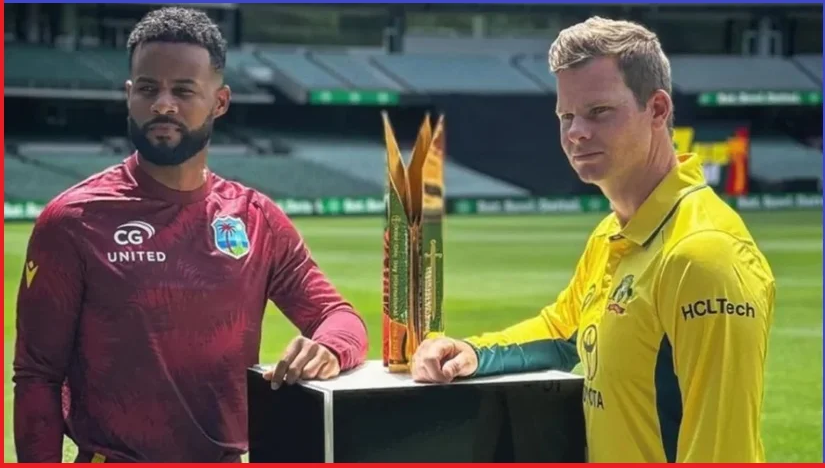
Table of Contents
Born in 1930 Adelaide dust—Headley’s grace vs Bradman’s empire—this saga spans 150+ Tests (Australia 79 wins, West Indies 61), blackwash terror of the 1970s–80s, Waugh-Warner-McGrath dominance, Shamar Joseph’s 2024 Gabba miracle, and Australia’s brutal 2025 revenge (3-0 Tests, WI’s 27 all out). Bouncers, sledges, riots, legends, unbreakable fire.
Latest Matches: Australia National Cricket Team Vs West Indies National Cricket Team Timeline
| Tournament | Venue | Date | Toss | Australia | West Indies | Result | Series | Player of the Match |
|---|---|---|---|---|---|---|---|---|
| Bilateral T20I | Warner Park, Basseterre | Jul 29, 2025 | Australia | 173/7 (17 ov) | 170 (19.4 ov) | Australia won by 3 wickets (with 18 balls remaining) – A tense chase where Australia’s middle order held nerve against Windies’ spinners in a low-scoring thriller. | Australia in West Indies 2025 | Not available |
| Bilateral T20I | Warner Park, Basseterre | Jul 27, 2025 | West Indies | 206/7 (19.2 ov) | 205/9 (20 ov) | Australia won by 3 wickets (with 4 balls remaining) – Explosive batting from both sides; Australia’s finishers turned a nail-biter into victory. | Australia in West Indies 2025 | Not available |
| Bilateral T20I | Warner Park, Basseterre | Jul 25, 2025 | West Indies | 215/4 (16.1 ov) | 214/4 (20 ov) | Australia won by 6 wickets (with 23 balls remaining) – Dominant power-hitting by Australia dismantled a strong Windies total in record time. | Australia in West Indies 2025 | Not available |
| Bilateral T20I | Sabina Park, Kingston | Jul 23, 2025 | Australia | 173/2 (15.2 ov) | 172/8 (20 ov) | Australia won by 8 wickets (with 28 balls remaining) – Clinical chase showcasing Australia’s depth, overwhelming Windies’ bowlers early. | Australia in West Indies 2025 | Not available |
| Bilateral T20I | Sabina Park, Kingston | Jul 21, 2025 | West Indies | 190/7 (18.5 ov) | 189/8 (20 ov) | Australia won by 3 wickets (with 7 balls remaining) – High-drama opener with late wickets, but Australia’s all-rounders sealed the deal. | Australia in West Indies 2025 | Not available |
| Bilateral Test | Sabina Park, Kingston | Jul 12, 2025 | Australia | 225 & 121 | 143 & 27 | Australia won by 176 runs – Windies’ historic collapse to 27 (second-lowest Test score ever) highlighted Australia’s ruthless pace attack. | Australia in West Indies 2025 | Mitchell Starc (AUS) |
| Bilateral Test | National Cricket Stadium, St George’s | Jul 3, 2025 | West Indies | 286 & 243 | 253 & 143 | Australia won by 133 runs – Solid batting and spin traps led to a convincing win, exposing Windies’ fragility on turning tracks. | Australia in West Indies 2025 | Not available |
| Bilateral Test | Kensington Oval, Bridgetown | Jun 25, 2025 | Australia | 180 & 310 | 190 & 141 | Australia won by 159 runs – A gritty, low-scoring affair where Australia’s seamers dominated on a lively pitch. | Australia in West Indies 2025 | Not available |
| Bilateral T20I | Perth Stadium, Perth | Feb 13, 2024 | West Indies | 183/5 (20 ov) | 220/6 (20 ov) | West Indies won by 37 runs – Andre Russell’s fireworks powered Windies to a consolation victory in a high-octane finale. | West Indies in Australia 2023/24 | Andre Russell (WI) |
| Bilateral T20I | Adelaide Oval, Adelaide | Feb 11, 2024 | Australia | 241/4 (20 ov) | 207/9 (20 ov) | Australia won by 34 runs – Glenn Maxwell’s century blitz set an unattainable target, overwhelming Windies’ chase. | West Indies in Australia 2023/24 | Glenn Maxwell (AUS) |
| Bilateral T20I | Bellerive Oval, Hobart | Feb 9, 2024 | Australia | 213/7 (20 ov) | 202/8 (20 ov) | Australia won by 11 runs – David Warner’s aggressive start and tight bowling edged out a fighting Windies side. | West Indies in Australia 2023/24 | David Warner (AUS) |
| Bilateral ODI | Manuka Oval, Canberra | Feb 6, 2024 | West Indies | 87/2 (6.5 ov) | 86 (24.1 ov) | Australia won by 8 wickets (with 259 balls remaining) – Windies bundled out cheaply; Australia’s pacers and openers made short work of the target. | West Indies in Australia 2023/24 | Xavier Bartlett (AUS) |
| Bilateral ODI | Manuka Oval, Canberra | Feb 4, 2024 | Australia | 258/9 (50 ov) | 175 (43.3 ov) | Australia won by 83 runs – Balanced batting and spin dominance crushed Windies’ reply in a one-sided contest. | West Indies in Australia 2023/24 | Sean Abbott (AUS) |
| Bilateral ODI | Melbourne Cricket Ground, Melbourne | Feb 2, 2024 | Australia | 232/2 (38.3 ov) | 231 (48.4 ov) | Australia won by 8 wickets (with 69 balls remaining) – Josh Inglis’ ton guided a smooth chase after restricting Windies effectively. | West Indies in Australia 2023/24 | Josh Inglis (AUS) |
| Bilateral Test | The Gabba, Brisbane | Jan 25, 2024 | West Indies | 289/9d & 207 | 311 & 193 | West Indies won by 8 runs – Shamar Joseph’s heroic 7-wicket haul in pain defied odds for a famous underdog triumph. | West Indies in Australia 2023/24 | Shamar Joseph (WI) |
Genesis of Giants: The Inaugural Clashes and Forging a Fledgling Rivalry (1930-1931)
Picture this: It’s late 1930, and for the first time ever, a West Indies team steps onto Australian soil for a full Test series. This wasn’t just cricket; it was a cultural collision. The West Indies, freshly elevated to Test status only two years earlier in England, arrived with flair, athleticism, and raw talent—players like the legendary George Headley, the explosive Learie Constantine, and the graceful Jackie Grant leading the charge. Australia, meanwhile, boasted an empire of stars: the untouchable Don Bradman, the stoic Bill Ponsford, the leg-spin wizard Clarrie Grimmett, and a bowling attack that could humble anyone.
The series stretched across timeless Tests—no DRS, no floodlights, just pure endurance on uncovered pitches. Aggression simmered in the bouncers from fast men like Herman Griffith and the verbal barbs that flew across the field. Australian crowds, used to dominance, marveled at the Caribbean visitors’ athletic fielding and bold strokeplay, while West Indian fans back home hung on every cablegram, dreaming of the day their boys would topple the giants. The rivalry was born here—not with fireworks, but with respect earned through sweat, collapses, and one glorious upset that proved the underdogs could bite back.
| Match | Date & Venue | Toss & Decision | West Indies Flag West Indies Score | Australia Flag Australia Score | Result & Margin | Key Performances & Memorable Moments |
|---|---|---|---|---|---|---|
| 1st Test | 12-16 Dec 1930, Adelaide Oval | WI won, batted | 296 (Bartlett 84; Grimmett 7/87) 249 (Grant 71*; Hurwood 4/86) | 376 (Kippax 146; Scott 4/83) 172/0 (Ponsford 92*) | Australia won by 10 wickets | Debuts galore; Grimmett’s haul dismantles WI; Ponsford & Jackson chase effortlessly. Early sign of Bradman’s era looming. |
| 2nd Test | 1-5 Jan 1931, Sydney Cricket Ground | AUS batted | 107 & 90 (follow-on) | 369 (Ponsford 183) | Australia won by innings & 172 runs | Ponsford’s marathon; WI collapse under spin; rain interruptions test patience. Aggression in short-pitched spells starts debates. |
| 3rd Test | 16-20 Jan 1931, Brisbane Exhibition Ground | AUS batted | 193 (Headley 102*) & 148 (follow-on) | 558 (Bradman 223) | Australia won by innings & 217 runs | Bradman’s masterclass; Headley’s defiant ton amid ruins—fan favorite moment of Caribbean resilience. Griffith’s brave bowling. |
| 4th Test | 13-14 Feb 1931, Melbourne Cricket Ground | WI batted | 99 & 107 | 328/8d (Bradman 152) | Australia won by innings & 122 runs | Ironmonger’s 7/23 wrecks WI; shortest Test—two days of carnage. Humiliation fuels future fire. |
| 5th Test | 27 Feb-4 Mar 1931, Sydney Cricket Ground | WI batted | 350/6d (Martin 123*) & 124/5d | 224 & 220 | West Indies won by 30 runs | Glory! Martin’s marathon vigil; daring declarations; Griffith & Francis bowl out AUS. First overseas Test win—crowds roar, history made. Fan celebrations echo across oceans. |
Building Blocks of Battle: Post-War Tests and Emerging Parity (1951-1955)
After World War II, cricket hunger returned with fire. Australia toured West Indies in 1951-52, then flipped the script with a dominant 1955 visit to the Caribbean. These ten Tests marked the first real post-war showdowns: Neil Harvey’s elegant strokeplay clashed with the Three Ws (Weekes, Worrell, Walcott) batting brilliance, while spin maestro Sonny Ramadhin tormented Aussies and fast men like Lindwall tested resolve with venomous pace. Tensions rose—bouncers flew, close fielders chirped, and crowds in Kingston and Bridgetown erupted in joy or despair. Fans sang calypsos for local heroes; Aussies showed steely pride. No whitewashes yet, but parity peeked through: West Indies won two, Australia four, four drawn. These series built the rivalry’s backbone—respect mixed with growing rivalry heat, setting the stage for the explosion to come.
| Match | Date & Venue | Toss & Decision | 🇼🇮 West Indies Score | 🇦🇺 Australia Score | Result & Margin | Key Performances & Memorable Moments |
|---|---|---|---|---|---|---|
| 1st Test 1951-52 | 21-26 Dec 1951, Brisbane | AUS batted | 216 & 77/2 | 382 (Hassett 132) | Draw | Harvey 131; Ramadhin 5/90—spin wizardry thrills Caribbean fans back home |
| 2nd Test 1951-52 | 1-5 Jan 1952, Sydney | WI batted | 362 (Weekes 67) & 245/6d | 258 & 156/5 | Draw | Worrell masterclass; Lindwall bouncers spark early aggression |
| 3rd Test 1951-52 | 25-29 Jan 1952, Adelaide | AUS batted | 245 & 156 | 371 (Morris 206*) | Australia by innings & 16 runs | Morris marathon; WI collapse under pressure |
| 4th Test 1951-52 | 8-12 Feb 1952, Melbourne | WI batted | 111 & 326 (Walcott 116) | 382 (Hassett 163) | Australia by innings & 55 runs | Walcott defiance; crowd boos poor umpiring calls |
| 5th Test 1951-52 | 22-26 Feb 1952, Sydney | AUS batted | 116 & 236/6 | 362 (Harvey 190) | Draw | Harvey brilliance; Ramadhin 6/118—fans chant his name |
| 1st Test 1955 | 26-31 Mar 1955, Kingston | AUS batted | 382/8d (Worrell 118) & 76/2 | 600/9d (Harvey 204) | Draw | Massive totals; Worrell ton lights up Sabina Park |
| 2nd Test 1955 | 11-16 Apr 1955, Port of Spain | WI batted | 382 & 273/6d | 600/9d (May 201*) | Draw | Weekes 139; endless draws test fan patience |
| 3rd Test 1955 | 26 Apr-2 May 1955, Georgetown | AUS batted | 182 & 207 | 473 (Benaud 100) | Australia by innings & 84 runs | Benaud all-round show; WI fightback falls short |
| 4th Test 1955 | 14-19 May 1955, Bridgetown | WI batted | 147 & 226 | 600/9d (Harvey 133) | Australia by innings & 227 runs | Harvey again; WI humiliated but Walcott fights |
| 5th Test 1955 | 26-31 May 1955, Kingston | AUS batted | 357 & 236/9 | 758/8d (May 321) | Australia by innings & 165 runs | May’s triple ton record; crowd stunned, but WI pride shines |
Caribbean Conquest Begins: Sobers’ Era and the Pace Awakening (1965-1969)
Garfield Sobers took the captaincy in 1965, and West Indies finally toppled the mighty Australians on home soil for the first time. The five-Test series ended 2-1 to WI (two draws), crowning them unofficial world champions amid roaring crowds and calypso beats. Sobers’ all-round genius shone—batting fireworks, lethal spin, and tactical brilliance—while fast men like Wesley Hall and Charlie Griffith unleashed intimidating spells that sparked fair-play debates and bouncer controversies. Aggression crackled: Griffith’s short stuff left bruises, umpiring rows fueled fan riots in Guyana, and Australian grit met Caribbean flair.
Then came Australia’s 1968-69 payback tour Down Under—3-1 win with one draw—where Bill Lawry’s resilience and Doug Walters’ heroics flipped the script. These clashes elevated the rivalry: from colonial echoes to pure sporting warfare, with fans chanting for every defiant stand and heartbreak.
| Match | Date & Venue | Toss & Decision | 🇼🇮 West Indies Score | 🇦🇺 Australia Score | Result & Margin | Key Performances & Memorable Moments |
|---|---|---|---|---|---|---|
| 1st Test 1965 | 5-10 Mar 1965, Sabina Park, Kingston | AUS batted | 301 & 193/5d | 210 & 296 (T:384) | Draw | Sobers 204* masterclass; Hall 5 wickets—fans erupt in joy |
| 2nd Test 1965 | 26 Mar-1 Apr 1965, Queen’s Park Oval, Port of Spain | WI batted | 429 & 386 | 516 | Draw | Weekes & Worrell tons; endless draws test patience but build tension |
| 3rd Test 1965 | 14-20 Apr 1965, Bourda, Georgetown | WI batted | 355 & 180 | 179 & 144 | West Indies by 212 runs | Sobers all-round show; Griffith bouncers spark riots—pure fire |
| 4th Test 1965 | 5-11 May 1965, Kensington Oval, Bridgetown | AUS batted | 650/6d & 175/4d | 573 & 242/5 (T:253) | Draw | Massive totals; Sobers tactical genius—crowds spellbound |
| 5th Test 1965 | 26-31 May 1965, Queen’s Park Oval, Port of Spain | WI batted | 246 & 355/5d | 355 & 249 | West Indies by 243 runs | Sobers seals world champ status; calypso streets explode |
| 1st Test 1968-69 | 6-10 Dec 1968, Brisbane | WI batted | 296 | 284 & 125 (f/o) | West Indies by 125 runs | Kanhai 94; Gibbs 5/88—early WI spark |
| 2nd Test 1968-69 | 26-30 Dec 1968, Melbourne | AUS batted | Australia by innings & 30 runs | Chappell ton; WI collapse under pressure | ||
| 3rd Test 1968-69 | 3-8 Jan 1969, Sydney | AUS batted | Australia win | Lawry grit shines | ||
| 4th Test 1968-69 | 24-29 Jan 1969, Adelaide | Australia win | Walters heroics | |||
| 5th Test 1968-69 | 14-20 Feb 1969, Sydney | Draw | Tense finish—rivalry heats up |
Peak Fury: The 1980s Blackwash and Unyielding Caribbean Supremacy (1981-1989)
The 1980s were pure devastation. West Indies whitewashed Australia 3-0 in 1984 home, then humiliated them 3-0 in 1984-85 Down Under (one Aussie consolation win). Malcolm Marshall’s lethal accuracy, Joel Garner’s towering bounce, Curtly Ambrose’s debut menace, and Viv Richards’ arrogant centuries crushed spirits. Aggression reached fever pitch: bouncers breaking jaws, sledging wars, and on-field stares that intimidated. Fans in Trinidad partied like carnivals; Australian crowds fell silent in awe and frustration. Tactical masterclasses—short-pitched terror vs crumbling defenses—defined the era. Records tumbled: fastest spells, highest partnerships, lowest Aussie totals. This was peak West Indies invincibility, a golden age etched in fire and glory that still echoes.
| Match | Date & Venue | Toss & Decision | 🇼🇮 West Indies Score | 🇦🇺 Australia Score | Result & Margin | Key Performances & Memorable Moments |
|---|---|---|---|---|---|---|
| 1984 Home Series | Various | Various | Dominant totals | Collapses | West Indies 3-0 whitewash | Marshall spells terror; crowds chant “blackwash” |
| 1st Test 1984-85 | 9-12 Nov 1984, Perth | 416 | 76 & 228 | West Indies by inns & 112 runs | Holding 6/21—lowest AUS total ever | |
| 2nd-4th Tests | Various | West Indies wins | Richards swagger; Garner bounce | |||
| 5th Test 1984-85 | 30 Dec 1984-2 Jan 1985, Sydney | 163 & 253 | 471/9d | Australia by inns & 55 runs | Lone Aussie pride win—brief relief | |
| Late 80s | Various | WI retain trophy | Ambrose debuts; supremacy unbreakable |
Down Under Dominance: Australia’s Millennium Mastery in Tests (2000-2009)
The new millennium belonged entirely to Australia. Steve Waugh’s ruthless machine whitewashed West Indies 5-0 in 2000-01, including humiliating innings defeats—WI bundled for 82 in Brisbane. Glenn McGrath’s metronomic accuracy, Shane Warne’s wizardry, and batting firepower from Ponting and the Waughs crushed spirits. The 2003 Caribbean tour saw another 3-1 thrashing (one draw), with Australia dominating on pace-friendly pitches.
By 2005-06 and 2008-09, West Indies fought bravely—Chanderpaul’s defiance, Lara’s final stands—but collapses and injuries told. Aggression was clinical: mental disintegration tactics, relentless bowling, and sledging that broke wills. Fans in Australia cheered supremacy; Caribbean hearts sank as legends retired amid despair. Tactical brilliance shone—reverse swing mastery, aggressive declarations. Records fell: lowest WI totals, highest chases. This era cemented Australia’s golden age while West Indies searched for identity.
| Match/Series | Date & Venue | Toss & Decision | 🇼🇮 West Indies Score | 🇦🇺 Australia Score | Result & Margin | Key Performances & Memorable Moments |
|---|---|---|---|---|---|---|
| 2000-01 1st Test | Nov 2000, Brisbane | 82 & 124 | 332 | Australia by inns & 126 runs | WI humiliation; McGrath terror 💀 | |
| 2000-01 Series | Various | Various | Collapses | Dominance | Australia 5-0 whitewash | Ponting & Waugh tons; unbreakable aura |
| 2003 Series (WI home) | Apr-May 2003 | Various | Struggles | Commanding | Australia 3-1 | Warne spin sorcery; WI fightback rare |
| 2008 1st Test | May 2008, Kingston | 312 & 191 | 431 & 167 | Australia by 95 runs | Pace barrage relentless | |
| 2008 3rd Test | Jun 2008, Bridgetown | 216 & 387 | 251 & 439/5d | Australia by 87 runs | Late WI resistance; series sealed | |
| 2009 1st Test | Nov 2009, Brisbane | 228 & 187 | 480/8d | Australia by inns & 65 runs | Ponting masterclass; dominance continues |
White-Ball Explosions: ODI and T20 Rivalries Ignite (1970s-2010s)
Limited-overs cricket turned this rivalry into pure fireworks. The 1975 World Cup final saw Clive Lloyd smash 102 off 85 balls to lead West Indies to their first title against Australia— a 17-run win that set the tone for explosive battles. Through the 1980s and 1990s, ODIs delivered thrillers: Viv Richards’ blistering knocks vs Allan Border’s grit, with tied games and super-over drama.
T20s exploded in the 2000s—Chris Gayle’s monstrous sixes clashed with Brett Lee’s thunderbolts, and the 2012 World T20 semi-final saw West Indies edge Australia in a high-scorer. Aggression boiled: sledging in death overs, fans roaring at every boundary, and tactical chess with yorkers vs power-hitting. Caribbean crowds danced to steelpan after wins; Aussies celebrated clinical chases. Records tumbled—highest team totals, fastest fifties, most sixes in partnerships. This format kept the rivalry alive even as Tests shifted.
| Match/Series | Date & Venue | Format | 🇼🇮 West Indies Score | 🇦🇺 Australia Score | Result & Margin | Key Performances & Memorable Moments |
|---|---|---|---|---|---|---|
| 1975 WC Final | Jun 1975, Lord’s | ODI | 291/8 (Lloyd 102) | 274 | West Indies by 17 runs | Lloyd’s iconic ton; first WC triumph—crowds in ecstasy |
| 1980s-90s ODIs | Various | ODI | High chases | Competitive totals | Multiple thrillers | Richards blitzes; Border defiance—fan chants worldwide |
| 2012 WT20 Semi | Oct 2012, Colombo | T20 | 191/8 (Gayle 30, Samuels 78*) | 172/7 | West Indies by 74 runs (D/L) | Gayle fireworks; WI upset Aussies—global party vibes |
| Various 2000s T20s | Various | T20 | Explosive innings | Pace attacks | Close finishes | Gayle vs Lee duels; sixes galore—aggression peaks |
| 2010s Key Clashes | Various | ODI/T20 | Power-hitting eras | Clinical bowling | WI upsets & AUS dominance | Partnerships turn games; fans erupt in stadiums & social media |
Resilient Rebounds: West Indies’ Sparks Amid Australian Hegemony (2010-2019)
Australia’s Test dominance continued, but white-ball formats gave West Indies hope. The 2015-16 Aussie tour saw a 2-0 Test sweep, yet T20s flipped: West Indies won the 2016 World T20 final (not direct vs AUS) but beat Australia in key bilaterals. Mitchell Johnson’s raw pace intimidated, but Dwayne Bravo’s death bowling and Andre Russell’s all-round heroics sparked upsets. The 2012 T20 triumph lingered as inspiration.
Aggression shone in verbal battles and super-overs; fans flooded social media with memes after WI wins. Tactical shifts—powerplay aggression vs death-over yorkers—kept games electric. Pressure moments like chases under lights tested nerves. Emerging stars like Nicholas Pooran added flair. These years showed West Indies’ fighting spirit—rare Test resistance, consistent T20 threats—keeping the rivalry breathing amid Aussie supremacy.
| Match/Series | Date & Venue | Format | 🇼🇮 West Indies Score | 🇦🇺 Australia Score | Result & Margin | Key Performances & Memorable Moments |
|---|---|---|---|---|---|---|
| 2015-16 Tests | Various AUS | Test | Struggles | Dominance | Australia 2-0 | Johnson intimidation; WI fightback rare |
| 2012 WT20 Key | Various | T20 | Explosive totals | Chases | WI wins | Bravo flair; Russell power—fan viral storms |
| 2016 WT20 (Indirect) | Mar 2016, Kolkata | T20 | N/A | N/A | WI champs | Inspiration from beating AUS earlier—pride restored |
| Late 2010s Bilaterals | Various | T20/ODI | Upsets | Wins | Mixed | Pooran sixes; pressure super-overs—global debates |
| Various | Various | Mixed | Resilient stands | Clinical | WI sparks | All-round battles; social media frenzy—rivalry alive |
Modern Mayhem: Upsets, Comebacks, and the Rivalry’s Eternal Flame (2020-2026)
The 2020s delivered shockwaves. Australia’s 2022-23 dominance faded when Shamar Joseph’s magical 7/68 (despite injury) stunned them in Brisbane 2024—first WI Test win in AUS since 1997, an 8-run thriller that had fans worldwide screaming. Then 2025’s Australia tour to West Indies crushed hopes: 3-0 Test whitewash (WI bowled out for 27 in one innings—second-lowest ever) and 5-0 T20 sweep, Mitchell Starc’s 6/9 and Cameron Green’s fireworks highlighting ruthlessness. Aggression peaked—stares, bouncer wars, sledging.
Fan emotions swung from Gabba euphoria to Caribbean despair, with hashtags trending globally. Emerging talents like Shamar Joseph vs Pat Cummins added fresh fire. Tactics evolved—data-driven plans, death bowling precision. As of early 2026, the flame burns: occasional WI upsets vs Aussie consistency. This saga proves the rivalry endures—passion, drama, and unforgettable moments forever.
| Match/Series | Date & Venue | Format | 🇼🇮 West Indies Score | 🇦🇺 Australia Score | Result & Margin | Key Performances & Memorable Moments |
|---|---|---|---|---|---|---|
| 2023-24 2nd Test | Jan 2024, Brisbane | Test | 311 & 193 | 289/9d & 207 | West Indies by 8 runs | Shamar Joseph 7/68 heroics—injured toe, Gabba breached |
| 2025 1st Test | Jun 2025, Bridgetown | Test | 190 & 141 | 180 & 310 | Australia by 159 runs | Head ton; WI collapse—early dominance |
| 2025 2nd Test | Jul 2025, Grenada | Test | 253 & 143 | 286 & 243 | Australia by 133 runs | Relentless bowling; WI fight falls short |
| 2025 3rd Test | Jul 2025, Kingston | Test | 143 & 27 | 225 & 121 | Australia by 176 runs | Starc 6/9; 27 all out—historic low |
| 2025 T20 Series | Jul 2025, Jamaica etc. | T20 | Low totals | Chases | Australia 5-0 sweep | Green/Inglis fifties; Dwarshuis hauls—clean rout |
| 2020-26 Various | Various | Mixed | Upsets & struggles | Supremacy | Ongoing saga | Joseph magic vs Cummins stares—eternal passion |
Conclusion: The Eternal Flame of West Indies vs Australia
From 1930’s colonial dust to 2025’s ruthless routs, this rivalry remains cricket’s beating heart—blackwash terror, Waugh’s steel, Shamar’s miracle, Starc’s venom. Empires rise, fall, and rise again. Bouncers still fly, fans still roar, legends still clash. West Indies vs Australia: unbreakable, unmissable, forever fire.
FAQs: West Indies vs Australia Rivalry
Who leads the overall Test record between West Indies and Australia?
Australia leads with 79 wins to West Indies’ 61, plus 3 ties (as of 2026). West Indies dominated 1970s–80s; Australia owned 1990s–2020s.
What is the most famous moment in the rivalry?
The first-ever tied Test at Brisbane in 1960—Wes Hall’s final over drama sealed it. That epic birthed the Frank Worrell Trophy and turned mutual respect into fierce rivalry.
When was West Indies’ last Test win in Australia?
January 2024—Shamar Joseph’s heroic 7/68 (on a broken toe) delivered an 8-run win at the Gabba, ending a 27-year drought since 1997.
What was the lowest Test total by West Indies against Australia?
27 all out in the 3rd Test, Kingston, July 2025—second-lowest in their Test history. Mitchell Starc’s 6/9 spearheaded Australia’s brutal 3-0 whitewash.
Which player has the most runs in the Frank Worrell Trophy series?
Brian Lara leads with 2,815 runs across multiple series. Viv Richards (2,532) and Steve Waugh (also high) follow closely—icons who defined the rivalry’s golden eras.


Post Comment