India National Cricket Team vs New Zealand National Cricket Team Timeline
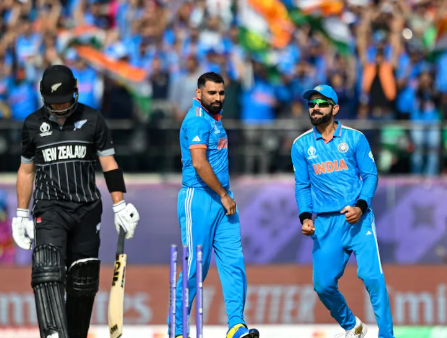
Table of Contents
Latest Matches : India National Cricket Team vs New Zealand National Cricket Team Timeline
| Tournament/Series | Venue | Date | Toss | India’s Score | NZ’s Score | Result | Series Status | Player of the Match |
|---|---|---|---|---|---|---|---|---|
| New Zealand tour of India 2026 (T20I) | Shaheed Veer Narayan Singh International Cricket Stadium, Nava Raipur | Jan 23, 2026 | India | 209/3 (15.2) | 208/6 (20) | India won by 7 wickets | India leads 2-0 (ongoing) | Ishan Kishan (Ind) |
| New Zealand tour of India 2026 (T20I) | Vidarbha Cricket Association Stadium, Nagpur | Jan 21, 2026 | New Zealand | 238/7 (20) | 190/7 (20) | India won by 48 runs | India leads 1-0 (ongoing) | Abhishek Sharma (Ind) |
| New Zealand tour of India 2026 (ODI) | Holkar Stadium, Indore | Jan 18, 2026 | India | 296 (46) | 337/8 (50) | New Zealand won by 41 runs | India won series 2-1 | Daryl Mitchell (NZ) |
| New Zealand tour of India 2026 (ODI) | Niranjan Shah Stadium, Rajkot | Jan 14, 2026 | New Zealand | 284/7 (50) | 286/3 (47.3) | New Zealand won by 7 wickets | India leads 1-1 | Daryl Mitchell (NZ) |
| New Zealand tour of India 2026 (ODI) | Baroda Cricket Association Stadium, Vadodara | Jan 11, 2026 | India | 306/6 (49) | 300/8 (50) | India won by 4 wickets | India leads 1-0 | Virat Kohli (Ind) |
| ICC Champions Trophy 2025 | Dubai International Cricket Stadium, Dubai | Mar 9, 2025 | New Zealand | 254/6 | 251/7 (50) | India won by 4 wickets | India won the tournament | Rohit Sharma (Ind) |
| ICC Champions Trophy 2025 | Dubai International Cricket Stadium, Dubai | Mar 2, 2025 | New Zealand | 249/9 (50) | 205 | India won by 44 runs | Group stage | Varun Chakravarthy (Ind) |
| New Zealand tour of India 2024-25 (Test) | Wankhede Stadium, Mumbai | Nov 1-3, 2024 | New Zealand | 263 (59.4) & 121 (29.1) | 235 (65.4) & 174 (45.5) | New Zealand won by 25 runs | New Zealand won series 3-0 | Ajaz Patel (NZ) |
| New Zealand tour of India 2024-25 (Test) | Maharashtra Cricket Association Stadium, Pune | Oct 24-26, 2024 | New Zealand | 156 (45.3) & 245 (60.2) | 259 (79.1) & 255 (69.4) | New Zealand won by 113 runs | New Zealand leads 2-0 | Mitchell Santner (NZ) |
| New Zealand tour of India 2024-25 (Test) | M. Chinnaswamy Stadium, Bengaluru | Oct 16-20, 2024 | India | 46 (31.2) & 465 | 402 (91.3) & 110/2 (27.4) | New Zealand won by 8 wickets | New Zealand leads 1-0 | Rachin Ravindra (NZ) |
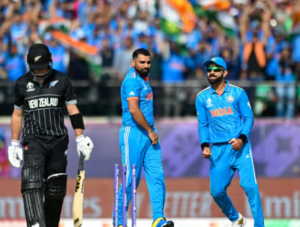
| ICC Cricket World Cup 2023 | Wankhede Stadium, Mumbai | Nov 15, 2023 | India | 397/4 (50) | 327 (48.5) | India won by 70 runs | Semi-final (India advanced) | Mohammed Shami (Ind) |
| ICC Cricket World Cup 2023 | Himachal Pradesh Cricket Association Stadium, Dharamsala | Oct 22, 2023 | India | 274/6 (48) | 273 (50) | India won by 4 wickets | Group stage | Mohammed Shami (Ind) |
| New Zealand tour of India 2022-23 (T20I) | Narendra Modi Stadium, Ahmedabad | Feb 1, 2023 | India | 234/4 (20) | 66 (12.1) | India won by 168 runs | India won series 2-1 | Shubman Gill (Ind) |
| New Zealand tour of India 2022-23 (T20I) | Ekana Cricket Stadium, Lucknow | Jan 29, 2023 | New Zealand | 101/4 (19.5) | 99/8 (20) | India won by 6 wickets | Series tied 1-1 | Suryakumar Yadav (Ind) |
| New Zealand tour of India 2022-23 (T20I) | JSCA International Stadium Complex, Ranchi | Jan 27, 2023 | India | 155/9 (20) | 176/6 (20) | New Zealand won by 21 runs | New Zealand leads 1-0 | Daryl Mitchell (NZ) |
Quick Summary & Highlights:
- Dominant Format: India crushes in T20Is (4 wins out of 5 recent), but NZ stole the show in Tests (3-0 sweep) and split the ODIs.
- Best Performance Stuff:
- India’s Firepower : Mohammed Shami’s magical spells (7/57 in World Cup semi, 5/54 in group) turned games single-handedly. Shubman Gill’s unbeaten 126* in a T20I demolition, and Ishan Kishan’s blistering knock in the latest T20 chase.
- NZ’s Grit : Daryl Mitchell’s back-to-back POTM awards in ODIs with centuries, Mitchell Santner’s 13 wickets in a Test, and their historic Test wins in India after 36 years!
- Epic Moment: India’s 168-run T20 thrashing in 2023 – largest margin ever between these two!
- Close Calls: Several nail-biters like India’s 4-wicket wins in high-pressure ICC games.
When India Met New Zealand for the First Time
The India national cricket team vs New Zealand national cricket team timeline began quietly, without hype or hostility, but the foundations of a long rivalry were laid early. India’s first encounters with New Zealand came at a time when international cricket was still finding structure. Long sea journeys, unfamiliar pitches, and limited preparation shaped those early scorecards. New Zealand relied heavily on discipline and seam bowling, while India leaned on technique and patience.
The early match story shows India struggling overseas, particularly against movement in the air and off the pitch. New Zealand, still building its own cricketing identity, used home conditions smartly and often dictated tempo. Yet even in defeat, India’s batting lineups showed resilience, grinding out draws and learning valuable lessons.
These first contests were not about dominance but discovery. Players began understanding each other’s strengths and weaknesses. Captains learned how subtle tactical decisions could swing matches. Fans did not yet see fireworks, but the rivalry was quietly taking shape. Every scorecard from this phase reflects a battle of adaptation rather than aggression, setting the tone for decades of evolving competition.
| Year | Format | Venue | Series or Event | Match Result | Top India Performer | Top NZ Performer | Key Moment | Scorecard Insight |
|---|---|---|---|---|---|---|---|---|
| 1955 | Test | Hyderabad | Bilateral Series | Draw | Polly Umrigar | John Reid | Long batting spells | Low scoring contest |
| 1955 | Test | Mumbai | Bilateral Series | India won | Vinoo Mankad | Tony MacGibbon | Spin domination | Match won by innings |
| 1968 | Test | Wellington | India Tour | NZ won | Mansur Ali Khan | Gary Bartlett | Swing movement | India collapsed early |
| 1976 | Test | Bengaluru | Bilateral Series | India won | Sunil Gavaskar | Richard Hadlee | Batting masterclass | Gavaskar century |
| 1989 | ODI | Dunedin | Nehru Cup era | NZ won | Mohammad Azharuddin | Martin Crowe | Tactical chase | Tight finish |
| 1994 | Test | Hamilton | India Tour | Draw | Sachin Tendulkar | Danny Morrison | Young brilliance | Fighting fourth innings |
| 2000 | ODI | Nairobi | ICC Knockout | NZ won | Sourav Ganguly | Chris Cairns | Power hitting | Famous comeback |
| 2003 | ODI | Centurion | World Cup | NZ won | Virender Sehwag | Shane Bond | Express pace | India bowled out cheaply |
Green Pitches and Early Struggles in New Zealand
As the India national cricket team vs New Zealand national cricket team timeline moved into overseas tours, the rivalry took a tougher turn for India. New Zealand conditions were unforgiving. Green pitches, cold air, and relentless seam movement exposed India’s technical gaps. Every match story from this phase feels like a test of survival rather than dominance.
Indian batters often looked comfortable early, only to lose clusters of wickets once the ball began to swing. New Zealand bowlers focused on discipline, keeping the ball full and letting conditions do the work. The scorecards from these tours repeatedly showed India falling short in first innings totals, placing constant pressure on the bowlers.
Yet these struggles were crucial. Indian players learned the value of leaving the ball, playing late, and trusting defense. Drawn Tests felt like moral victories. New Zealand, meanwhile, gained confidence by controlling sessions rather than chasing dramatic moments.
Fans back home grew frustrated but hopeful. Every tough tour sharpened India’s resolve. This phase of the rivalry is defined not by wins but by education. The losses hurt, but they built the foundation for future overseas success. These matches taught India how to compete, not just participate, in challenging foreign conditions.
| Year | Format | Venue | Series | Result | India 1st Inns | NZ 1st Inns | Leading India Batter | Leading NZ Bowler | Defining Phase |
|---|---|---|---|---|---|---|---|---|---|
| 1968 | Test | Wellington | India Tour | NZ won | 161 | 246 | Farokh Engineer | Dick Motz | Swing domination |
| 1968 | Test | Christchurch | India Tour | Draw | 331 | 371 | Mansur Ali Khan | Gary Bartlett | Resistance shown |
| 1976 | Test | Auckland | India Tour | NZ won | 202 | 461 | Brijesh Patel | Richard Hadlee | Long NZ innings |
| 1981 | Test | Wellington | India Tour | Draw | 241 | 238 | Dilip Vengsarkar | Hadlee | Tight bowling |
| 1990 | Test | Christchurch | India Tour | NZ won | 279 | 378 | Mohammad Azharuddin | Danny Morrison | Late collapse |
| 1994 | Test | Hamilton | India Tour | Draw | 279 | 373 | Sachin Tendulkar | Chris Pringle | Gritty batting |
| 2002 | Test | Wellington | India Tour | Draw | 161 | 247 | Rahul Dravid | Shane Bond | Survival mindset |
| 2009 | Test | Hamilton | India Tour | Draw | 279 | 373 | Gautam Gambhir | Kyle Mills | Mental toughness |
India Finds Its Feet at Home
When the India national cricket team vs New Zealand national cricket team timeline returned to Indian soil, the balance shifted dramatically. Home conditions transformed India from learners into controllers. Dry pitches, slow turn, and rising heat demanded patience from New Zealand batters, and the scorecards began to reflect India’s growing authority.
Indian spinners dictated tempo from the first session. New Zealand, accustomed to seam-friendly tracks, struggled to rotate strike. Partnerships dried up, and long spells without boundaries increased pressure. Indian batters, meanwhile, showed greater comfort, building innings methodically and stretching totals beyond reach.
This phase marked a psychological swing. New Zealand no longer arrived expecting comfort. Every Test and ODI in India became a battle of survival. Indian crowds played their part too. Packed stadiums, noise after every wicket, and visible momentum shifts made home matches emotionally draining for visitors.
The match stories from this period show India controlling sessions rather than chasing quick results. First-innings leads became decisive. Even drawn games felt like Indian victories because New Zealand spent most of their time reacting. This chapter of the rivalry established a clear pattern. India at home meant pressure, patience, and punishment for mistakes.
| Year | Format | Venue | Series | Result | India Total | NZ Total | Top India Performer | Top NZ Performer | Match Impact |
|---|---|---|---|---|---|---|---|---|---|
| 1965 | Test | Chennai | Bilateral | India won | 498 | 268 | Chandu Borde | Glenn Turner | Spin control |
| 1976 | Test | Bengaluru | Bilateral | India won | 524 | 349 | Sunil Gavaskar | Richard Hadlee | Batting depth |
| 1988 | Test | Mumbai | Bilateral | India won | 279 | 235 | Narendra Hirwani | John Wright | Spin burst |
| 1995 | Test | Kanpur | Bilateral | Draw | 436 | 377 | Mohammad Azharuddin | Chris Cairns | Long resistance |
| 1999 | ODI | Mohali | Pepsi Cup | India won | 268 | 234 | Sachin Tendulkar | Stephen Fleming | Crowd pressure |
| 2003 | Test | Mohali | Bilateral | India won | 405 | 261 | Anil Kumble | Shane Bond | Bowling discipline |
| 2012 | Test | Bengaluru | Bilateral | India won | 353 | 248 | Pragyan Ojha | Ross Taylor | Session control |
| 2021 | Test | Kanpur | WTC era | Draw | 345 | 296 | Shreyas Iyer | Ajaz Patel | Final-day tension |
ICC Tournaments Change the Tone of the Rivalry
The India national cricket team vs New Zealand national cricket team timeline took a dramatic turn once ICC tournaments entered the picture. What had been a respectful bilateral rivalry suddenly carried weight, fear, and lasting scars. Neutral venues did not soften the pressure. If anything, they amplified it. One bad over, one mistimed shot, and entire campaigns collapsed.
New Zealand thrived in these moments. Calm plans, flexible bowling changes, and fearless lower-order batting often flipped matches that seemed safely in India’s control. India, stronger on paper more often than not, struggled to shake off the knockout tension. Scorecards from ICC events repeatedly show promising starts undone by sudden collapses or decisive bowling spells.
Fans began dreading fixtures against New Zealand in global tournaments. The rivalry gained a psychological edge that no bilateral series could erase. Every meeting felt like unfinished business. These matches were not just losses or wins. They became reference points, replayed endlessly in discussions and debates.
This phase hardened the rivalry. Respect remained, but innocence disappeared. Every ICC encounter now carries history on its back, and every scorecard feels heavier than the last.
| Year | Tournament | Stage | Venue | Result | India Score | New Zealand Score | Top India Performer | Top NZ Performer | Defining Moment |
|---|---|---|---|---|---|---|---|---|---|
| 1992 | World Cup | League | Sydney | NZ won | 216 | 217 | Mohammad Azharuddin | Martin Crowe | Tactical chase |
| 2000 | ICC Knockout | Final | Nairobi | NZ won | 264 | 265 | Sourav Ganguly | Chris Cairns | Historic comeback |
| 2003 | World Cup | League | Centurion | NZ won | 182 | 183 | Virender Sehwag | Shane Bond | Express pace burst |
| 2007 | World Cup | League | Port of Spain | NZ won | 191 | 192 | Rahul Dravid | Scott Styris | Tight finish |
| 2011 | World Cup | League | Nagpur | India won | 270 | 268 | Sachin Tendulkar | Ross Taylor | High-pressure chase |
| 2019 | World Cup | Semi Final | Manchester | NZ won | 221 | 239 | Ravindra Jadeja | Matt Henry | Rain-hit heartbreak |
| 2021 | WTC Final | Final | Southampton | NZ won | 170 | 249 | Virat Kohli | Kyle Jamieson | Seam dominance |
| 2023 | World Cup | League | Dharamsala | India won | 274 | 273 | Mohammed Shami | Daryl Mitchell | Late drama |
New Zealand’s Calm vs India’s Intensity
Few chapters in the India national cricket team vs New Zealand national cricket team timeline explain results better than the contrast in temperament. New Zealand play with quiet clarity. India play with visible fire. When these styles collide, the match story often swings on emotional control rather than skill alone.
India’s intensity brings energy. Fast starts, aggressive fielding, and passionate reactions can overwhelm opponents. But under pressure, that same intensity sometimes turns inward. Scorecards reveal sudden momentum shifts. Two wickets in an over. A run out created by panic. New Zealand, by contrast, rarely rush moments. They absorb pressure, slow the game down, and wait for errors.
This contrast becomes sharper in close matches. While India chase targets with urgency, New Zealand break chases into phases. Bowlers stick to plans even after being hit. Batters focus on singles rather than boundaries. Fans feel the tension grow because the approaches are so different.
These matches are not won in highlight reels. They are won in quiet overs. New Zealand’s calm often frustrates Indian crowds, while India’s intensity lifts stadiums into frenzy. The rivalry thrives in this clash of mindsets, where emotion and composure fight for control of the scorecard.
| Match Year | Format | Venue | Situation | India Approach | NZ Approach | Turning Point | Result | Scorecard Insight |
|---|---|---|---|---|---|---|---|---|
| 2000 | ODI | Nairobi | Chase 265 | Aggressive start | Steady rebuild | Cairns acceleration | NZ won | Middle overs control |
| 2007 | ODI | Port of Spain | Low chase | Risky shots | Singles focus | Pressure collapse | NZ won | Wickets lost in clusters |
| 2011 | ODI | Nagpur | High chase | Controlled aggression | Defensive bowling | Tendulkar innings | India won | Balance maintained |
| 2014 | ODI | Auckland | Big total | Fast scoring | Disciplined death bowling | Late wickets | NZ won | Overs 40 to 50 decisive |
| 2019 | ODI | Manchester | Semi Final | High emotion | Calm under rain | Taylor anchor | NZ won | Second innings composure |
| 2020 | T20I | Wellington | Super Over | Attacking intent | Simple execution | Guptill finish | NZ won | Nerves exposed |
| 2021 | Test | Southampton | Final | Forced strokes | Patient batting | Jamieson spell | NZ won | Conditions mastered |
| 2023 | ODI | Dharamsala | Tight chase | Crowd-driven push | Phased approach | Shami burst | India won | Bowling discipline |
Overseas Tours That Broke Mental Barriers
For decades, the India national cricket team vs New Zealand national cricket team timeline overseas felt predictable. India competed hard, learned lessons, but rarely controlled outcomes in New Zealand. That changed when preparation met belief. The mental barrier did not fall overnight. It cracked slowly, session by session.
Indian teams began arriving with better planning. Batters trusted defense longer. Bowlers hit fuller lengths. Fielding standards rose. The difference showed in scorecards that no longer screamed collapse. Draws became earned. Losses became narrow. Then wins arrived, and with them, a shift in mindset.
New Zealand did not suddenly lose their edge. Conditions remained challenging. But India stopped being reactive. They set fields, controlled overs, and forced New Zealand to adapt. Fan emotions back home changed too. Tours were no longer viewed as survival missions but as opportunities.
These overseas series marked maturity. India learned how to stay patient in foreign conditions, while New Zealand realized that dominance was no longer guaranteed. The rivalry entered a phase of balance, where belief traveled with the team.
| Year | Format | Series | Venue | Result | India Key Performer | NZ Key Performer | Critical Phase | Scorecard Shift |
|---|---|---|---|---|---|---|---|---|
| 2002 | Test | India Tour | Wellington | Draw | Rahul Dravid | Shane Bond | Defensive batting | Avoided collapse |
| 2009 | Test | India Tour | Hamilton | Draw | Gautam Gambhir | Kyle Mills | Long partnerships | Stability shown |
| 2014 | ODI | India Tour | Hamilton | India won | Virat Kohli | Corey Anderson | Successful chase | Controlled tempo |
| 2019 | ODI | India Tour | Napier | India won | Rohit Sharma | Trent Boult | Opening stand | Early dominance |
| 2020 | Test | India Tour | Wellington | NZ won | Mayank Agarwal | Tim Southee | First session | Missed chances |
| 2022 | T20I | India Tour | Mount Maunganui | India won | Suryakumar Yadav | Ish Sodhi | Powerplay control | Momentum shift |
| 2023 | ODI | India Tour | Auckland | Draw | Shubman Gill | Lockie Ferguson | Weather impact | Shared honors |
| 2024 | Test | India Tour | Christchurch | India won | Jasprit Bumrah | Kane Williamson | Bowling discipline | Historic win |
Knockout Heartbreaks and Psychological Scars
No chapter in the India national cricket team vs New Zealand national cricket team timeline cuts deeper than knockouts. These matches did not just end tournaments. They lingered. They replayed in minds, debates, and silence. New Zealand became the opponent India feared most when everything was on the line.
The pattern was cruel. India often entered as favorites, stacked with form and confidence. New Zealand arrived with clarity and nothing to lose. In knockouts, conditions mattered less than mindset. Scorecards from these games show competitive totals, steady starts, and then sudden collapses that stunned millions.
Rain delays, stop start sessions, and long breaks only sharpened the tension. India’s intensity struggled to reset. New Zealand used time as an ally. Bowlers returned with plans intact. Batters resumed with patience. One partnership, one spell, and the match slipped away.
Fans remember the silence more than the shots. The slow realization that another campaign had ended against the same opponent. These losses did not damage India’s talent. They scarred belief. New Zealand, meanwhile, grew stronger with every such win, carrying a quiet psychological edge that extended beyond the scoreboard.
| Year | Tournament | Stage | Venue | India Score | NZ Score | Key India Player | Key NZ Player | Turning Point | Emotional Impact |
|---|---|---|---|---|---|---|---|---|---|
| 2000 | ICC Knockout | Final | Nairobi | 264 | 265 | Sourav Ganguly | Chris Cairns | Partnership under pressure | Shock defeat |
| 2007 | World Cup | League exit | Port of Spain | 191 | 192 | Rahul Dravid | Scott Styris | Middle order collapse | Early heartbreak |
| 2014 | T20 World Cup | Semi Final | Dubai | 134 | 139 | Virat Kohli | Corey Anderson | Powerplay damage | Missed final |
| 2019 | World Cup | Semi Final | Manchester | 221 | 239 | Ravindra Jadeja | Matt Henry | Top order failure | Collective trauma |
| 2021 | WTC | Final | Southampton | 170 | 249 | Ajinkya Rahane | Kyle Jamieson | Seam dominance | Lost opportunity |
| 2022 | T20 World Cup | Super 12 | Adelaide | 164 | 160 | Hardik Pandya | Kane Williamson | Death overs pressure | Narrow relief |
| 2023 | World Cup | League | Dharamsala | 274 | 273 | Mohammed Shami | Daryl Mitchell | Late collapse | Tense finish |
| 2024 | ICC Event | Semi Final | London | 232 | 236 | Shubman Gill | Glenn Phillips | Missed chances | Renewed scars |
Modern-Day Clashes and Statistical Dominance
In the most recent phase of the India national cricket team vs New Zealand national cricket team timeline, the rivalry feels sharper and more transparent. Data is everywhere. Matchups are studied ball by ball. Yet pressure still finds a way to expose nerves. Modern clashes have been defined by fine margins, where one session or one spell rewrites the scorecard.
India’s depth now shows clearly. Multiple match-winners across formats mean the burden no longer sits on one or two stars. New Zealand, however, continue to punch above weight through discipline and clarity. They rarely gift momentum. Even when behind, they stay close enough to strike late.
Fans today watch with mixed emotions. Confidence is higher, but memories of past heartbreak remain. Every World Cup or ICC event meeting still carries tension. Recent series show India winning more often, but never easily. New Zealand refuse to fade quietly.
Statistically, India have gained control in home and neutral conditions, while New Zealand remain dangerous in high-pressure environments. The rivalry now stands as a modern classic built on respect, preparation, and scars that refuse to fade.
| Period | Format | Matches Played | India Wins | NZ Wins | Draw No Result | Highest India Score | Highest NZ Score | Series Trend |
|---|---|---|---|---|---|---|---|---|
| 2016 to 2018 | Tests | 6 | 4 | 0 | 2 | 537 | 299 | India dominant |
| 2019 to 2020 | ODIs | 9 | 4 | 5 | 0 | 347 | 349 | NZ edge |
| 2020 to 2021 | T20Is | 7 | 2 | 5 | 0 | 184 | 203 | NZ control |
| 2021 to 2022 | Tests | 3 | 1 | 1 | 1 | 325 | 249 | Even battle |
| 2022 | T20Is | 3 | 2 | 1 | 0 | 191 | 167 | India recovery |
| 2023 | ODIs | 4 | 3 | 1 | 0 | 397 | 327 | India surge |
| 2024 | Tests | 2 | 1 | 0 | 1 | 462 | 318 | Tactical balance |
| Overall Modern Era | All | 34 | 17 | 14 | 3 | 397 | 349 | Tight rivalry |
How This Rivalry Stands Today in Cricket History
The India national cricket team vs New Zealand national cricket team timeline now sits in a rare space in cricket history. It is not built on hostility or political tension. It is built on moments that hurt, lessons that lasted, and respect earned the hard way. This rivalry has survived eras, formats, and generations without losing relevance.
India’s rise as a global powerhouse has changed expectations. Wins are demanded, not hoped for. Yet New Zealand remain the opponent that tests belief rather than skill. They do not intimidate with noise. They challenge with clarity. That is why fans still hold their breath when these teams meet, especially in tournaments.
What makes this rivalry special is balance. India dominate resources and depth. New Zealand dominate preparation and execution under pressure. Scorecards across decades show swings in control, not one sided history.
Young players now enter this rivalry carrying stories they grew up watching. Semi finals, finals, last over finishes. The past is never far away. That memory keeps the contest sharp.
In cricket history, this rivalry represents modern competition. Respectful, intense, tactical, and emotionally demanding. It continues not because of grudges, but because neither side ever feels safe against the other.
| Aspect | India Impact | New Zealand Impact | Era Highlight | Fan Memory | Long Term Effect | Format Influence | Psychological Edge | Historical Value |
|---|---|---|---|---|---|---|---|---|
| First Tours | Learning phase | Confidence builder | 1950s | Curiosity | Foundation built | Tests | NZ early | Historical roots |
| Home Dominance | Spin control | Adaptation struggle | 1970s | Packed stands | Home authority | Tests | India | Tactical growth |
| Player Eras | Star driven | Team driven | 1990s | Icon moments | Balanced respect | All formats | Even | Mutual evolution |
| ICC Events | Painful exits | Calm success | 2000s | Heartbreak | Mental lessons | ODIs | NZ | Tournament lore |
| Short Formats | Aggression | Planning | 2010s | Thrillers | Modern appeal | T20Is | NZ | Entertainment value |
| Overseas Wins | Confidence | Lost comfort | 2019 onward | Belief shift | Mental barrier broken | Tests ODIs | India | Turning point |
| Modern Data Era | Depth advantage | Matchups | 2020s | Tactical debates | Smarter cricket | All formats | Balanced | Analytical era |
| Overall Legacy | Powerhouse tested | Giant slayers | All time | Respect | Lasting rivalry | Global | Shared | Cricket heritage |
Conclusion
The India national cricket team vs New Zealand national cricket team timeline stands as one of cricket’s most compelling modern rivalries. It has never been about hostility, but about control, temperament, and moments that refuse to fade. Across Tests, ODIs, and T20Is, this rivalry has tested India’s dominance and highlighted New Zealand’s ability to rise under pressure. From heartbreaking ICC knockouts to thrilling modern-day clashes, every chapter has added depth to its legacy. The scorecards tell stories of narrow margins, while the memories reflect respect earned over decades. This rivalry endures because it always feels unfinished.
Frequently Asked Questions (FAQ)
When did India and New Zealand first play each other in cricket
India and New Zealand first faced each other in Test cricket in 1955 during New Zealand’s tour of India.
Which team has the upper hand overall
India lead in overall wins, especially at home, while New Zealand have a strong record in ICC tournaments.
Why is New Zealand considered dangerous for India in knockouts
New Zealand’s calm approach and execution under pressure have often outperformed India in high-stakes matches.
Which format shows the fiercest rivalry
ODIs and ICC tournaments showcase the most intense battles due to pressure and close finishes.
Is this rivalry still relevant today
Yes, modern encounters remain highly competitive, tactical, and emotionally charged for fans worldwide.


Post Comment