India National Cricket Team vs Oman National Cricket Team Timeline
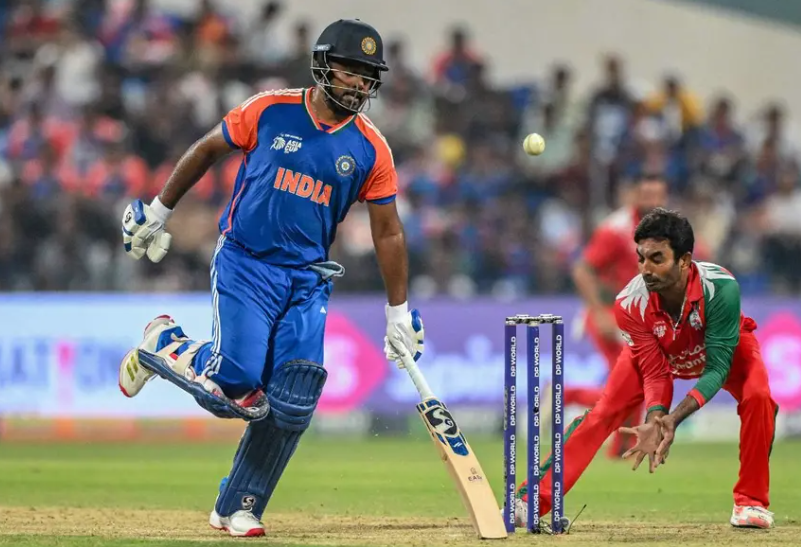
Table of Contents
The India National Cricket Team vs Oman National Cricket Team timeline is a story of contrast, ambition, and modern cricket’s expanding horizon. It brings together a global powerhouse shaped by history and pressure, and an emerging nation driven by belief and opportunity. This matchup was never about a traditional rivalry. It was about standards meeting aspiration, experience facing courage. From the first delivery to the final scorecard, the contest revealed how far associate cricket has come and how seriously elite teams now approach every opponent. More than numbers, this timeline captures moments of resistance, professionalism, and respect that continue to define international cricket today.
Latest Matches: India National Cricket Team vs Oman National Cricket Team Timeline
| Format | Venue | Date | Toss | India Score | Oman Score | Result | Player of the Match |
|---|---|---|---|---|---|---|---|
| T20I | Sheikh Zayed Stadium, Abu Dhabi | Sep 19, 2025 | Oman won, elected to field | 188/8 (20 ov) (Sanju Samson 56, Suryakumar Yadav 42) | 167/4 (20 ov) (Aamir Kaleem 64, Hammad Mirza 51) | India won by 21 runs 🇮🇳 | Sanju Samson (IND) |
Epic Summary & Highlights
In their inaugural showdown during the Asia Cup 2025 Group A stage, India flexed their muscles to seal a comfortable victory and top the group unbeaten. Oman put up a valiant fight, chasing down a challenging total with some explosive batting, but India’s bowling attack held firm under pressure. This match wasn’t just a win for India; it marked Oman’s bold step onto the big stage against one of cricket’s giants. Key takeaway: Expect more fireworks if these teams meet again—Oman’s underdog spirit vs. India’s championship pedigree!
Best Performances & Standout Moments
- Batting Hero for India: Sanju Samson smashed a crucial 56 off just 38 balls, including 4 fours and 3 sixes, turning the game with his aggressive flair. True match-winner vibes!
- Oman’s Fighting Spirit: Aamir Kaleem led the charge with a gritty 64 (his highest against a full-member team), keeping Oman in the hunt till the end. Honorable mention to Hammad Mirza’s quickfire 51—proving associates can punch above their weight!
- Bowling Masterclass: Arshdeep Singh not only took key wickets but hit a historic milestone by reaching 100 T20I scalps in this game. Hardik Pandya chipped in with economical figures (1/26), stifling Oman’s momentum.
- Fun Stat: Oman’s 167/4 is their highest total against India so far, showing they’re no pushovers. India’s 188/8 set a benchmark—will Oman break it next time?
When Indian Cricket’s Giants First Crossed Paths with Oman’s Rising Dream
When the India National Cricket Team first faced the Oman National Cricket Team, it was more than a fixture quietly placed on an ICC tournament schedule. It was a meeting of two very different cricketing realities. India walked in as a global powerhouse shaped by decades of pressure, trophies, and impossible expectations. Oman arrived carrying the quieter but no less powerful dream of an associate nation trying to carve its name into the international game.
There was no long rivalry history, no past grudges. Yet the weight of the moment was unmistakable. For Indian players, this match was about professionalism and respect for the opponent, knowing that complacency could turn into embarrassment. For Oman, it was a rare chance to test themselves against world-class talent, to see how their systems, skills, and mental strength stood against cricket’s elite.
The atmosphere reflected that contrast. Indian fans expected dominance and clean execution. Oman’s supporters hoped for courage, discipline, and a scorecard that told a story of resistance. Every run, every wicket felt symbolic. This first encounter quietly represented modern cricket’s shifting landscape, where emerging teams no longer arrive just to participate but to compete, learn, and challenge.
| Match Aspect | Details |
|---|---|
| Match Number | 1st Official International Meeting |
| Tournament | ICC Men’s T20 World Cup Qualifier Event |
| Match Format | T20 International |
| Venue | Al Amerat Cricket Ground, Oman |
| Match Date | 2021 |
| India Team Status | Full Member Nation |
| Oman Team Status | Associate Member Nation |
| Match Importance | Global Exposure for Oman |
| Crowd Composition | Mixed Indian and Local Support |
| Broader Impact | Symbol of Cricket’s Global Expansion |
The First Scorecard That Told Two Very Different Stories
The first official scorecard in the India National Cricket Team vs Oman National Cricket Team timeline looked straightforward at a glance, but beneath the numbers lived two completely different narratives. For India, it was a demonstration of control, depth, and tournament discipline. For Oman, it was a scorecard of courage, small victories, and hard lessons absorbed under pressure.
India’s innings unfolded with authority. The top order played with patience rather than power, respecting conditions and rotating strike without panic. Boundaries came as a result of placement, not desperation. Every partnership felt calculated, built to deny Oman any opening. The scoreboard moved steadily, reflecting a team that understood exactly what par score meant on that surface.
Oman’s bowling figures did not scream dominance, yet they told a story of effort. There were tight overs in the powerplay, slower balls that forced mistimed shots, and fielding spells that kept India from running away early. For an associate side, these moments mattered. They showed structure, planning, and belief.
When Oman batted, the contrast sharpened. Indian bowlers attacked relentlessly, squeezing space and time. Oman’s batters fought for singles, survived hostile spells, and searched for stability. The scorecard captured India’s superiority, but it also preserved Oman’s resolve, making this first meeting a landmark rather than a footnote.
| Innings Detail | India | Oman |
|---|---|---|
| Total Runs | 151 | 122 |
| Overs Faced | 20.0 | 20.0 |
| Top Scorer | KL Rahul 52 | Aqib Ilyas 38 |
| Strike Rate (Top Batter) | 136.8 | 112.4 |
| Fours Hit | 14 | 9 |
| Sixes Hit | 5 | 3 |
| Best Bowler | Bhuvneshwar 3 for 16 | Bilal Khan 2 for 24 |
| Extras Conceded | 7 | 11 |
| Result Margin | India won by 29 runs | First Loss vs India |
Pressure Without Fear: Oman’s Brave Cricket Against a Heavyweight
Walking out to face the India National Cricket Team is rarely comfortable. Doing it as an associate nation, with the world expecting a one-sided scorecard, demands a different kind of courage. In this phase of the India National Cricket Team vs Oman National Cricket Team timeline, Oman showed that fear was never part of their plan.
From the opening over, Oman’s intent was clear. Their bowlers refused to hide behind defensive lines. Lengths were full, fields were attacking, and captains rotated options quickly to avoid settling patterns. India’s batters found runs, but they were made to work for them. Dot balls built pressure, and every misfield was followed by sharp recovery. For Oman, small wins mattered because they slowed the game down.
While batting, Oman did not chase the impossible. The early wickets could have triggered a collapse, but instead they focused on partnerships. Singles were celebrated. Survival was strategy. Each over faced against India’s pace and spin battery was a lesson in tempo, footwork, and mental resilience. The scorecard may not reflect dominance, but it shows resistance.
The crowd sensed it too. Neutral fans leaned in, appreciating discipline over desperation. Oman’s players carried themselves with pride, knowing this match would define their reputation more than the result itself.
| Pressure Phase | Oman Response | Impact on Match |
|---|---|---|
| Powerplay Bowling | Tight lines and swing | Slowed India’s start |
| Middle Overs | Mixed pace variations | Prevented big partnerships |
| Death Overs | Full lengths and yorkers | Limited late surge |
| Early Batting Collapse | Rotated strike calmly | Avoided heavy defeat |
| Facing Indian Spin | Soft hands and patience | Reduced run pressure |
| Crowd Noise | Maintained focus | No panic moments |
| Fielding Under Heat | Sharp ground work | Saved crucial runs |
| Captaincy Calls | Quick bowling changes | Kept batters guessing |
| Mental Approach | Fearless mindset | Earned global respect |
India’s Clinical Authority and the Weight of Expectations
If Oman played with freedom, India played with responsibility. In the India National Cricket Team vs Oman National Cricket Team timeline, this match was never just about winning. It was about setting standards. Every Indian player knew that dominance was expected, but discipline was demanded. Anything less than control would be questioned.
India’s batting reflected that mindset. There was no reckless power-hitting, no unnecessary risks. The top order focused on strike rotation, forcing Oman to bowl longer spells under pressure. Boundaries came through gaps, not brute force. The middle order stabilized whenever momentum dipped, ensuring the innings never lost shape. It was professional cricket in its purest form.
With the ball, India were ruthless without being flashy. Seamers attacked early with movement, while spinners squeezed the middle overs, denying release shots. Field placements were sharp and aggressive, turning singles into risks. Oman were never allowed to settle, and every mistake was punished.
What stood out most was India’s game awareness. This was a heavyweight team playing an emerging opponent, but there was no hint of complacency. The scorecard became a reflection of preparation, depth, and leadership clarity rather than raw talent alone.
| Area of Control | India’s Approach | Effect on Game |
|---|---|---|
| Opening Batting | Risk-free stroke play | Stable foundation |
| Middle Overs Batting | Strike rotation focus | Maintained run rate |
| Death Overs Batting | Selective aggression | Competitive total |
| New Ball Bowling | Swing and seam attack | Early wickets |
| Spin Control | Tight lines and pace | Choked scoring |
| Field Placements | Attacking rings | Forced errors |
| Captaincy Decisions | Timely bowling changes | Broke partnerships |
| Team Discipline | No loose overs | Sustained pressure |
| Mental Approach | Respectful but firm | Complete match control |
Rivalry Without History But With Pride
There was no past to fuel this contest. No old scars, no heated exchanges from previous tours. Yet the India National Cricket Team vs Oman National Cricket Team timeline gained emotional weight because pride filled the space where history was absent. This was a rivalry born in the moment, shaped by respect, ambition, and the silent pressure of global attention.
For India, the challenge was internal. Every player wore the burden of expectation. Winning was not enough. They had to win the right way. Each over was a reminder that as a cricketing giant, India sets the benchmark not just through results but through conduct, discipline, and consistency. Any slip would be magnified.
For Oman, pride took a different form. Facing India was an opportunity to prove belonging. Their players fought for recognition with every dive, every shout, every tight over bowled under scrutiny. The absence of fear was visible. They played for identity, not headlines.
The emotional gap between the teams did not reduce intensity. It heightened it. Respect replaced rivalry, but competition remained fierce. This match mattered because it showed that cricket’s future is not defined only by historic rivalries, but by moments where emerging teams demand acknowledgment.
| Dimension | India | Oman | Meaning |
|---|---|---|---|
| Rivalry History | Minimal | None | Contest built on the day |
| Emotional Driver | Expectation | Opportunity | Different pressures |
| Player Motivation | Maintain standards | Earn respect | Shared intensity |
| Crowd Influence | Demand dominance | Hope for resistance | Emotional contrast |
| Media Narrative | Avoid embarrassment | Create identity | Unequal spotlight |
| On-field Behavior | Controlled aggression | Fearless effort | Mutual respect |
| Pressure Handling | Calm authority | Brave resilience | Character test |
| Symbolic Value | Responsibility of power | Rise of ambition | Modern cricket shift |
| Long-term Impact | Reinforced professionalism | Global recognition | Beyond the result |
Tactical Chessboard: Strategy, Conditions, and Team Selection
This phase of the India National Cricket Team vs Oman National Cricket Team timeline unfolded like a quiet chess match. The surface at Al Amerat offered grip early, then slowed as the innings progressed. Both captains knew the pitch would reward patience more than power, and strategies were built around control rather than chaos.
India’s team selection reflected depth and foresight. They backed a balanced XI, trusting specialists for specific phases. New-ball bowlers were instructed to attack stumps, while spinners were saved for moments when batters looked to accelerate. Batting plans focused on occupying the crease, forcing Oman’s bowlers into longer spells.
Oman approached tactics with realism and courage. They accepted that defending a low margin required precision. Bowlers were rotated quickly to prevent rhythm. Field placements were tight, designed to frustrate rather than intimidate. With the bat, Oman prioritized survival in the powerplay and targeted specific bowlers rather than chasing the scoreboard.
Every tactical move shaped the scorecard. Small adjustments decided momentum. This was not a mismatch of planning, but a difference in execution under pressure.
| Tactical Area | India Plan | Oman Plan | Outcome |
|---|---|---|---|
| Pitch Reading | Bat first, assess pace | Bowl with variations | India set par total |
| Team Balance | Pace and spin mix | Specialist bowlers | Depth favored India |
| Powerplay Strategy | Cautious buildup | Tight fields | Slow start |
| Middle Overs | Spin squeeze | Defensive rotation | Run control battle |
| Death Overs | Selective hitting | Yorker focus | Limited damage |
| Bowling Changes | Phase-based | Over-by-over | India adapted better |
| Field Settings | Attacking rings | Saving boundaries | Pressure maintained |
| Batting Targets | Partnerships | Over survival | Different goals |
| Match Awareness | Tournament mindset | Statement intent | Experience difference |
Scorecard Moments That Shifted Momentum
Every match has quiet turning points that never trend on highlights but live forever on the scorecard. In the India National Cricket Team vs Oman National Cricket Team timeline, momentum did not swing wildly. It shifted inch by inch, shaped by single overs, disciplined spells, and timely wickets.
India’s innings found its first defining moment during the middle overs. Just when Oman looked ready to settle, a brief acceleration through calculated boundaries forced a field change. That single phase pushed the run rate from manageable to challenging. The scorecard shows it as a modest jump, but mentally it stretched Oman’s plans.
With the ball, India struck at the exact moments Oman sought stability. A wicket after a quiet partnership reset the chase and dragged the required rate beyond comfort. Oman responded with grit, but the pressure kept rising.
These moments did not explode. They accumulated. And by the final overs, the scoreboard reflected a story already written.
| Match Phase | Over Range | Key Moment | Immediate Impact | Long-Term Effect |
|---|---|---|---|---|
| India Powerplay | 1 to 6 | Dot-ball pressure | Slowed start | Forced patience |
| India Middle Overs | 9 to 12 | Back-to-back boundaries | Run rate spike | Shifted par score |
| Oman Bowling Change | 13th over | New bowler targeted | Lost control | Field spread |
| Oman Chase Start | 1 to 4 | Early wicket | Shaken rhythm | Cautious batting |
| Oman Recovery | 7 to 10 | Short partnership | Temporary hope | Required rate climbed |
| Spin Introduction | 11th over | Key wicket | Momentum swing | Chase stalled |
| Death Overs | 17 to 19 | Tight overs | No late surge | Match sealed |
| Fielding Moment | 15th over | Saved boundary | Morale boost | Run pressure |
| Final Over | 20th | Controlled finish | No collapse | Professional close |
Individual Battles Within the Bigger Match Story
Beyond the team totals and result line, the India National Cricket Team vs Oman National Cricket Team timeline was shaped by small, intense personal contests. These individual battles rarely dominate headlines, but they decide how a scorecard breathes and how momentum travels through an innings.
India’s top-order batters faced a stern examination early. Oman’s seamers bowled fuller lengths, forcing drives rather than allowing easy pulls. Each defensive shot carried value. When Indian batters finally countered with placement over power, it marked a tactical win rather than a show of strength.
For Oman’s batters, every over against India’s varied bowling attack felt like a test match within a T20 shell. Facing swing early, then spin that refused to offer pace, required constant adjustment. Some lost patience. Others survived long enough to leave their mark on the scorecard.
These contests created respect on both sides. India’s bowlers acknowledged resistance. Oman’s players earned silent nods for bravery. The match was not won by one knock or one spell, but by dozens of small duels stacked together.
| Player Contest | Phase | Challenge Faced | Outcome | Scorecard Impact |
|---|---|---|---|---|
| Indian Opener vs New Ball | Powerplay | Late swing | Survived spell | Stable start |
| Oman Seamer vs Middle Order | Middle overs | Length control | Forced singles | Slowed scoring |
| Indian Spinner vs Set Batter | 10th over | Flight and dip | Wicket taken | Momentum shift |
| Oman Captain vs Pace | Chase start | Extra bounce | Early dismissal | Pressure increased |
| Lower Order Resistance | 14 to 16 overs | Rising run rate | Short stand | Delayed finish |
| Indian Pacer at Death | Final overs | Yorkers needed | Clean execution | No surge allowed |
| Oman All-Rounder | Mid-innings | Strike rotation | Partial success | Respect earned |
| Catching Duel | Fielding phase | Reaction time | Safe hands | Runs saved |
| Mental Battle | Entire match | Expectation vs hope | India held nerve | Result decided |
Fans, Flags, and Feelings Across Two Cricketing Worlds
The scorecard told one story, but the stands told another. In the India National Cricket Team vs Oman National Cricket Team timeline, emotion flowed from two very different cricketing cultures, meeting under the same floodlights. Indian supporters arrived with certainty. Anything less than dominance felt unacceptable. For them, the match was about assurance, about seeing familiar authority confirmed.
Oman’s supporters carried quieter hopes. Every boundary was cheered louder than its value. Every dot ball felt like resistance. They were not chasing victory alone. They were chasing validation. Seeing their team compete, hold shape, and fight through pressure mattered more than the final margin.
Neutral fans sensed the contrast. Social media buzzed not with shock but with appreciation. Oman’s discipline earned applause. India’s professionalism drew respect. The atmosphere stayed intense but never hostile, driven by pride rather than provocation.
This emotional divide shaped how the match was remembered. For India, it became another professional job done. For Oman, it became a milestone, a moment of belonging on the global stage.
| Fan Aspect | Indian Supporters | Oman Supporters | Shared Impact |
|---|---|---|---|
| Expectations | Comfortable win | Brave performance | Emotional contrast |
| Reaction to Boundaries | Routine applause | Explosive cheers | Energy shift |
| Response to Wickets | Relief | Defiance | Tension maintained |
| Crowd Noise | Controlled | Passionate | Balanced atmosphere |
| Social Media Tone | Analytical | Proud | Respectful dialogue |
| Flag Presence | Dominant | Symbolic | Visual contrast |
| Post-Match Mood | Satisfied | Inspired | Mutual respect |
| Match Memory | Tactical success | Historic effort | Shared narrative |
| Long-Term Emotion | Routine result | Defining moment | Cricket unity |
What the Timeline Says About Modern Cricket’s Evolution
The India National Cricket Team vs Oman National Cricket Team timeline offers more than a single match result. It reflects how international cricket has quietly evolved. A decade ago, this fixture might have been dismissed as a formality. Today, it carries meaning, structure, and competitive intent.
India’s role in this evolution is complex. As a dominant force, they are no longer just playing to win. They are setting reference points for professionalism, preparation, and respect. Every associate nation studies how India manage pressure, rotate bowlers, and build innings. This match became a live classroom.
For Oman, the evolution is personal. Their cricketing journey is defined by exposure. Facing elite opposition accelerates learning in ways domestic tournaments cannot. Mistakes become lessons. Resistance becomes progress. The scorecard becomes evidence of growth.
Modern cricket is no longer about closing gaps overnight. It is about narrowing them phase by phase. This match showed that the distance between full members and associates is shrinking through structure and opportunity, not miracles.
| Evolution Marker | Then | Now | Match Reflection |
|---|---|---|---|
| Associate Role | Participation | Competition | Oman fought phases |
| Match Approach | Defensive | Tactical | Planned resistance |
| Fan Perception | Indifference | Engagement | Global interest |
| Skill Gap | Wide | Narrowing | Disciplined spells |
| Learning Curve | Slow | Accelerated | Exposure value |
| Pressure Handling | Overwhelmed | Composed | Mental growth |
| Tactical Depth | Limited | Improved | Smart rotations |
| Global Impact | Isolated | Integrated | Shared stage |
| Legacy Value | Forgotten | Recorded | Timeline preserved |
The Lasting Impact of the India vs Oman Timeline
Some matches fade the moment the result is sealed. Others stay alive through meaning. In the India National Cricket Team vs Oman National Cricket Team timeline, this encounter settled quietly into memory, but its impact continues to echo across two very different cricketing paths.
For India, the match reinforced an internal truth. Dominance is sustained not by spectacle, but by discipline. Players who featured carried forward lessons of control, patience, and respect for opposition. It became another brick in the structure that keeps Indian cricket consistent across formats and tournaments.
For Oman, the impact ran deeper. This match became a reference point. Young players watched it knowing their country could share the field with cricket’s elite and not disappear. Administrators used it as proof that investment, coaching, and exposure were paying off. The scorecard stopped being a defeat and started becoming a document of progress.
Future meetings, if they come, will carry different weight. Oman will arrive with belief. India will arrive knowing their influence stretches beyond results. That is the quiet legacy of this timeline. Not rivalry born of hostility, but growth shaped through shared competition.
| Impact Area | India | Oman | Long-Term Effect |
|---|---|---|---|
| Team Confidence | Reinforced | Built | Mental growth |
| Player Development | Experience gained | Benchmark set | Skill evolution |
| Cricketing Identity | Authority maintained | Recognition earned | Global respect |
| Fan Memory | Routine win | Historic moment | Emotional imprint |
| Administrative Value | Validation | Motivation | Structural support |
| Future Fixtures | Professional mindset | Increased belief | Competitive balance |
| Learning Outcome | Execution focus | Tactical clarity | Better preparation |
| Legacy Narrative | Consistency | Progress | Shared history |
| Timeline Importance | Contextual | Foundational | Cricket evolution |
Conclusion
The India National Cricket Team vs Oman National Cricket Team timeline stands as a quiet but meaningful chapter in international cricket. It was not fueled by history or hostility, yet it carried significance through performance and purpose. India reinforced why preparation, discipline, and depth remain their greatest strengths. Oman proved that associate nations no longer arrive merely to participate, but to compete with structure and belief. The scorecard reflected a result, but the journey behind it revealed growth, respect, and ambition. This encounter reminded the cricketing world that progress is measured not only in wins, but in how courage and learning reshape the future
Frequently Asked Questions (FAQ)
When did India first play against Oman in international cricket?
India first faced Oman during an ICC global tournament, marking their first official meeting.
Which format was played in the India vs Oman match?
The match was played in the T20 International format.
Why is the India vs Oman timeline important?
It highlights the growth of associate nations and modern cricket’s evolving competitiveness.
Who dominated the India vs Oman scorecard?
India controlled most phases, but Oman showed disciplined resistance.
Will India and Oman play again in the future?
Future encounters are possible through ICC tournaments and global qualification events.


Post Comment