India National Cricket Team vs Sri Lanka National Cricket Team Timeline
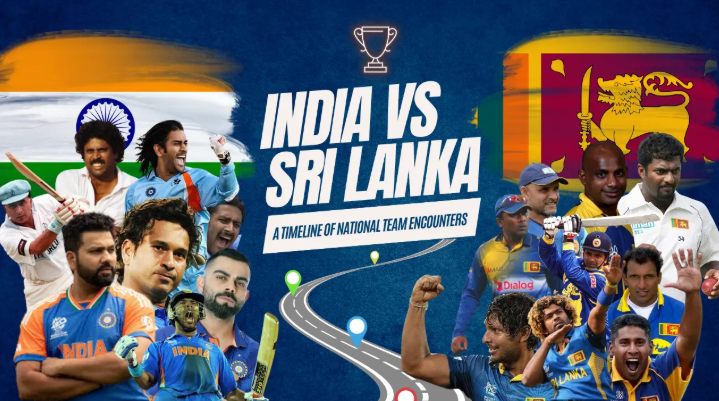
Table of Contents
The India national cricket team vs Sri Lanka national cricket team timeline is not just a sequence of matches. It is a story of two neighboring nations growing into their cricketing identities side by side. What began as respectful, uneven contests slowly transformed into a rivalry shaped by belief, innovation, and unforgettable moments. Across Tests, ODIs, and T20s, this timeline captures shifting power, iconic players, dramatic scorecards, and emotional turning points. From early lessons to World Cup nights and modern clashes, every encounter added a new layer. Together, India and Sri Lanka helped define Asian cricket, proving that rivalry can be fierce, competitive, and deeply respectful at the same time.
Latest Matches: India National Cricket Team vs Sri Lanka National Cricket Team Timeline
| Tournament/Series | Venue | Date | Toss | India Score | Sri Lanka Score | Result | Player of the Match |
|---|---|---|---|---|---|---|---|
| Asia Cup (Super 4) | Dubai International Cricket Stadium, Dubai | Sep 26, 2025 | Sri Lanka | 202/5 | 202/5 | Tie (India won Super Over) Nissanka’s ton forces drama! | Pathum Nissanka (SL) – 107 |
| India in Sri Lanka ODI Series | R. Premadasa Stadium, Colombo | Aug 7, 2024 | Sri Lanka | 138 (all out) | 248/7 | Sri Lanka won by 110 runs Vandersay’s spin demolition! | Jeffrey Vandersay (SL) – 6/33 |
| India in Sri Lanka ODI Series | R. Premadasa Stadium, Colombo | Aug 4, 2024 | India | 208 (all out) | 240/9 | Sri Lanka won by 32 runs Fernando’s near-ton edges it! | Avishka Fernando (SL) – 96 |
| India in Sri Lanka ODI Series | R. Premadasa Stadium, Colombo | Aug 2, 2024 | Sri Lanka | 230 (all out) | 230/8 | Tie Last-over heartbreak for both! | N/A (Tie) |
| India in Sri Lanka T20I Series | Pallekele International Cricket Stadium, Pallekele | Jul 30, 2024 | Sri Lanka | 137/9 | 137/8 | Tie (India won Super Over) Yadav’s boundary seals SO! | Suryakumar Yadav (IND) |
| India in Sri Lanka T20I Series | Pallekele International Cricket Stadium, Pallekele | Jul 28, 2024 | India | 81/3 (6.3 ov, DLS target 78) | 161/9 | India won by 7 wickets (DLS) Bishnoi’s wickets in rain chaos! | Ravi Bishnoi (IND) – 3/26 |
| India in Sri Lanka T20I Series | Pallekele International Cricket Stadium, Pallekele | Jul 27, 2024 | Sri Lanka | 213/7 | 170 (all out) | India won by 43 runs Jaiswal blasts off! | Yashasvi Jaiswal (IND) – 40 off 21 |
| ICC Cricket World Cup | Wankhede Stadium, Mumbai | Nov 2, 2023 | Sri Lanka | 357/8 | 55 (all out) | India won by 302 runs Shami’s fifer crushes SL! | Mohammed Shami (IND) – 5/18 |
| Asia Cup (Final) | R. Premadasa Stadium, Colombo | Sep 17, 2023 | Sri Lanka | 51/0 | 50 (all out) | India won by 10 wickets Siraj’s 6-fer, SL skittled! | Mohammed Siraj (IND) – 6/21 |
| Asia Cup (Super 4) | R. Premadasa Stadium, Colombo | Sep 12, 2023 | India | 213 (all out) | 172 (all out) | India won by 41 runs Kuldeep’s magic turn! | Kuldeep Yadav (IND) – 4/43 |
| Sri Lanka in India ODI Series | Greenfield International Stadium, Thiruvananthapuram | Jan 15, 2023 | India | 390/5 | 73 (all out) | India won by 317 runs Kohli’s unbeaten epic! | Virat Kohli (IND) – 166* |
| Sri Lanka in India ODI Series | Eden Gardens, Kolkata | Jan 12, 2023 | Sri Lanka | 219/6 | 215 (all out) | India won by 4 wickets Rahul’s steady chase! | KL Rahul (IND) – 64* |
| Sri Lanka in India ODI Series | Barsapara Cricket Stadium, Guwahati | Jan 10, 2023 | Sri Lanka | 373/7 | 306/8 | India won by 67 runs Twin tons from Rohit & Kohli! | Virat Kohli (IND) – 113 |
| Sri Lanka in India T20I Series | Saurashtra Cricket Association Stadium, Rajkot | Jan 7, 2023 | India | 228/5 | 137 (all out) | India won by 91 runs Yadav’s T20 blaze! | Suryakumar Yadav (IND) – 112* |
| Sri Lanka in India T20I Series | Maharashtra Cricket Association Stadium, Pune | Jan 5, 2023 | India | 190/8 | 206/6 | Sri Lanka won by 16 runs Shanaka’s power show! | Dasun Shanaka (SL) – 56* & 2/20 |
The First Scorecards That Spoke of a Gap
As the India national cricket team vs Sri Lanka national cricket team timeline moved forward, the early scorecards began telling a clear and uncomfortable truth. This was not yet a rivalry built on balance. It was a phase of distance. India walked into most encounters as the senior side, armed with Test experience, deeper benches, and players hardened by long battles against the world’s best. Sri Lanka, still carving its place on the global stage, often found itself chasing the game before it had truly begun.
India’s strength during this period lay in structure. Solid opening partnerships, classical middle order batting, and disciplined spin bowling allowed them to control tempo. Sri Lanka showed flashes of flair, especially in limited overs cricket, but consistency remained elusive. A collapse after a promising start became a familiar story on the scorecard. For India, victories were professional rather than emotional. For Sri Lanka, defeats became classrooms.
Yet, these lopsided results carried hidden importance. Sri Lanka’s batters started learning how to play long innings. Their bowlers experimented with flight, pace variation, and angles against Indian technique. Every defeat added detail to their understanding of pressure. India, meanwhile, began noticing that Sri Lanka never stopped fighting, even when the numbers looked bleak.
The gap was real, but it was not permanent. These scorecards were not endpoints. They were early chapters that quietly prepared Sri Lanka for the moment when the balance would finally shift.
| Year | Format | Venue | India Score | Sri Lanka Score | Result | Key Indian Contribution | Key Sri Lankan Contribution |
|---|---|---|---|---|---|---|---|
| 1975 | ODI World Cup | Manchester | 230 all out | 205 all out | India won by 25 runs | Sunil Gavaskar 92 | Roy Dias 62 |
| 1979 | ODI World Cup | Manchester | 191 all out | 238 all out | Sri Lanka won by 47 runs | Kapil Dev 33 and 2 wkts | Sidath Wettimuny 128 |
| 1982 | Test | Chennai | 300 and 345 | 176 and 236 | India won by innings | Viswanath 71 | Duleep Mendis 56 |
| 1983 | ODI | Kanpur | 225 all out | 200 all out | India won by 25 runs | Ravi Shastri 58 | Aravinda de Silva 43 |
| 1984 | ODI Asia Cup | Sharjah | 245 for 6 | 200 for 8 | India won by 45 runs | Sandeep Patil 65 | Arjuna Ranatunga 51 |
| 1985 | ODI | Sharjah | 205 all out | 210 for 7 | Sri Lanka won by 3 wkts | Mohinder Amarnath 44 | Arjuna Ranatunga 63 |
| 1986 | Test | Colombo | 279 and 296 | 206 and 190 | India won by 179 runs | Dilip Vengsarkar 102 | Rumesh Ratnayake 5 wkts |
1979 The Match That Changed How India Looked at Sri Lanka
In the long India national cricket team vs Sri Lanka national cricket team timeline, 1979 stands as the moment perception shifted. Until then, Sri Lanka had been competitive but rarely threatening. That changed on a grey Manchester afternoon during the World Cup, when Sri Lanka did not just beat India, they outplayed them with authority. The result shocked Indian supporters and, more importantly, jolted the Indian dressing room.
Sidath Wettimuny’s fearless century was not just a personal milestone. It was a declaration. Sri Lanka batted with intent, clarity, and confidence that had not been seen before against India. Their bowlers followed it up with discipline, exposing India’s vulnerability against swing and tight lines. The scorecard told a story India had not prepared for. This was no longer a learning opponent.
For Sri Lanka, that win became identity-defining. It validated years of effort and sacrifice. Players walked off believing they belonged at the highest level. For India, it became a warning shot. Matches against Sri Lanka could no longer be approached casually. Preparation, respect, and tactical sharpness became non negotiable.
This was not the birth of hostility, but it was the birth of caution. From this point onward, every encounter carried a quiet edge. The rivalry had not yet become loud, but it had become serious. And once seriousness enters cricket, rivalry is never far behind.
| Year | Tournament | Venue | India Score | Sri Lanka Score | Result | Match Defining Moment | Standout Performer |
|---|---|---|---|---|---|---|---|
| 1979 | ODI World Cup | Manchester | 191 all out | 238 all out | Sri Lanka won by 47 runs | Dominant opening stand | Sidath Wettimuny 128 |
| 1978 | ODI | Colombo | 212 all out | 180 all out | India won by 32 runs | Middle order resistance | Gundappa Viswanath 60 |
| 1981 | ODI | Kanpur | 230 for 6 | 224 all out | India won by 6 runs | Tight death overs | Kapil Dev 3 wkts |
| 1982 | Test | Chennai | 300 and 345 | 176 and 236 | India won by innings | Sustained pressure | Dilip Vengsarkar 102 |
| 1983 | ODI World Cup | Manchester | 238 for 9 | 216 all out | India won by 22 runs | Controlled chase defense | Madan Lal 3 wkts |
| 1984 | Asia Cup | Sharjah | 245 for 6 | 200 for 8 | India won by 45 runs | Experience under lights | Ravi Shastri 58 |
| 1985 | ODI | Sharjah | 205 all out | 210 for 7 | Sri Lanka won by 3 wkts | Calm finish | Arjuna Ranatunga 63 not out |
1996 The Year Power Shifted Forever
No chapter in the India national cricket team vs Sri Lanka national cricket team timeline carries more emotional weight than 1996. What had been a competitive rivalry suddenly turned seismic. The World Cup did not just crown a champion. It altered how Asian cricket saw itself, and how India and Sri Lanka looked at each other forever.
Sri Lanka arrived fearless. Sanath Jayasuriya and Romesh Kaluwitharana tore through bowling attacks with a powerplay approach that felt revolutionary. India, still rooted in traditional tempo control, struggled to contain the chaos. Scorecards from this tournament tell a brutal story of momentum. Sri Lanka dominated starts. India spent matches chasing the game far too early.
The semifinal at Eden Gardens remains etched into memory. Pressure crushed India’s middle order as wickets fell in clusters. The crowd, once hopeful, turned restless, then angry. The match ended not with applause but confusion and heartbreak. Sri Lanka walked off not just winners, but transformed. They were no longer uncomfortable opponents. They were champions in waiting.
For India, 1996 forced introspection. Batting depth, finishing ability, and mental resilience became talking points. For Sri Lanka, belief turned into identity. From this point on, every encounter carried emotional residue. Wins meant validation. Losses cut deeper. The rivalry had crossed a line. It was no longer polite competition. It had become personal, intense, and unforgettable.
| Match | Tournament Stage | Venue | India Score | Sri Lanka Score | Result | Turning Point | Standout Performer |
|---|---|---|---|---|---|---|---|
| India vs Sri Lanka | Group Match | Delhi | 271 for 3 | 251 all out | India won by 20 runs | Sachin Tendulkar century | Sachin Tendulkar 137 |
| India vs Sri Lanka | Semifinal | Kolkata | 120 all out | 251 for 8 | Sri Lanka won | Middle order collapse | Aravinda de Silva 66 |
| Sri Lanka vs India | Asia Cup | Colombo | 271 for 6 | 267 for 4 | India won by 4 runs | Tight final over | Anjum Bhani 3 wkts |
| Sri Lanka vs India | Singer Cup Final | Colombo | 215 all out | 219 for 3 | Sri Lanka won | Aggressive opening | Jayasuriya 44 |
| Sri Lanka vs India | Tri Series | Sharjah | 245 for 7 | 249 for 5 | Sri Lanka won by 5 wkts | Calm chase | Arjuna Ranatunga 55 not out |
| Sri Lanka vs India | ODI | Colombo | 225 all out | 229 for 6 | Sri Lanka won | Controlled finish | Aravinda de Silva 58 |
| India vs Sri Lanka | Test | Colombo | 279 and 287 | 304 and 263 | Sri Lanka won by 1 wicket | Historic chase | Arjuna Ranatunga 35 |
Sachin, Jayasuriya, and the Battle of Generations
As the India national cricket team vs Sri Lanka national cricket team timeline moved beyond 1996, the rivalry found faces. It became personal without ever turning ugly. At the center stood two men who could not have been more different yet defined the same era. Sachin Tendulkar represented precision, balance, and classical control. Sanath Jayasuriya embodied chaos, strength, and fearless acceleration. Every match between India and Sri Lanka felt like a referendum on which philosophy would win.
Sachin batted with patience, constructing innings brick by brick. Against Sri Lanka, he often played the anchor role, absorbing early pressure and dictating tempo through placement rather than power. Jayasuriya did the opposite. He attacked from ball one, turning fielding restrictions into weapons. Indian bowlers were forced into defensive lines far earlier than planned.
Scorecards from this period swing wildly. When Sachin stayed deep, India usually posted or chased winning totals. When Jayasuriya fired early, Sri Lanka seized control within the first ten overs. Fans watched with divided loyalties and rising tension. A quiet contest of minds played out within a loud stadium.
This was not just batter versus batter. It was about influence. Sachin calmed Indian nerves. Jayasuriya unsettled opponents before the game settled. Their duels shaped tactics, bowling selections, and even field placements. The rivalry matured here, driven by greatness rather than resentment.
| Year | Format | Venue | India Score | Sri Lanka Score | Result | Sachin Tendulkar | Sanath Jayasuriya |
|---|---|---|---|---|---|---|---|
| 1996 | World Cup Group | Delhi | 271 for 3 | 251 all out | India won by 20 runs | 137 | 79 |
| 1997 | Asia Cup | Colombo | 227 for 6 | 228 for 4 | Sri Lanka won by 6 wkts | 53 | 63 |
| 1998 | Singer Cup | Sharjah | 316 for 6 | 287 all out | India won | 143 | 48 |
| 1999 | ODI | Colombo | 238 all out | 239 for 6 | Sri Lanka won | 69 | 24 |
| 2000 | Asia Cup | Dhaka | 205 all out | 209 for 7 | Sri Lanka won | 42 | 51 |
| 2001 | Test | Colombo | 279 and 287 | 304 and 263 | Sri Lanka won by 1 wicket | 16 and 60 | 41 and 0 |
| 2003 | World Cup | Durban | 292 for 7 | 109 all out | India won | 113 not out | 18 |
Spin Wars and Subcontinent Mind Games
As the India national cricket team vs Sri Lanka national cricket team timeline moved deeper into the late 1990s and 2000s, batting duels slowly gave way to a quieter, more brutal contest. Spin became the language of dominance. Matches were no longer decided in the first ten overs but in long, suffocating spells where patience cracked and pride was tested.
Muttiah Muralitharan stood at the center of this era. His variations were endless, his control unsettling. Indian batters prepared obsessively, yet scorecards often showed familiar patterns a steady start followed by a collapse once Murali found rhythm. India responded with their own masters. Anil Kumble’s relentless accuracy and Harbhajan Singh’s sharp turn changed matches session by session rather than ball by ball.
These contests were cerebral. Captains placed fields to invite mistakes. Batters fought internal battles, knowing one loose stroke could undo hours of work. Runs came hard. Wickets felt expensive. Crowds fell silent as spells unfolded, then erupted at breakthroughs.
The scorecards from this phase are deceptive. Modest totals hide immense pressure. Five wicket hauls carried more weight than centuries. The rivalry matured again, shifting from spectacle to strategy. In these spin wars, victory belonged not to flair, but to the team that could think longer, wait better, and break last.
| Year | Format | Venue | India Score | Sri Lanka Score | Result | Key Spin Performance | Match Impact |
|---|---|---|---|---|---|---|---|
| 1998 | Test | Kandy | 320 and 270 | 485 | Sri Lanka won | Muralitharan 9 wkts | Match control |
| 2001 | Test | Colombo | 279 and 287 | 304 and 263 | Sri Lanka won by 1 wkt | Muralitharan 8 wkts | Final day pressure |
| 2002 | Test | Galle | 279 | 378 | Sri Lanka won | Muralitharan 7 wkts | Spin dominance |
| 2003 | Test | Mumbai | 557 | 154 and 196 | India won by innings | Kumble 6 wkts | One sided |
| 2005 | ODI | Dambulla | 206 all out | 209 for 6 | Sri Lanka won | Jayasuriya 2 wkts | Tight chase |
| 2007 | Test | Colombo | 329 and 269 | 329 and 170 | India won by 159 runs | Kumble 6 wkts | Tactical patience |
| 2009 | ODI | Colombo | 256 for 8 | 251 all out | India won by 5 runs | Harbhajan 4 wkts | Death over squeeze |
Test Matches That Broke Bodies and Minds
In the long India national cricket team vs Sri Lanka national cricket team timeline, Test cricket has been the truest examination of character. These matches were not about moments of brilliance alone. They were about survival. Heat, humidity, turning pitches, and endless sessions stripped players down to their mental core. Victory here meant more than a point on the table. It meant outlasting the opponent.
Sri Lanka’s home Tests became endurance trials. Long batting innings tested Indian bowlers’ patience, while Indian batters were forced to play late, soft, and smart against relentless spin. Matches stretched into fifth days where every run felt earned. Partnerships became lifelines. A single session could flip the scorecard completely.
India responded with resilience. Batters learned to trust defense again. Bowlers focused on discipline over magic. These games were slow burns, but the tension never dipped. Fans watched for hours, knowing one mistake could undo days of effort.
Some of these Tests ended in heartbreak, others in dominance, but all left scars. Cramped muscles, frayed tempers, and exhausted celebrations told their own stories. The scorecards from this era do not shout. They whisper tales of grit, patience, and pride. This was rivalry in its purest form.
| Year | Venue | India 1st Innings | Sri Lanka 1st Innings | India 2nd Innings | Sri Lanka 2nd Innings | Result | Defining Performance |
|---|---|---|---|---|---|---|---|
| 1997 | Colombo | 537 | 952 for 6 dec | Did not bat | Did not bat | Draw | Jayasuriya 340, Mahanama 225 |
| 2001 | Colombo | 279 | 304 | 287 | 263 | Sri Lanka won by 1 wkt | Muralitharan 8 wkts |
| 2002 | Galle | 279 | 378 | Did not bat | Did not bat | Sri Lanka won | Muralitharan 7 wkts |
| 2005 | Ahmedabad | 259 | 206 | 426 | 197 | India won by 259 runs | Dravid 110 |
| 2007 | Colombo | 329 | 329 | 269 | 170 | India won by 159 runs | Kumble 6 wkts |
| 2009 | Mumbai | 726 for 9 dec | 82 and 196 | Did not bat | Did not bat | India won by innings | Sehwag 293 |
| 2015 | Galle | 600 | 183 | Did not bat | Did not bat | India won | Kohli 103 |
ODI Clashes Where Nerves Decided Winners
When the India national cricket team vs Sri Lanka national cricket team timeline shifts to one day cricket, the tempo changes but the pressure multiplies. These matches were often decided not by skill alone, but by nerve. Chases tightened. Fields crept in. A single misfield or mistimed shot could flip the result in minutes. India and Sri Lanka produced some of the tensest ODI finishes the subcontinent has witnessed.
Sri Lanka thrived in these moments during the late 1990s and early 2000s. Calm finishers like Arjuna Ranatunga and later Mahela Jayawardene slowed the game down when panic threatened. India responded with aggressive middle order counterpunching, trusting players like Mohammad Azharuddin and later Yuvraj Singh to absorb pressure.
Scorecards from these games often show margins of five runs or less than a wicket. Death overs became psychological tests. Bowlers held their nerve or crumbled. Fans felt every delivery. Stadiums went quiet, then exploded, sometimes within the same over.
These ODI battles gave the rivalry its emotional edge. They were unpredictable, intense, and unforgettable. Unlike Tests, there was no tomorrow. Mistakes were final. And more often than not, the team that stayed calm under suffocating pressure walked away victorious.
| Year | Tournament | Venue | India Score | Sri Lanka Score | Result | Match Pressure Moment | Key Performer |
|---|---|---|---|---|---|---|---|
| 1988 | Asia Cup Final | Dhaka | 271 for 6 | 267 for 4 | India won by 4 runs | Last over defense | Ravi Shastri |
| 1996 | World Cup Group | Delhi | 271 for 3 | 251 all out | India won by 20 runs | Controlled chase | Sachin Tendulkar |
| 1997 | Asia Cup | Colombo | 227 for 6 | 228 for 4 | Sri Lanka won by 6 wkts | Calm finish | Arjuna Ranatunga |
| 1999 | ODI | Colombo | 238 all out | 239 for 6 | Sri Lanka won by 4 wkts | Final over chase | Jayawardene |
| 2002 | Champions Trophy | Colombo | 244 for 7 | 245 for 4 | Sri Lanka won | Nerve holding chase | Sanath Jayasuriya |
| 2008 | Asia Cup | Karachi | 249 for 7 | 250 for 6 | Sri Lanka won by 4 wkts | Late surge | Kumar Sangakkara |
| 2013 | Tri Series | Kingston | 275 for 5 | 278 for 8 | Sri Lanka won by 2 wkts | Final ball drama | Angelo Mathews |
Asia Cup Nights When Pride Outweighed Points
Few stages have amplified the India national cricket team vs Sri Lanka national cricket team timeline like the Asia Cup. These matches carried a different weight. Points mattered, trophies mattered, but pride mattered more. With familiar conditions, partisan crowds, and regional bragging rights at stake, every Asia Cup clash felt personal. There was no room for easing in. Intensity began at the toss.
Sri Lanka often treated these encounters as statements. Beating India in a multi nation Asian tournament carried symbolic power. Their approach was fearless yet calculated, especially in finals and knockout games. India, on the other hand, leaned on experience, trusting big match temperament and depth. The result was a series of tightly fought contests where momentum shifted repeatedly.
Crowds played their part. Noise surged with every boundary, then fell into nervous silence during tense chases. Captains slowed the game down, bowlers took extra seconds at the top of their marks, and batters focused on singles rather than glory shots. Asia Cup scorecards from this rivalry rarely show dominance. They show survival.
These nights sharpened the edge of the rivalry. Wins were celebrated loudly. Losses lingered. More than any bilateral series, the Asia Cup ensured that India vs Sri Lanka was never just another fixture. It was a contest for regional authority.
| Year | Match Type | Venue | India Score | Sri Lanka Score | Result | Pressure Moment | Match Hero |
|---|---|---|---|---|---|---|---|
| 1988 | Asia Cup Final | Dhaka | 271 for 6 | 267 for 4 | India won by 4 runs | Last over defense | Ravi Shastri |
| 1997 | Asia Cup Group | Colombo | 227 for 6 | 228 for 4 | Sri Lanka won by 6 wkts | Calm chase | Arjuna Ranatunga |
| 2000 | Asia Cup Final | Dhaka | 205 all out | 209 for 7 | Sri Lanka won by 3 wkts | Late order composure | Jayawardene |
| 2004 | Asia Cup Group | Colombo | 271 for 6 | 246 all out | India won by 25 runs | Middle overs squeeze | Sachin Tendulkar |
| 2008 | Asia Cup Final | Karachi | 249 for 7 | 250 for 6 | Sri Lanka won by 4 wkts | Death overs nerve | Kumar Sangakkara |
| 2010 | Asia Cup Group | Dambulla | 268 for 7 | 209 all out | India won by 59 runs | Early wickets | Virender Sehwag |
| 2014 | Asia Cup Group | Mirpur | 264 for 9 | 262 all out | India won by 2 runs | Last ball tension | Ravichandran Ashwin |
2000s The Era of Narrow Margins and a Sharper Edge
By the early 2000s, the India national cricket team vs Sri Lanka national cricket team timeline had entered its most finely balanced phase. The clear gaps of earlier decades were gone. Matches now hovered on the edge, decided by one session, one partnership, sometimes one delivery. The rivalry had learned how to hurt without crossing into hostility.
Both sides evolved. India developed a deeper batting order and sharper fielding standards. Sri Lanka refined game awareness, mastering the art of staying calm when chaos threatened. Leadership became crucial. Decisions around bowling changes, batting order tweaks, and field placements often shaped entire series.
Aggression was present but controlled. Verbal exchanges were rare. Instead, pressure came through relentless accuracy and intent. Bowlers bowled longer spells. Batters refused to blink. Scorecards from this era show repeated patterns totals within reach, chases stretching deep, and margins shrinking.
Fans responded accordingly. Expectations rose. Losses stung harder. Wins felt earned rather than expected. This was no longer a rivalry of surprise. It was a rivalry of standards. Both teams measured themselves against each other, knowing that beating the other meant genuine quality.
| Year | Format | Venue | India Score | Sri Lanka Score | Result | Margin | Match Defining Moment |
|---|---|---|---|---|---|---|---|
| 2002 | Champions Trophy | Colombo | 244 for 7 | 245 for 4 | Sri Lanka won | 6 wkts | Composed chase |
| 2004 | ODI | Colombo | 272 for 6 | 268 all out | India won | 4 runs | Death over defense |
| 2005 | ODI | Visakhapatnam | 225 all out | 221 all out | India won | 4 runs | Tail end nerves |
| 2007 | ODI | Colombo | 239 for 7 | 240 for 5 | Sri Lanka won | 5 wkts | Calm finishing |
| 2008 | Asia Cup Final | Karachi | 249 for 7 | 250 for 6 | Sri Lanka won | 4 wkts | Late surge |
| 2009 | ODI | Colombo | 256 for 8 | 251 all out | India won | 5 runs | Final over squeeze |
| 2011 | World Cup Final | Mumbai | 277 for 4 | 274 all out | India won | 6 wkts | Composed chase |
When T20 Cricket Rewrote the Rivalry
The arrival of T20 cricket altered the India national cricket team vs Sri Lanka national cricket team timeline in ways few could have predicted. What had once been a rivalry built on patience and endurance was suddenly about speed, instinct, and nerve. Twenty overs left no room for recovery. One poor over could decide the match. One fearless innings could tilt an entire tournament.
Sri Lanka adapted early. Their players were naturally suited to improvisation. Lasith Malinga’s slingy yorkers became weapons of fear, while batters like Tillakaratne Dilshan and later Kusal Perera embraced risk without hesitation. India responded by unleashing power and depth. Younger players arrived with fewer inhibitions and sharper athleticism, shaped by domestic leagues and global exposure.
The IPL influence quietly blurred lines. Teammates became opponents overnight. Familiarity increased intensity. Bowlers knew batters’ weaknesses. Batters anticipated variations. Matches turned into chess games played at sprinting pace.
Scorecards from the T20 era look explosive but hide immense pressure. Chases swung wildly. Partnerships formed and vanished within minutes. Fans barely had time to breathe. This phase did not replace the old rivalry. It accelerated it. India vs Sri Lanka became faster, louder, and more volatile, yet still anchored in mutual respect.
| Year | Tournament | Venue | India Score | Sri Lanka Score | Result | Game Changing Moment | Standout Performer |
|---|---|---|---|---|---|---|---|
| 2009 | World T20 | Nottingham | 166 for 5 | 154 all out | India won by 12 runs | Tight death bowling | Harbhajan Singh |
| 2010 | World T20 | Gros Islet | 163 for 5 | 167 for 5 | Sri Lanka won | Calm final overs | Mahela Jayawardene |
| 2012 | World T20 | Colombo | 170 for 3 | 171 for 4 | Sri Lanka won | Controlled chase | Kumar Sangakkara |
| 2014 | World T20 Final | Dhaka | 130 for 4 | 134 for 4 | Sri Lanka won | Composed finish | Kumar Sangakkara |
| 2016 | World T20 | Delhi | 196 for 5 | 172 all out | India won by 24 runs | Middle overs surge | Virat Kohli |
| 2018 | Nidahas Trophy | Colombo | 196 for 5 | 194 for 6 | India won | Last over nerves | Dinesh Karthik |
| 2023 | Asia Cup T20 | Colombo | 213 for 7 | 172 all out | India won | Powerplay dominance | Suryakumar Yadav |
Player Rivalries Hidden Inside the Timeline
Beyond team results, the India national cricket team vs Sri Lanka national cricket team timeline is shaped by quieter, recurring personal battles. These were not loud rivalries fueled by words, but repeated contests of skill and pride that subtly influenced outcomes over years. Batter versus bowler. Youth versus experience. Innovation versus control.
Muttiah Muralitharan against India’s right handed core was one such duel. Over multiple series, he learned patterns, adjusting angles and pace to draw errors from even the most disciplined batters. India countered through preparation and patience, treating every run off Murali as a small victory. Scorecards reflect this tug of war long, grinding innings followed by sudden collapses.
Sachin Tendulkar versus Sri Lanka’s spinners formed another thread. His ability to read flight and length often set the tone for India’s innings. When he survived the early spell, India usually did. When he fell early, Sri Lanka sensed opportunity.
Later generations continued the pattern. Kohli versus Herath. Dhoni versus Malinga. Each contest carried memory. Dismissals were remembered. Revenge was quiet but deliberate. These individual battles deepened the rivalry without poisoning it.
The beauty of this timeline lies here. It was never about hatred. It was about mastery, adaptation, and the relentless pursuit of one-upmanship played out across decades.
| Era | Indian Player | Sri Lankan Player | Nature of Battle | Impact on Matches |
|---|---|---|---|---|
| 1990s | Sachin Tendulkar | Muttiah Muralitharan | Technique vs variation | Middle overs control |
| 1996–2003 | Anil Kumble | Sanath Jayasuriya | Accuracy vs aggression | Powerplay momentum |
| 2005–2011 | MS Dhoni | Lasith Malinga | Finishing vs death bowling | Final over outcomes |
| 2008–2015 | Virat Kohli | Rangana Herath | Rotation vs containment | Chasing stability |
| 2012–2016 | Yuvraj Singh | Ajantha Mendis | Power vs mystery spin | Match turning spells |
| 2016–2023 | Rohit Sharma | Suranga Lakmal | Timing vs movement | New ball battles |
| 2018–2024 | Suryakumar Yadav | Wanindu Hasaranga | Innovation vs control | T20 momentum swings |
Recent Encounters and the Modern Balance of Power
In the most recent phase of the India national cricket team vs Sri Lanka national cricket team timeline, the rivalry has entered a mature, pragmatic stage. The emotion remains, but preparation now outweighs instinct. Fitness, depth, and tactical clarity define results more than reputation. India, backed by a strong domestic structure and a wide talent pool, have asserted control across formats, particularly in bilateral series. Sri Lanka, rebuilding after generational transitions, have focused on discipline, youth development, and short format sharpness.
Modern encounters show a clear pattern. India dominate prolonged contests where squad depth and bowling rotations matter. Sri Lanka remain dangerous in high intensity matches where momentum shifts quickly, especially in T20s and regional tournaments. Scorecards from recent years reflect this contrast big margins in Tests and ODIs for India, tighter finishes and occasional upsets in shorter formats.
Another defining factor is leadership. Indian captains emphasize data driven decisions, matchup planning, and sustained pressure. Sri Lanka rely on adaptability and instinct, often leaning on multi skill players to balance inexperience. Fan expectations mirror this shift. Indian supporters expect consistency. Sri Lankan fans celebrate competitiveness and signs of revival.
This era is less about proving superiority and more about sustaining standards. The rivalry has not faded. It has evolved. What once was emotional and reactive is now calculated and professional. The balance of power currently leans toward India, but history has taught both sides that momentum in this rivalry is never permanent.
| Year | Format | Series or Tournament | Venue | India Score | Sri Lanka Score | Result | Key Indian Performer | Key Sri Lankan Performer |
|---|---|---|---|---|---|---|---|---|
| 2017 | ODI | Bilateral Series | Colombo | 375 for 5 | 207 all out | India won by 168 runs | Rohit Sharma 124 | Angelo Mathews 36 |
| 2018 | T20 | Nidahas Trophy | Colombo | 196 for 5 | 194 for 6 | India won | Dinesh Karthik | Kusal Perera |
| 2020 | T20 | Bilateral | Indore | 201 for 3 | 178 all out | India won | KL Rahul 89 | Dasun Shanaka |
| 2021 | ODI | Bilateral | Colombo | 225 for 7 | 230 for 5 | Sri Lanka won | Shikhar Dhawan | Avishka Fernando |
| 2022 | T20 | Asia Cup | Dubai | 173 for 8 | 174 for 4 | Sri Lanka won | Hardik Pandya | Pathum Nissanka |
| 2023 | ODI | Asia Cup Final | Colombo | 50 all out | 51 for 0 | Sri Lanka won | None | Mohammed Siraj |
| 2024 | T20 | Bilateral | Bengaluru | 212 for 4 | 170 all out | India won | Suryakumar Yadav | Wanindu Hasaranga |
Conclusion
The India national cricket team vs Sri Lanka national cricket team timeline stands as one of Asian cricket’s most meaningful journeys. It began with imbalance, matured through challenge, and evolved into a rivalry defined by intelligence rather than animosity. Every era added a new layer early lessons, World Cup shocks, spin dominated battles, and modern tactical duels. What makes this rivalry special is not just iconic scorecards or legendary players, but the way both teams pushed each other forward. India found consistency and depth. Sri Lanka found courage and innovation. Together, they shaped how subcontinent cricket is played, watched, and respected. This timeline proves that true rivalries are built over time, through shared history and mutual growth.
Frequently Asked Questions (FAQ)
Why is the India vs Sri Lanka rivalry considered unique in Asian cricket?
Because it blends fierce competition with deep respect. Unlike politically charged rivalries, this one grew through learning, innovation, and shared cricket culture.
Which match changed the direction of the rivalry the most?
The 1979 World Cup upset and the 1996 World Cup semifinal reshaped belief, confidence, and global perception of Sri Lankan cricket.
Who has dominated the India vs Sri Lanka timeline overall?
India hold the advantage in total wins, but Sri Lanka have delivered defining victories in World Cups and Asia Cup finals.
Which players symbolize this rivalry across generations?
Sachin Tendulkar, Muttiah Muralitharan, Sanath Jayasuriya, Kumar Sangakkara, MS Dhoni, and Virat Kohli shaped different phases of the timeline.
Why does this rivalry still matter today?
Because it represents evolution. Every meeting reflects how Asian cricket adapts, rebuilds, and stays competitive across changing formats.
Post Comment