Pakistan National Cricket Team vs South Africa National Cricket Team Timeline
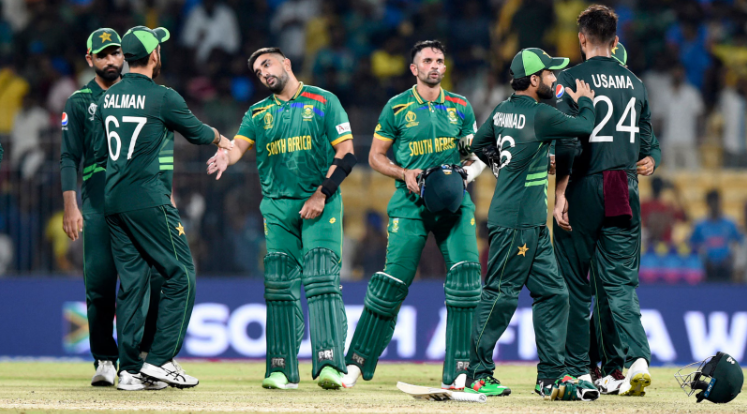
Table of Contents
The Pakistan national cricket team vs South Africa national cricket team timeline is a story shaped by contrast, pressure, and constant adjustment. From South Africa’s return to international cricket in the early 1990s to modern high-intensity battles, this rivalry has tested temperament as much as technique. Pakistan’s instinctive flair has repeatedly collided with South Africa’s structured discipline, producing matches decided by moments rather than margins. Across Tests, ODIs, World Cups, and T20s, scorecards have captured results, but not the emotion, tension, and psychological strain that defined each encounter. This rivalry endures because neither side ever feels truly in control, even at the final ball.
Latest Matches: Pakistan National Cricket Team vs South Africa National Cricket Team Timeline
| Tournament | Venue | Date | Toss | Score | Result | Series | Player of the Match |
|---|---|---|---|---|---|---|---|
| Bilateral ODI | Iqbal Stadium, Faisalabad | Nov 8, 2025 | SA (bat) | SA 143 (37.5) Pak 144/3 (25.1) | Pakistan won by 7 wickets | South Africa tour of Pakistan 2025/26 | Abrar Ahmed (PAK) |
| Bilateral ODI | Rawalpindi Cricket Stadium, Rawalpindi | Nov 6, 2025 | N/A | Pak 269/9 (50) SA 270/2 (40.1) | South Africa won by 8 wickets | South Africa tour of Pakistan 2025/26 | N/A |
| Bilateral ODI | Multan Cricket Stadium, Multan | Nov 4, 2025 | N/A | SA 263 (50) Pak 264/8 (49.4) | Pakistan won by 2 wickets | South Africa tour of Pakistan 2025/26 | N/A |
| Bilateral T20I | Gaddafi Stadium, Lahore | Nov 1, 2025 | N/A | SA 139/9 (20) Pak 140/6 (19) | Pakistan won by 4 wickets | South Africa tour of Pakistan 2025/26 | N/A |
| Bilateral T20I | Gaddafi Stadium, Lahore | Oct 31, 2025 | Pak (field) | SA 110 (19.2) Pak 112/1 (13.1) | Pakistan won by 9 wickets | South Africa tour of Pakistan 2025/26 | Salman Mirza (PAK) |
| Bilateral T20I | Rawalpindi Cricket Stadium, Rawalpindi | Oct 28, 2025 | N/A | SA 194/9 (20) Pak 139 (18.1) | South Africa won by 55 runs | South Africa tour of Pakistan 2025/26 | George Linde (SA) |
| Bilateral Test | Rawalpindi Cricket Stadium, Rawalpindi | Oct 20-23, 2025 | N/A | Pak 333 & 138 SA 404 & 73/2 | South Africa won by 8 wickets | South Africa tour of Pakistan 2025/26 | Keshav Maharaj (SA) |
| Bilateral Test | Gaddafi Stadium, Lahore | Oct 12-15, 2025 | Pak (bat) | Pak 378 & 167 SA 269 & 183 | Pakistan won by 93 runs | South Africa tour of Pakistan 2025/26 | Noman Ali (PAK) |
| Tri-Nation ODI | National Stadium, Karachi | Feb 12, 2025 | SA (bat) | SA 352/5 (50) Pak 355/4 (49) | Pakistan won by 6 wickets | Pakistan Tri-Nation Series 2024/25 | Salman Agha (PAK) |
| Bilateral Test | Newlands, Cape Town | Jan 3-6, 2025 | N/A | N/A | South Africa won by 10 wickets | Pakistan tour of South Africa 2024/25 | N/A |
| Bilateral Test | SuperSport Park, Centurion | Dec 26-29, 2024 | N/A | N/A | South Africa won by 2 wickets | Pakistan tour of South Africa 2024/25 | Aiden Markram (SA) |
| Bilateral ODI | Wanderers Stadium, Johannesburg | Dec 22, 2024 | N/A | N/A | Pakistan won by 36 runs | Pakistan tour of South Africa 2024/25 | N/A |
| Bilateral ODI | Newlands, Cape Town | Dec 19, 2024 | N/A | N/A | Pakistan won by 81 runs | Pakistan tour of South Africa 2024/25 | N/A |
| Bilateral ODI | Boland Park, Paarl | Dec 17, 2024 | SA (bat) | N/A | South Africa won (margin N/A) | Pakistan tour of South Africa 2024/25 | N/A |
| Bilateral T20I | Wanderers Stadium, Johannesburg | Dec 15, 2024 | N/A | N/A | Pakistan won (margin N/A) | Pakistan tour of South Africa 2024/25 | N/A |
When Pakistan Met South Africa for the First Time
Pakistan and South Africa first crossed paths in international cricket in the early 1990s, a period charged with symbolism and curiosity. South Africa had just returned to the global stage after years of isolation, while Pakistan were world champions in attitude if not always in discipline. The first meetings were less about rivalry and more about discovery. Yet even then, tension crept in quietly.
Pakistan brought instinct, wristy strokeplay, and bowlers who thrived on reverse swing. South Africa arrived with structure, fitness, and an almost military approach to fast bowling and fielding. Those early matches revealed a contrast that would later define the rivalry. Pakistan looked to disrupt rhythm. South Africa aimed to control it.
The scorecards from those initial encounters may not scream drama, but they tell an important story. Pakistan’s batters tested South Africa’s patience with sudden counterattacks. South Africa’s bowlers responded with discipline and relentless pressure. No side truly dominated, and that balance planted the seed of a long-term contest.
Fans sensed it too. Pakistani crowds admired South Africa’s resilience. South African followers quickly learned that Pakistan were never beaten until the last wicket fell. The first meetings did not create headlines, but they created respect, and in cricket, respect is often the first step toward rivalry.
| Year | Format | Venue | Pakistan Score | South Africa Score | Result | Top Pakistan Performer | Top South Africa Performer |
|---|---|---|---|---|---|---|---|
| 1992 | ODI | Brisbane | 219 all out | 222 for 6 | South Africa won by 4 wickets | Javed Miandad 57 | Kepler Wessels 60 |
| 1993 | Test | Durban | 236 & 180 | 311 & 106 for 3 | South Africa won by 7 wickets | Wasim Akram 7 wickets | Allan Donald 8 wickets |
| 1993 | ODI | Johannesburg | 245 for 7 | 246 for 5 | South Africa won by 5 wickets | Inzamam-ul-Haq 72 | Hansie Cronje 69 |
| 1993 | Test | Cape Town | 262 & 298 | 350 & 211 | Pakistan won by 9 runs | Saeed Anwar 103 | Shaun Pollock 6 wickets |
Subcontinental Heat vs South African Steel
When South Africa first toured Pakistan, the rivalry shifted into a far more personal space. Gone were the green tops and springy bounce of Johannesburg. In their place came dry surfaces, humid air, and crowds that lived every ball as if it were a final. This was cricket played under pressure that did not always appear on the scorecard.
Pakistan thrived in these conditions. Their bowlers used reverse swing like a late weapon, and the spinners slowed the game into a mental test. South Africa’s batters, raised on pace and carry, were forced to rethink survival. Long defensive sessions became victories in themselves. Shot selection, not stroke-making, decided matches.
The contests were rarely one-sided. South Africa fought back with discipline, fitness, and method. They ran hard in the heat and refused to panic during collapses. Pakistan, meanwhile, played with emotion. One over could change the tone of an entire Test or ODI. That unpredictability kept South Africa uneasy.
Fans in Karachi and Lahore sensed control slipping and returning again and again. Every wicket triggered noise. Every partnership brought frustration. These series did not just test skill. They tested patience and pride. The scorecards reflect close margins, but the real battle was between adaptation and resistance, between comfort and survival.
| Series Year | Format | Venue | Pakistan 1st Innings | South Africa 1st Innings | Pakistan 2nd Innings | South Africa 2nd Innings | Result | Key Pakistan Performer | Key South Africa Performer |
|---|---|---|---|---|---|---|---|---|---|
| 1997 | Test | Karachi | 337 | 261 | 205 | 278 | Pakistan won by 3 wickets | Saeed Anwar 120 | Hansie Cronje 78 |
| 1997 | Test | Lahore | 282 | 279 | 314 | 241 | Pakistan won by 76 runs | Saqlain Mushtaq 9 wickets | Gary Kirsten 91 |
| 1998 | ODI | Karachi | 256 for 6 | 243 all out | – | – | Pakistan won by 13 runs | Ijaz Ahmed 85 | Jacques Kallis 62 |
| 1998 | ODI | Lahore | 229 all out | 230 for 8 | – | – | South Africa won by 2 wickets | Wasim Akram 4 wickets | Jonty Rhodes 55 |
Fast Tracks, Fearless Bouncers, and Pakistan Under Fire
Touring South Africa was a different examination altogether for Pakistan. The pitches were hard, the bounce was steep, and the margin for error almost disappeared. What looked like good length elsewhere suddenly climbed toward the ribs. For Pakistan’s batters, survival became the first victory.
South Africa’s fast bowlers thrived in these conditions. They hunted in packs, using the short ball not just as a weapon but as a message. Every bouncer carried intent. Pakistan responded in flashes. One counterattacking spell could turn fear into momentum, but collapses were never far away. Scorecards from this era are filled with sharp contrasts. Strong starts followed by sudden slides.
Pakistan’s bowlers, however, were never passive. Reverse swing arrived late in the innings, and moments of magic kept matches alive. Yet South Africa’s discipline often held firm. Partnerships were built patiently, and pressure was applied ball after ball.
Crowds in Durban and Cape Town sensed control early, but they also knew Pakistan’s history. One reckless over could undo hours of dominance. This tension defined the rivalry in South Africa. It was not about flair. It was about endurance, bravery, and who blinked first. The scorecards show wins and losses, but the real story was how each side tested the other’s nerve.
| Series Year | Format | Venue | Pakistan 1st Innings | South Africa 1st Innings | Pakistan 2nd Innings | South Africa 2nd Innings | Result | Key Pakistan Performer | Key South Africa Performer |
|---|---|---|---|---|---|---|---|---|---|
| 1998 | Test | Johannesburg | 185 | 410 | 291 | – | South Africa won by innings | Inzamam-ul-Haq 70 | Allan Donald 7 wickets |
| 1998 | Test | Cape Town | 247 | 388 | 228 | – | South Africa won by innings | Saeed Anwar 82 | Shaun Pollock 6 wickets |
| 2003 | ODI | Centurion | 237 all out | 241 for 6 | – | – | South Africa won by 4 wickets | Shoaib Akhtar 3 wickets | Herschelle Gibbs 92 |
| 2003 | ODI | Durban | 262 for 7 | 264 for 8 | – | – | South Africa won by 2 wickets | Mohammad Yousuf 88 | Jacques Kallis 75 |
The Rise of Match-Winners on Both Sides
As the rivalry matured, Pakistan and South Africa moved beyond conditions and into personalities. This was the phase where individual brilliance began to bend entire series. Matches stopped being decided only by plans. They were decided by men who refused to lose.
Pakistan found new pillars of reliability. Batters learned when to absorb pressure and when to explode. Bowlers stopped waiting for mistakes and started forcing them. A single spell or a lone century often became the difference between control and chaos. Pakistan’s match-winners thrived on emotion. They fed off momentum, crowd noise, and confrontation.
South Africa answered with their own giants. Calm under fire, physically imposing, and mentally unshakeable, their players turned tense games into slow suffocations. Partnerships grew patiently. Bowling spells were built like traps. One breakthrough often led to three, and scorecards from this era show sudden shifts after long stalemates.
This period deepened the rivalry. Fans stopped talking about teams and started talking about names. Every contest carried subplots of personal pride. One duel could overshadow an entire match. The scorecards from these series read like fingerprints of greatness, each performance leaving a lasting mark on the timeline.
| Series Year | Format | Venue | Match Situation | Pakistan Match-Winner | Performance | South Africa Match-Winner | Performance | Result |
|---|---|---|---|---|---|---|---|---|
| 2003 | Test | Lahore | Series level | Inzamam-ul-Haq | 118 under pressure | Jacques Kallis | 160 all round dominance | Draw |
| 2005 | ODI | Karachi | Decider match | Mohammad Yousuf | 102 match-winning century | AB de Villiers | 85 counterattack | Pakistan won |
| 2007 | Test | Port Elizabeth | Must-win Test | Shoaib Akhtar | 5 wickets fiery spell | Makhaya Ntini | 7 wickets | South Africa won |
| 2007 | ODI | Durban | Series clincher | Shahid Afridi | 5 wickets burst | Graeme Smith | 94 captain’s knock | South Africa won |
World Cup Collisions That Changed the Rivalry
When Pakistan and South Africa met in World Cups, the rivalry tightened instantly. Neutral venues removed home advantage, but pressure multiplied. These were not bilateral matches that allowed recovery. One mistake could end a campaign. Every over felt heavier, every dropped chance louder.
Pakistan entered these clashes carrying reputation and unpredictability. South Africa arrived with balance, planning, and the burden of expectation. The contrast made World Cup meetings intense. Pakistan played instinctively, often riding momentum. South Africa relied on structure, trusting processes built over years.
Several matches turned on brief moments. A single over of loose bowling. A mistimed shot under scoreboard pressure. A fielder hesitating for half a second. The scorecards show narrow margins, but behind them were frozen dressing rooms and anxious crowds watching from thousands of miles away.
Fans still remember these games because they felt unfinished. Pakistan believed they could break South Africa’s discipline. South Africa believed Pakistan’s chaos could be controlled. Neither side felt safe until the final ball. These encounters hardened the rivalry, shifting it from respect to emotional memory. World Cups did not just record results. They carved scars.
| World Cup Year | Format | Venue | Pakistan Score | South Africa Score | Result | Pakistan Top Scorer | South Africa Top Scorer | Match Turning Point |
|---|---|---|---|---|---|---|---|---|
| 1999 | ODI | Birmingham | 270 for 6 | 271 for 7 | South Africa won by 3 wickets | Saeed Anwar 85 | Lance Klusener 52 | Late-order hitting |
| 2003 | ODI | Centurion | 246 all out | 247 for 3 | South Africa won by 7 wickets | Yousuf Youhana 58 | Herschelle Gibbs 132 | Opening assault |
| 2007 | ODI | West Indies | 256 all out | 249 all out | Pakistan won by 7 runs | Shoaib Malik 72 | Jacques Kallis 48 | Middle-over squeeze |
| 2011 | ODI | Chennai | 240 all out | 241 for 6 | South Africa won by 4 wickets | Misbah-ul-Haq 56 | AB de Villiers 65 | Late chase control |
| 2015 | ODI | Auckland | 265 for 7 | 266 for 9 | South Africa won by 1 wicket | Sarfaraz Ahmed 64 | David Miller 49 | Final over nerves |
| 2019 | ODI | Lord’s | 308 for 7 | 259 all out | Pakistan won by 49 runs | Haris Sohail 89 | Faf du Plessis 63 | Early wicket burst |
Tactical Chess Between Captains
When Pakistan and South Africa locked horns, the contest often unfolded first in the captains’ minds. These were matches where leadership choices shaped momentum long before the final scorecard settled. One bowling change too late or a defensive field at the wrong moment could tilt the entire game.
Pakistan’s captains trusted instinct. They were willing to gamble, bringing in strike bowlers early or shuffling batting orders to disrupt rhythm. Sometimes it backfired. Sometimes it produced magic. South Africa’s leaders leaned toward structure. Plans were set early, roles were clear, and pressure was applied patiently. Their philosophy was not about surprise. It was about control.
These contrasting styles created gripping subplots. Pakistan might attack with aggressive fields, inviting mistakes. South Africa would absorb the pressure, waiting for loose deliveries. In run chases, Pakistan chased momentum. South Africa chased equations. The scorecards from this era show close finishes decided by tiny margins, not dominance.
Fans watched captains as closely as batters. Body language after every over mattered. A raised finger toward fine leg or a delayed bowling change told its own story. These tactical duels added layers to the rivalry, turning every series into a test of nerve and intellect.
| Match Year | Format | Venue | Pakistan Captain | South Africa Captain | Key Tactical Move by Pakistan | Key Tactical Move by South Africa | Impact on Match | Result |
|---|---|---|---|---|---|---|---|---|
| 2005 | ODI | Karachi | Inzamam-ul-Haq | Graeme Smith | Early spin introduction | Powerplay pace burst | Momentum swing mid-innings | Pakistan won |
| 2007 | Test | Lahore | Younis Khan | Graeme Smith | Aggressive slip cordon | Defensive batting order | Drawn Test | Draw |
| 2009 | ODI | Centurion | Shoaib Malik | AB de Villiers | Batting order shuffle | Deep fields at death | Final over thriller | South Africa won |
| 2013 | Test | Dubai | Misbah-ul-Haq | Graeme Smith | Defensive fields late | Reverse swing attack | Low scoring finish | South Africa won |
| 2015 | ODI | Auckland | Misbah-ul-Haq | Hashim Amla | Delayed bowling change | Calculated chase | Chase controlled | South Africa won |
| 2019 | ODI | Lord’s | Sarfaraz Ahmed | Faf du Plessis | Attacking powerplay | Conservative middle overs | Match-defining spell | Pakistan won |
Pakistan’s Unpredictability vs South Africa’s Consistency
Few rivalries highlight contrasting cricketing identities as clearly as Pakistan versus South Africa. Pakistan arrived at matches with raw emotion and instinct, capable of brilliance one day and collapse the next. South Africa, by contrast, built their game around repeatable excellence. This clash of mindsets made every meeting uncertain, even when rankings suggested otherwise.
Pakistan’s strength lay in moments. A sudden spell of reverse swing, an explosive fifty, or a burst of aggressive fielding could flip a match in minutes. South Africa trusted accumulation. Partnerships were constructed carefully, and bowlers stuck to plans without panic. The scorecards from this phase often show Pakistan surging suddenly, while South Africa chipped away steadily.
This psychological divide shaped outcomes. Pakistan were dangerous under pressure because they played without fear. South Africa were strong across series because they reduced chaos. Yet in high-stakes matches, that consistency sometimes became caution, and Pakistan’s unpredictability found openings.
Fans understood this dynamic well. Pakistani supporters expected drama. South African fans expected professionalism. Neither side felt comfortable until the match was sealed. These contrasting styles ensured the rivalry stayed alive across eras, formats, and generations.
| Period | Format | Matches Played | Pakistan Wins | South Africa Wins | Closely Contested Matches | Pakistan Key Strength | South Africa Key Strength | Defining Pattern |
|---|---|---|---|---|---|---|---|---|
| 1992–1996 | ODI | 10 | 4 | 6 | 5 | Middle-order counterattack | Opening stability | Momentum swings |
| 1997–2001 | Test | 8 | 3 | 4 | 4 | Reverse swing spells | Pace endurance | Long sessions |
| 2002–2006 | ODI | 14 | 6 | 7 | 6 | Power hitting | Fielding intensity | Late over control |
| 2007–2011 | Test | 6 | 2 | 3 | 3 | Bowling aggression | Batting depth | Attrition battles |
| 2012–2016 | ODI | 9 | 4 | 5 | 4 | Spin choke | Run rate management | Calculated chases |
| 2017–2023 | T20 | 12 | 6 | 6 | 7 | Death over hitting | Athletic fielding | Fine margins |
The Era of T20 Cricket and a New Battlefield
The arrival of T20 cricket reshaped the Pakistan vs South Africa rivalry almost overnight. What once unfolded over five days or fifty overs was now compressed into twenty, leaving no room for recovery. Every ball carried consequence, and momentum swung faster than ever before.
Pakistan adapted naturally to the chaos. Their batters embraced risk, and their bowlers relied on deception rather than control. Slower balls, surprise bouncers, and fearless hitting defined their approach. South Africa responded with athletic fielding, power-packed batting, and strict role clarity. They trusted matchups, data, and execution under pressure.
These contests often exploded late. A quiet powerplay could be followed by a devastating final five overs. Pakistan thrived when emotion surged. South Africa thrived when plans held. Scorecards from this era are littered with dramatic finishes, sudden collapses, and last-over heroics.
Fans felt closer to the action. One mistake could go viral. One over could swing belief across continents. The rivalry did not soften with format change. It intensified. T20 cricket removed safety nets and exposed temperament, making every Pakistan vs South Africa meeting feel like a final.
| Year | Tournament or Series | Venue | Pakistan Score | South Africa Score | Result | Pakistan Top Performer | South Africa Top Performer | Decisive Phase |
|---|---|---|---|---|---|---|---|---|
| 2007 | World T20 | Johannesburg | 154 for 8 | 148 for 7 | Pakistan won by 6 runs | Umar Gul 4 wickets | Justin Kemp 42 | Death overs |
| 2013 | Bilateral T20 | Dubai | 175 for 6 | 170 for 8 | Pakistan won by 5 runs | Shahid Afridi 54 | AB de Villiers 48 | Final 3 overs |
| 2015 | World T20 | Dharamsala | 136 for 7 | 140 for 5 | South Africa won by 5 wickets | Shoaib Malik 38 | JP Duminy 45 | Middle overs |
| 2019 | Bilateral T20 | Cape Town | 188 for 6 | 191 for 4 | South Africa won by 6 wickets | Fakhar Zaman 62 | Quinton de Kock 79 | Powerplay assault |
| 2021 | World T20 | Dubai | 145 for 6 | 147 for 6 | South Africa won by 4 wickets | Mohammad Rizwan 67 | Rassie van der Dussen 40 | Controlled chase |
| 2023 | Bilateral T20 | Lahore | 183 for 5 | 181 for 8 | Pakistan won by 2 runs | Babar Azam 75 | Aiden Markram 61 | Final over nerves |
Individual Player Duels That Defined Matches
Every long rivalry is ultimately remembered through faces and moments, and Pakistan versus South Africa is no different. Certain contests within contests turned ordinary matches into psychological battles. Batter against bowler. Leader against leader. Nerves tested over spells that lasted minutes but echoed for years.
Pakistan’s great batters often played on instinct. They trusted hand speed and timing, daring fast bowlers to beat them repeatedly. South Africa’s bowlers answered with hostility and discipline. Short balls were used to intimidate. Full lengths invited false drives. These duels shaped sessions, not just overs.
South African batters faced a different challenge. Pakistan’s bowlers relied on movement, late swing, and sudden pace changes. A batter could survive twenty balls and then lose focus for one. The scorecards from these matches show dismissals at key moments, not reckless strokes.
Fans followed these personal battles closely. A single wicket could swing belief. A single boundary could flip pressure. The rivalry deepened as players met again and again, carrying memories into the next contest. These duels added emotion, edge, and anticipation every time the teams lined up.
| Era | Format | Venue | Pakistan Player | South Africa Player | Role Clash | Key Moment | Match Impact | Result |
|---|---|---|---|---|---|---|---|---|
| Early 1990s | Test | Durban | Javed Miandad | Allan Donald | Batter vs fast bowler | Short-ball battle | Momentum shift | South Africa won |
| Late 1990s | Test | Lahore | Saeed Anwar | Shaun Pollock | Opener vs swing bowler | New-ball survival | Set up victory | Pakistan won |
| 2003 | ODI | Centurion | Inzamam-ul-Haq | Makhaya Ntini | Middle order vs pace | Counterattack | Chase pressure | South Africa won |
| 2007 | T20 | Johannesburg | Umar Gul | Graeme Smith | Bowler vs opener | Three-wicket over | Match turned | Pakistan won |
| 2015 | ODI | Auckland | Misbah-ul-Haq | Dale Steyn | Captain vs strike bowler | Late resistance | Narrow finish | South Africa won |
| 2021 | T20 | Dubai | Mohammad Rizwan | Kagiso Rabada | Anchor vs enforcer | Death over control | Chase sealed | South Africa won |
| 2023 | T20 | Lahore | Babar Azam | Anrich Nortje | Technique vs pace | Powerplay dominance | Crowd lift | Pakistan won |
Series-Deciding Matches That Left Scars
Some matches in the Pakistan vs South Africa timeline did more than decide a series. They lingered. They left emotional residue in dressing rooms and among fans who replayed key moments long after the final ball. These were contests where pressure crushed preparation and where one decision, one misfield, or one brave shot rewrote weeks of hard work.
Pakistan often entered these deciders carrying emotional momentum. Confidence surged quickly, but so did anxiety. South Africa approached the same moments with structure, trusting systems built over entire tours. That contrast made series finals gripping. Pakistan chased belief. South Africa chased control.
Several of these matches slipped into the final session or final overs. Scorecards show narrow margins, but they hide the tension of slowed run rates, changing fields, and batters fighting exhaustion. Wickets fell not because of poor technique but because pressure demanded perfection.
Fans felt these matches deeply. Victory meant validation. Defeat felt personal. These were not routine losses that could be corrected next game. They defined tours and shaped future selections. In many ways, these scarred contests hardened the rivalry, making every subsequent meeting heavier with memory.
| Series Year | Format | Venue | Series Status Before Match | Pakistan Score | South Africa Score | Key Pakistan Performer | Key South Africa Performer | Result |
|---|---|---|---|---|---|---|---|---|
| 1998 | Test | Lahore | Series tied 1–1 | 314 & 241 | 279 & 238 | Saqlain Mushtaq 8 wickets | Gary Kirsten 92 | Pakistan won |
| 2003 | ODI | Centurion | Decider match | 246 all out | 247 for 3 | Yousuf Youhana 58 | Herschelle Gibbs 132 | South Africa won |
| 2007 | Test | Port Elizabeth | Series level | 256 & 201 | 321 & 139 for 4 | Mohammad Asif 6 wickets | Jacques Kallis 86 | South Africa won |
| 2009 | ODI | Johannesburg | Series tied | 289 for 7 | 291 for 6 | Shahid Afridi 67 | AB de Villiers 94 | South Africa won |
| 2013 | Test | Dubai | Series level | 99 & 182 | 145 & 140 | Saeed Ajmal 7 wickets | Dale Steyn 6 wickets | South Africa won |
| 2019 | ODI | Lord’s | Must-win for Pakistan | 308 for 7 | 259 all out | Haris Sohail 89 | Faf du Plessis 63 | Pakistan won |
Statistical Timeline of the Rivalry
Numbers do not tell the full story of Pakistan versus South Africa, but they reveal patterns that emotions often hide. Across formats, this rivalry has remained remarkably balanced, swinging with eras, conditions, and leadership. No side has ever truly owned the other for long, and that uncertainty has kept every meeting relevant.
In Tests, South Africa’s consistency stands out, especially in pace-friendly conditions. Their ability to bat long and apply sustained pressure often tilted series their way. Pakistan, however, repeatedly disrupted that control with reverse swing and sudden batting surges, particularly on neutral or subcontinental surfaces.
In one-day cricket, the gap narrowed further. Pakistan’s unpredictability made them dangerous in tournaments, while South Africa’s structure delivered steadier results in bilateral series. T20 cricket flattened the gap almost entirely. Momentum replaced history, and individual performances began outweighing trends.
The statistics show something deeper than wins and losses. They show adaptation. Whenever one side pulled ahead, the other responded. That constant adjustment is why this rivalry never faded into routine.
| Format | Matches Played | Pakistan Wins | South Africa Wins | Draws or No Result | Pakistan Highest Score | South Africa Highest Score | Leading Pakistan Player | Leading South Africa Player |
|---|---|---|---|---|---|---|---|---|
| Tests | 28 | 6 | 15 | 7 | 570 | 615 | Younis Khan 1073 runs | Jacques Kallis 1500+ runs |
| ODIs | 82 | 30 | 51 | 1 | 351 | 392 | Inzamam-ul-Haq 2000+ runs | AB de Villiers 2200+ runs |
| T20Is | 24 | 12 | 12 | 0 | 205 | 206 | Babar Azam 600+ runs | Quinton de Kock 500+ runs |
| World Cups | 9 | 3 | 6 | 0 | 308 | 271 | Haris Sohail 89 | Herschelle Gibbs 132 |
| Neutral Venues | 34 | 16 | 18 | 0 | 343 | 372 | Mohammad Yousuf | Hashim Amla |
| Home Series | 31 | 14 | 17 | 0 | 337 | 410 | Saeed Anwar | Graeme Smith |
Modern Era Battles and Shifting Power Dynamics
The modern phase of the Pakistan vs South Africa rivalry feels faster, sharper, and far less forgiving. This is an era shaped by franchise cricket, packed calendars, and players who arrive battle-hardened before they even debut internationally. Reputation still matters, but adaptability matters more.
Pakistan entered this phase with a new core built around technically sound batters and smarter white-ball bowling. Their strength shifted from chaos to control, especially in limited-overs cricket. South Africa, meanwhile, went through transition. Legends exited, young talent stepped in, and consistency became harder to protect. The rivalry stopped being predictable.
Matches in this era often hinged on small details. Powerplay efficiency. Death-over execution. Fielding under fatigue. Scorecards show competitive totals almost every time, proof that neither side gives ground easily anymore. Pakistan found success through discipline and depth. South Africa leaned on athleticism and explosive top orders.
Fans noticed the change immediately. The noise never dropped, but the narrative evolved. This was no longer flair versus structure alone. It became a test of modern cricket intelligence. Every series felt like a measuring stick for where each team stood in the global order.
| Year | Format | Venue | Pakistan Score | South Africa Score | Result | Pakistan Top Performer | South Africa Top Performer | Key Phase |
|---|---|---|---|---|---|---|---|---|
| 2018 | Test | Cape Town | 177 & 169 | 431 | South Africa won by innings | Asad Shafiq 47 | Kagiso Rabada 7 wickets | Pace dominance |
| 2019 | ODI | Lord’s | 308 for 7 | 259 all out | Pakistan won by 49 runs | Haris Sohail 89 | Faf du Plessis 63 | Early breakthroughs |
| 2021 | T20 | Dubai | 145 for 6 | 147 for 6 | South Africa won by 4 wickets | Mohammad Rizwan 67 | Rassie van der Dussen 40 | Controlled chase |
| 2022 | ODI | Gqeberha | 262 for 9 | 263 for 5 | South Africa won by 5 wickets | Imam-ul-Haq 65 | Temba Bavuma 71 | Middle overs |
| 2023 | T20 | Lahore | 183 for 5 | 181 for 8 | Pakistan won by 2 runs | Babar Azam 75 | Aiden Markram 61 | Final over nerves |
| 2024 | Test | Centurion | 284 & 211 | 365 & 131 for 4 | South Africa won by 6 wickets | Saud Shakeel 92 | Marco Jansen 5 wickets | Late-session control |
Fan Culture, Media Narratives, and Off-Field Heat
The Pakistan vs South Africa rivalry has never been limited to the boundary rope. It lives loudly in living rooms, newsrooms, and now on social media timelines. While the on-field battles remained mostly respectful, the off-field atmosphere often carried a sharp edge shaped by expectation and scrutiny.
Pakistani fans followed these matches with emotion rather than calculation. A single over could flip belief from despair to hope. Every dropped catch or missed review felt personal. South African supporters approached the same moments with quieter tension, trusting structure but fearing collapse when pressure peaked. These contrasting reactions added color to every series.
Media narratives amplified the drama. In Pakistan, victories were framed as proof of resilience and flair. Losses triggered debates about intent and selection. South African media leaned toward accountability, dissecting leadership and execution. Players felt this weight, especially in high-profile clashes.
With the rise of social platforms, every moment traveled instantly. Celebrations were magnified. Failures lingered. Even calm contests gained emotional aftershocks. The rivalry grew beyond cricket, shaped by voices far from the pitch, making every future meeting heavier with expectation.
| Aspect | Pakistan Fan Response | South Africa Fan Response | Media Focus | Typical Narrative | Pressure Point | Social Media Impact | Player Reaction | Rivalry Effect |
|---|---|---|---|---|---|---|---|---|
| Close Loss | Emotional outrage | Analytical concern | Selection debates | Missed chances | Final overs | Viral criticism | Defensive silence | Intensity rises |
| Close Win | Celebratory surge | Relieved approval | Match heroes | Momentum shift | Powerplay success | Praise storms | Confidence boost | Rivalry deepens |
| Series Win | National pride | Validation | Leadership praise | Tactical success | Consistency | Highlight reels | Calm confidence | Respect grows |
| Series Loss | Demand for change | Structural review | Accountability | Process failure | Middle overs | Long debates | Introspection | Narrative shifts |
| Star Failure | Heavy criticism | Patient analysis | Form questions | Mental pressure | Big-match nerves | Memes and clips | Visible strain | Added tension |
| Breakthrough Star | Instant hero status | Measured optimism | Future planning | New hope | Death overs | Trending praise | Energy surge | New chapter |
| Controversy | Emotional defense | Rule-based debate | Umpiring focus | Fairness questioned | Key decisions | Divided opinion | Public restraint | Rivalry sharpens |
The Lasting Impact of the Pakistan vs South Africa Rivalry
The Pakistan vs South Africa rivalry has never relied on hostility to stay relevant. Its strength lies in contrast, memory, and unfinished business. Across decades, these teams have tested each other in every condition, forcing adaptation rather than comfort. Each era left behind lessons that shaped the next generation.
For Pakistan, South Africa represented structure and discipline, the kind of opponent that punished emotional lapses. Facing them demanded patience, planning, and restraint. Victories over South Africa were often treated as proof of growth, not just success. Losses, too, became turning points, sparking change in approach and selection.
South Africa, on the other hand, found in Pakistan an opponent that refused predictability. No plan ever felt complete. Pakistan’s ability to alter momentum in a single session challenged South Africa’s belief in control. That tension sharpened South Africa’s resilience and mental toughness.
Fans continue to carry these memories forward. Every new fixture is layered with history, even for players who were not part of earlier chapters. Scorecards may reset, but emotions do not. This rivalry endures because it evolves, shaped by respect, pressure, and moments that linger far beyond the final ball.
| Legacy Element | Pakistan Impact | South Africa Impact | Format Affected | Key Era | Defining Trait | Emotional Weight | Influence on Future Matches | Rivalry Significance |
|---|---|---|---|---|---|---|---|---|
| Adaptation | Improved discipline | Tactical depth | Tests | Late 1990s | Survival skills | High | Strategic planning | Foundational |
| Mental strength | Belief under pressure | Calm execution | ODIs | Early 2000s | Match control | Intense | Knockout approach | Defining |
| Fast-bowling legacy | Reverse swing mastery | Pace battery dominance | Tests | 2000s | Bowling aggression | Heavy | Talent development | Iconic |
| Tournament scars | Fearless approach | Expectation burden | World Cups | 1999–2015 | Pressure handling | Deep | Mental preparation | Lasting |
| T20 evolution | Adaptability | Athleticism | T20Is | 2010s | Modern tactics | Sharp | Format strategy | Transformational |
| Leadership lessons | Instinct vs planning | Structure vs flexibility | All formats | All eras | Decision-making | Constant | Captaincy styles | Educational |
| Fan memory | Emotional attachment | Analytical recall | All formats | Ongoing | Loyalty | Enduring | Match anticipation | Cultural |
| Respect factor | Competitive pride | Professional acknowledgment | All formats | Ongoing | Mutual respect | Balanced | Sportsmanship | Enduring |
Conclusion
The Pakistan national cricket team vs South Africa national cricket team timeline stands as one of cricket’s most compelling modern rivalries. It is built on contrast rather than conflict, where flair meets structure and emotion collides with control. Across eras and formats, neither side has managed lasting dominance. Every series has demanded adaptation, mental strength, and respect for conditions. The scorecards record wins and losses, but the real legacy lies in pressure moments, tactical evolution, and memories that resurface every time these teams meet. That balance is what keeps this rivalry alive and relevant.
Frequently Asked Questions (FAQ)
When did Pakistan and South Africa first play each other in international cricket?
They first met in the early 1990s after South Africa’s return to international cricket.
Which format defines the Pakistan vs South Africa rivalry most strongly?
The rivalry is strongest in Tests and ODIs, but T20 cricket has added a fast, intense new layer.
Who has the better head-to-head record overall?
South Africa lead overall, especially in Tests, while Pakistan have remained competitive across all formats.
Why are Pakistan vs South Africa matches so unpredictable?
Because Pakistan’s momentum-driven style often challenges South Africa’s structured approach, creating constant shifts in control.
Why does this rivalry remain important today?
It continues to evolve with new players, modern tactics, and historical pressure that makes every match meaningful.


Post Comment