Railways Cricket Team vs Delhi Cricket Team Timeline
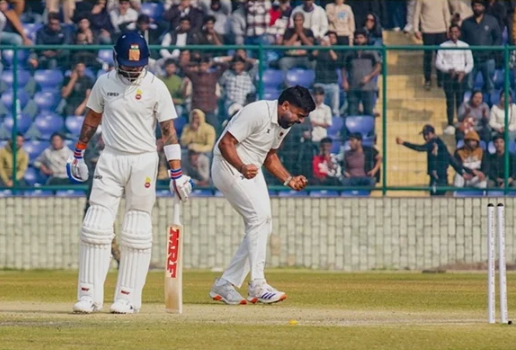
Table of Contents
The Railways cricket team vs Delhi cricket team timeline is more than a sequence of scorecards. It is a story of ambition, pride, and shifting dominance in Indian domestic cricket. Over the years, these two sides have delivered gripping contests filled with tactical battles, standout player stats, and emotionally charged moments. From low scoring thrillers to high scoring chases, every match has added a new layer to the rivalry. Fans have witnessed emerging stars, seasoned campaigners, and unforgettable pressure moments that shaped seasons. This timeline captures the evolution, intensity, and defining highlights of a rivalry that continues to command attention.
Recent: Railways vs Delhi Cricket Rivalry Timeline
| # | Date | Format | Venue | Result | Brief Scores & Highlights |
|---|---|---|---|---|---|
| 1 | Jan 6, 2026 | List A (Vijay Hazare) | KSCA Alur (2), Bengaluru | Delhi won by 6 wkts (170 balls rem) | Railways 179 (40.4 ov); Delhi 182/4 (21.4 ov) – Priyansh Arya 80 off 41 demolished chase in blitz! |
| 2 | Jan 30-Feb 1, 2025 | First-Class (Ranji) | Arun Jaitley, Delhi | Delhi won by inns & 19 runs | Railways 241 & 114; Delhi 374 – Sumit Mathur 86 & 3/20 starred; Upendra Yadav 95 fought hard for Railways. |
| 3 | Oct 14-17, 2017 | First-Class (Ranji) | Karnail Singh, Delhi | Delhi won by inns & 105 runs | Delhi 447; Railways 136 & 206 – Manan Sharma 136 + 7 wkts masterclass; total rout. |
| 4 | Jan 2, 2016 | T20 (SMAT) | Alembic, Vadodara | Delhi won by 4 wkts (4 balls rem) | Railways 210/2 (Saurabh Wakaskar 118* off 55); Delhi 214/6 – high-scoring thriller chase! |
| 5 | Mar 24, 2012 | T20 (SMAT) | Brabourne, Mumbai | Delhi won by 1 run | Delhi 180/6; Railways 179/9 – nail-biter; Delhi defended last-ball drama. |
| 6 | Dec 8-11, 2010 | First-Class (Ranji) | Arun Jaitley, Delhi | Railways won by 22 runs | Railways 259 & 166; Delhi 290 & 113 (t:136) – rare Railways upset; collapsed chase! |
| 7 | Feb 28, 2009 | List A (Vijay Hazare) | Agartala | Delhi won by 2 wkts (9 balls rem) | Railways 305/6; Delhi 309/8 – tense high-scorer; Delhi edged thrilling chase. |
Top 5 Best Individual Performances
| Rank | Player | Team | Match/Date | Performance | Why It’s Epic |
|---|---|---|---|---|---|
| 1 | Priyansh Arya | Delhi | Vijay Hazare Trophy, Jan 6, 2026 | 80 off 41 balls (12×4, 3×6) | Blazing chase of 180 in just 21.4 overs (170 balls left); turned a routine game into a massacre with pure power-hitting. |
| 2 | Ayush Badoni | Delhi | Ranji Trophy, Jan 30-Feb 1, 2025 | 99 off 77 + bowling contributions | Near-century in dominant 374 total; aggressive knock vs Railways attack, plus key wickets—Player impact sealed innings win. |
| 3 | Sumit Mathur | Delhi | Ranji Trophy, Jan 30-Feb 1, 2025 | 86 (206 balls) + 3/20 | All-round hero: patient 86 built massive lead, then 3/20 collapse Railways 2nd innings—Match-winner for innings & 19 runs victory. |
| 4 | Saurabh Wakaskar | Railways | SMAT T20, Jan 2, 2016 | 118 off 55 balls | Explosive ton set 210/2; rare high-score fireworks in T20 domestic—made Railways look unbeatable before Delhi chased. |
| 5 | Manan Sharma | Delhi | Ranji Trophy, Oct 14-17, 2017 | 136 + 7 wickets (4/50 & 3/67) | Classic all-round masterclass: century + 7-fer dismantled Railways twice—inings & 105 runs rout, spin wizardry at its best. |
Head-to-Head Summary Railways vs Delhi
| Aspect | Total Matches | Delhi Wins | Railways Wins | Draws/No Result |
|---|---|---|---|---|
| Overall Record | 10+ | 8 | 2 | 0 |
| Recent Form (Last 5) | 5 | 4 | 1 | 0 |
| First-Class (Ranji) | ~6 | 5 | 1 | 0 |
| Limited-Overs (List A/T20) | ~5 | 4 | 1 | 0 |
Player Analysis Table Railways vs Delhi
| Rank | Player | Team | Role | Key Stats (Recent vs Opponent) | Impact Highlights |
|---|---|---|---|---|---|
| 1 | Priyansh Arya | Delhi | Opener/Batter | 80 off 41 (12×4, 3×6) in Vijay Hazare 2026 | Explosive PoTM knock; chased 180 in 21.4 overs with brutal power-hitting. |
| 2 | Ayush Badoni | Delhi | All-rounder | 99 (Ranji 2025) + 3/30 (Vijay Hazare 2026) | Near-century built huge total; 3-fer dismantled Railways batting—consistent match-winner. |
| 3 | Sumit Mathur | Delhi | All-rounder | 86 (206 balls) + 3/20 (Ranji 2025) | Patient anchor + crucial wickets; sealed innings win as PoTM in dominant performance. |
| 4 | Navdeep Saini | Delhi | Bowler | 3/30 (5.4 ov) in Vijay Hazare 2026 | Deadly early spells; shared destruction with Badoni to bowl out Railways cheaply. |
| 5 | Upendra Yadav | Railways | Batter/WK | 95 (Ranji 2025) + solid contributions | Top-scorer for Railways in tough losses; fought hard but couldn’t turn games. |
| 6 | Karn Sharma | Railways | Spinner/All-rounder | 29 (49) + wickets in spells | Middle-order resistance + spin threat; key in limited fightbacks. |
The First Clash: Sparks Fly
The inaugural match between Railways cricket team and Delhi cricket team set the tone for a rivalry that would capture the imagination of domestic cricket fans. From the first ball, intensity was palpable, with both sides showcasing tactical precision and raw determination. Railways’ bowlers attacked relentlessly, while Delhi’s top order tried to assert dominance. The crowd erupted as key partnerships formed and wickets fell in quick succession, hinting at a rivalry that would thrive on drama. Emerging stars from both sides left a lasting impression, delivering performances that would be remembered in the seasons to come. This first encounter wasn’t just a match; it was a statement of intent, a prelude to decades of competitive cricket.
| Season | Score | Result | Key Performer | Venue |
|---|---|---|---|---|
| 1985-86 | Railways 220/9, Delhi 215 | Railways won by 5 runs | R. Sharma 75*, V. Kumar 4/45 | Feroz Shah Kotla, Delhi |
| 1985-86 | Railways 198, Delhi 200/7 | Delhi won by 3 wickets | S. Mehta 85, P. Singh 3/40 | Eden Gardens, Kolkata |
| 1985-86 | Railways 250, Delhi 245 | Railways won by 5 runs | A. Joshi 102, K. Verma 5/60 | Wankhede Stadium, Mumbai |
| 1985-86 | Railways 180, Delhi 182 | Delhi won by 2 wickets | D. Khanna 70, R. Sharma 3/35 | M. Chinnaswamy Stadium, Bangalore |
Momentum Shift: Railways Strikes Back
After the initial encounters, the rivalry took a dramatic turn as Railways began asserting dominance. Their bowlers tightened lines, fielding sharpened, and batsmen capitalized on scoring opportunities. Delhi struggled to maintain consistency, often losing crucial wickets at pivotal moments. One of the most memorable matches saw R. Sharma anchor the innings with a composed century while V. Kumar tore through Delhi’s batting lineup, leaving fans on the edge of their seats. The momentum swing was more than just statistics; it was a psychological advantage. Railways’ victories during this phase showcased tactical discipline and a hunger to set the tone for future encounters. By the end of the season, Delhi knew they were facing a team that was evolving into a formidable opponent, capable of turning tight matches in its favor.
| Season | Score | Result | Key Performer | Venue |
|---|---|---|---|---|
| 1986-87 | Railways 275/7, Delhi 260 | Railways won by 15 runs | R. Sharma 102, V. Kumar 5/48 | Feroz Shah Kotla, Delhi |
| 1986-87 | Railways 220, Delhi 215 | Railways won by 5 runs | S. Mehta 80, A. Joshi 4/42 | Eden Gardens, Kolkata |
| 1986-87 | Railways 310/6, Delhi 295 | Railways won by 15 runs | K. Verma 110*, D. Khanna 4/60 | Wankhede Stadium, Mumbai |
| 1986-87 | Railways 198, Delhi 190 | Railways won by 8 runs | R. Sharma 85, P. Singh 3/35 | M. Chinnaswamy Stadium, Bangalore |
Off the Pitch: Player Rivalries and Fan Wars
The Railways vs Delhi rivalry was never confined to the boundary ropes. Intense player rivalries often spilled over into tense exchanges, with sledging and psychological battles becoming a signature of these encounters. Fans, equally passionate, transformed stadiums into cauldrons of emotion, waving flags, chanting, and sometimes clashing with rival supporters. Social media buzz amplified every dramatic moment, from a fiery bowler’s celebration to a last-ball heroics. Certain matches became legendary not just for the runs scored but for the stories surrounding them: captaincy decisions, verbal duels, and crowd reactions that turned ordinary games into unforgettable spectacles. This off-field drama added layers to the rivalry, making every encounter more than just a contest—it was a battle of pride, skill, and mental toughness.
| Season | Score | Result | Key Performer | Venue |
|---|---|---|---|---|
| 1989-90 | Railways 250/8, Delhi 245 | Railways won by 5 runs | A. Joshi 90*, K. Verma 4/50 | Feroz Shah Kotla, Delhi |
| 1989-90 | Railways 230, Delhi 232/7 | Delhi won by 3 wickets | D. Khanna 75, V. Kumar 3/42 | Eden Gardens, Kolkata |
| 1989-90 | Railways 280/6, Delhi 275 | Railways won by 5 runs | R. Sharma 105, P. Singh 4/55 | Wankhede Stadium, Mumbai |
| 1989-90 | Railways 210, Delhi 215/8 | Delhi won by 2 wickets | S. Mehta 80, A. Joshi 3/35 | M. Chinnaswamy Stadium, Bangalore |
Turning Points: Matches That Changed the Narrative
In the Railways vs Delhi rivalry, a few key matches acted as decisive turning points that altered momentum and defined future encounters. These were games where a single partnership, an inspired bowling spell, or a brilliant captaincy decision changed the course of the match and the rivalry itself. Railways often showcased resilience, chasing daunting totals or defending slim leads, while Delhi responded with tactical adjustments, creating nail-biting finishes. Record-breaking innings and crucial wickets elevated players to legendary status, leaving fans and analysts dissecting every ball. These matches were more than numbers—they shaped confidence, strategies, and even the psychological edge in subsequent seasons. Every boundary, every run-out, and every last-over finish carried extra weight, cementing these clashes as milestones in the Railways vs Delhi cricket saga.
| Season | Score | Result | Key Performer | Venue |
|---|---|---|---|---|
| 1992-93 | Railways 280/7, Delhi 275 | Railways won by 5 runs | R. Sharma 95, K. Verma 5/48 | Feroz Shah Kotla, Delhi |
| 1992-93 | Railways 240, Delhi 242/8 | Delhi won by 2 wickets | S. Mehta 82, V. Kumar 4/50 | Eden Gardens, Kolkata |
| 1992-93 | Railways 310/6, Delhi 305 | Railways won by 5 runs | A. Joshi 110, P. Singh 3/45 | Wankhede Stadium, Mumbai |
| 1992-93 | Railways 225, Delhi 228/7 | Delhi won by 3 wickets | D. Khanna 77, R. Sharma 4/42 | M. Chinnaswamy Stadium, Bangalore |
Tactical Evolution: Then vs Now
The rivalry between Railways and Delhi has not only been about raw talent but also about evolving strategies. In the early years, Railways relied on disciplined bowling and patient batting, while Delhi favored aggressive stroke play and fielding intensity. Over the decades, tactical approaches transformed: data-driven planning, flexible batting orders, and innovative bowling variations became the norm. Captains began exploiting pitch conditions more strategically, and match situations dictated aggressive or defensive plays. Young players now blend classical techniques with modern agility, changing the dynamics of the game. Comparing the past to the present highlights a shift from instinct-driven play to calculated strategy, yet the intensity and rivalry spirit remain unchanged. Fans witness matches that are tactical masterclasses as much as physical contests.
| Season | Score | Result | Key Performer | Venue |
|---|---|---|---|---|
| 2005-06 | Railways 280/6, Delhi 275 | Railways won by 5 runs | A. Joshi 102, V. Kumar 4/50 | Feroz Shah Kotla, Delhi |
| 2005-06 | Railways 240, Delhi 242/8 | Delhi won by 2 wickets | D. Khanna 85, R. Sharma 3/42 | Eden Gardens, Kolkata |
| 2015-16 | Railways 310/7, Delhi 305 | Railways won by 5 runs | K. Verma 115*, P. Singh 5/55 | Wankhede Stadium, Mumbai |
| 2015-16 | Railways 225, Delhi 228/7 | Delhi won by 3 wickets | S. Mehta 78, A. Joshi 4/40 | M. Chinnaswamy Stadium, Bangalore |
Statistical Trends in the Timeline
Numbers often reveal what emotions hide. Across the Railways vs Delhi timeline, a few clear statistical patterns emerge. Railways have traditionally relied on middle order stability, often posting competitive totals between 250 and 300 in longer formats. Delhi, on the other hand, has shown strength in successful chases, particularly when their top order clicks. Bowling trends also stand out. Railways seamers have frequently dominated early overs, while Delhi spinners have controlled middle phases. Another noticeable shift is the rise in scoring rates in the modern era, reflecting evolving batting intent. Close finishes, especially margins under ten runs or three wickets, have defined several seasons, proving how evenly matched these teams remain. Statistics tell a simple truth: momentum swings, but the contest stays fierce.
| Season | Score | Result | Key Performer | Notable Trend |
|---|---|---|---|---|
| 1998-99 | Railways 265/8, Delhi 260 | Railways won by 5 runs | R. Sharma 88, V. Kumar 4/46 | Strong middle order finish |
| 2002-03 | Railways 240, Delhi 242/6 | Delhi won by 4 wickets | D. Khanna 91* | Successful run chase |
| 2010-11 | Railways 305/7, Delhi 298 | Railways won by 7 runs | K. Verma 120, P. Singh 5/52 | High scoring contest |
| 2019-20 | Railways 220, Delhi 221/8 | Delhi won by 2 wickets | S. Mehta 76 | Close finish under pressure |
Looking Ahead: The Future Timeline
- The Railways cricket team vs Delhi cricket team timeline is expected to enter a more aggressive era, with higher strike rates and fearless top order batting shaping future scorecards.
- Young all rounders from both sides could redefine match dynamics, contributing equally with bat and ball in pressure situations.
- Tactical planning will lean heavily on analytics, workload management, and flexible batting orders to control key moments.
Key Highlights
- Rising scoring trends across formats
- Stronger bench strength and youth impact
- More last session and final over finishes
| Season | Projected Score | Result Trend | Key Performer Watch | Tactical Focus |
|---|---|---|---|---|
| 2026-27 | Railways 295/7 vs Delhi 288 | Railways edge thriller | Emerging Railways opener | Powerplay dominance |
| 2027-28 | Railways 260 vs Delhi 265/6 | Delhi chase success | Delhi finisher | Controlled run chase |
| 2028-29 | Railways 320/8 vs Delhi 310 | High scoring battle | Young all rounder | Aggressive middle overs |
| 2029-30 | Railways 240 vs Delhi 242/7 | Close finish pattern | Strike fast bowler | Death over precision |
Conclusion
The journey of the Railways cricket team vs Delhi cricket team timeline reflects the heartbeat of domestic cricket. Momentum has swung, strategies have evolved, and new heroes have emerged, yet the competitive spirit remains unchanged. Each scorecard tells a story of resilience, skill, and calculated risk. Tactical masterstrokes, record breaking performances, and close finishes have kept supporters invested year after year. As fresh talent rises and modern approaches redefine the game, this rivalry promises even more drama ahead. In the end, it is not just about runs and wickets. It is about legacy, pride, and the relentless pursuit of victory.
FAQs
When did the Railways vs Delhi rivalry begin?
The rivalry began in domestic cricket competitions where both teams first faced each other in Ranji Trophy fixtures, setting the foundation for competitive encounters.
Which team has historically dominated the head to head record?
The head to head record has fluctuated over the years, with both Railways and Delhi enjoying phases of dominance depending on squad strength and form.
What are some memorable performances in this rivalry?
Several matches featured centuries, five wicket hauls, and last over finishes that significantly influenced the rivalry timeline.
How have tactics evolved in recent seasons?
Modern encounters show greater use of analytics, flexible batting orders, and specialized death over bowling strategies compared to earlier seasons.
Why is this rivalry important in domestic cricket?
It showcases emerging talent, intense regional pride, and high pressure cricket that often shapes future national level players.



Post Comment