West Indies Cricket Team vs India National Cricket Team Timeline
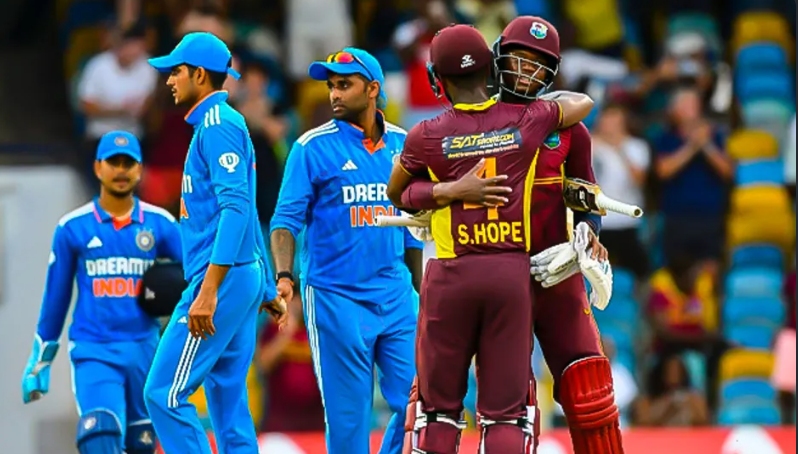
Table of Contents
The rivalry between the West Indies cricket team and the India national cricket team is a journey through eras, emotions, and evolution. What began as a one sided contest between a developing cricket nation and the kings of world cricket slowly transformed into one of the game’s most revealing timelines. From fearsome fast bowling and psychological battles to technical mastery, tactical growth, and modern dominance, every decade added a new layer. This timeline is not just about wins and losses. It is about how scorecards captured shifts in power, how players grew under pressure, and how two cricketing cultures shaped each other across generations.
Latest Matches: West Indies Cricket Team vs India National Cricket Team Timeline
| # | Date | Format | Venue | Scorecard Summary | Result for India | Margin | Standout Moment |
|---|---|---|---|---|---|---|---|
| 1 | Oct 10-14, 2025 | Test | Arun Jaitley Stadium, Delhi | IND 518/5d & 124/3; WI 248 & 390 (f/o) | Win | 7 wickets | Series clincher—spin & batting depth sealed it! |
| 2 | Oct 2-4, 2025 | Test | Narendra Modi Stadium, Ahmedabad | WI 162 & 146; IND 448/5d | Win | Innings & 140 runs | Dominant home win—India crushed WI twice! |
| 3 | Aug 13, 2023 | T20I | Lauderhill, Florida | IND 165/9; WI 171/2 | Loss | 8 wickets (12 balls left) | WI chased easily—series decider upset! |
| 4 | Aug 12, 2023 | T20I | Lauderhill, Florida | WI 178/8; IND 179/1 | Win | 9 wickets (18 balls left) | Explosive opening stand powered chase! |
| 5 | Aug 8, 2023 | T20I | Providence, Guyana | WI 159/5; IND 164/3 | Win | 7 wickets (13 balls left) | Comfortable chase—India leveled series! |
| 6 | Aug 6, 2023 | T20I | Providence, Guyana | IND 152/7; WI 155/8 | Loss | 2 wickets (7 balls left) | Nail-biter—WI sneaked home in thriller! |
| 7 | Aug 3, 2023 | T20I | Tarouba, Trinidad | WI 149/6; IND 145/9 | Loss | 4 runs | WI defended low total—tight bowling win! |
| 8 | Aug 1, 2023 | ODI | Tarouba, Trinidad | IND 351/5; WI 151 | Win | 200 runs | Massive total + bowling collapse—huge victory! |
| 9 | Jul 29, 2023 | ODI | Bridgetown, Barbados | IND 181; WI 182/4 | Loss | 6 wickets (80 balls left) | WI chased easily after India’s low score! |
| 10 | Jul 27, 2023 | ODI | Bridgetown, Barbados | WI 114; IND 118/5 | Win | 5 wickets (163 balls left) | Spin magic bowled WI out cheap—easy chase! |
| 11 | Jul 20-24, 2023 | Test | Port of Spain, Trinidad | IND 438 & 181/2d; WI 255 & 76/2 (target 365) | Draw | – | Rain spoiled—India strong but no result! |
| 12 | Jul 12-14, 2023 | Test | Roseau, Dominica | WI 150 & 130; IND 421/5d | Win | Innings & 141 runs | Jaiswal debut fireworks + Ashwin masterclass! |
| 13 | Aug 7, 2022 | T20I | Lauderhill, Florida | IND 188/7; WI 100 | Win | 88 runs | Spin attack demolished WI chase! |
| 14 | Aug 6, 2022 | T20I | Lauderhill, Florida | IND 191/5; WI 132 | Win | 59 runs | Strong batting + bowling—India in control! |
| 15 | Aug 2, 2022 | T20I | Basseterre, St Kitts | WI 164/5; IND 165/3 | Win | 7 wickets (6 balls left) | Bold chase—India wrapped it up nicely! |
When India First Faced the Kings of World Cricket
When India first stepped onto the field against the West Indies, it was not just another international fixture. It was a meeting with the undisputed kings of early world cricket. The rivalry began in 1948, at a time when Indian cricket was still finding its identity, while West Indies already carried an aura of flair, power, and natural athleticism shaped by island cricket culture.
India’s early tours to the Caribbean exposed a harsh reality. West Indies possessed stronger physiques, sharper reflexes, and a deeper understanding of conditions. Indian batters struggled with pace and bounce on lively pitches, while West Indian batters played with freedom and confidence that reflected their growing dominance. These matches were less about victory and more about survival for India.
Yet, those early scorecards quietly recorded the foundation of a rivalry that would later explode into something far greater. India learned discipline, patience, and resilience. West Indies, in turn, recognized India as a team willing to endure pressure rather than collapse. The gap was wide, but respect began forming through long hours in the middle.
The west indies cricket team vs india national cricket team timeline truly starts here, in matches where India lost more than it won but gained something priceless: experience. These encounters shaped generations of Indian cricketers who would later challenge West Indies dominance head on.
| Year | Series / Tour | Format | Venue | Match Result | India Key Performers | West Indies Key Performers |
|---|---|---|---|---|---|---|
| 1948 | West Indies tour of India | Test | Delhi | West Indies won | Vijay Hazare, Lala Amarnath | George Headley, Clyde Walcott |
| 1948 | West Indies tour of India | Test | Mumbai | Draw | Hemu Adhikari, Vinoo Mankad | Everton Weekes |
| 1952 | India tour of West Indies | Test | Port of Spain | West Indies won | Polly Umrigar | Frank Worrell |
| 1952 | India tour of West Indies | Test | Bridgetown | West Indies won | Vijay Manjrekar | Sonny Ramadhin |
| 1958 | West Indies tour of India | Test | Chennai | Draw | Subhash Gupte | Garfield Sobers |
The Era of Fear: Facing Fire, Pace, and Intimidation
If the first meetings were about learning, this phase was about survival. From the mid-1960s to the late 1970s, India walked into what many players later described as the most intimidating period in the west indies cricket team vs india national cricket team timeline. West Indies were no longer just talented. They were terrifying.
Fast bowling became their weapon of choice. Even before the full four-pronged pace era arrived, Indian batters faced relentless hostility. Short balls whistled past helmets, slips stood closer than comfort allowed, and every run felt earned through pain and concentration. Indian technique was tested brutally on bouncy Caribbean pitches and quicker tracks back home.
Batting scorecards from this era often look lopsided, but they hide stories of resistance. Long stays at the crease mattered more than strike rates. A gritty fifty was celebrated like a century. Bowlers like Bishan Singh Bedi and Erapalli Prasanna fought back with control and intelligence, but the margin for error was slim.
West Indies played with swagger and menace. Their dominance was psychological as much as tactical. India, however, did not retreat. Each tour hardened them. Each bruising series planted belief. This era of fear forged the mental steel that would later define India’s greatest overseas triumphs.
| Year | Series | Format | Venue | Result | India Standout Performers | West Indies Standout Performers |
|---|---|---|---|---|---|---|
| 1962 | India tour of West Indies | Test | Kingston | West Indies won | Chandu Borde | Gary Sobers |
| 1966 | West Indies tour of India | Test | Kolkata | Draw | Mansur Ali Khan Pataudi | Wesley Hall |
| 1971 | India tour of West Indies | Test | Port of Spain | Draw | Sunil Gavaskar | Lance Gibbs |
| 1976 | West Indies tour of India | Test | Delhi | West Indies won | Bishan Singh Bedi | Michael Holding |
| 1978 | India tour of West Indies | Test | Bridgetown | West Indies won | Dilip Vengsarkar | Andy Roberts |
1971: The Tour That Changed India Forever
Every rivalry has a moment when history turns. For India, that moment arrived in 1971 in the Caribbean. Until then, touring West Indies meant damage control. This time, it became a declaration of intent. The west indies cricket team vs india national cricket team timeline cannot be told without stopping here and taking a deep breath.
India arrived without fear but with clarity. Ajit Wadekar led quietly, trusting discipline over bravado. Sunil Gavaskar, on his first tour, played like a man immune to reputation. While West Indies still held the edge in power, India brought patience, planning, and belief. This was not survival cricket. This was resistance with purpose.
Gavaskar’s bat rewrote expectations. He left balls others chased, punished mistakes, and stayed rooted while the crowd waited for his mistake. Bishan Singh Bedi and the spin quartet controlled tempo, refusing to be rushed. Matches slowed down, pressure shifted, and suddenly West Indies were the ones searching for answers.
The scorecards from this series tell a revolutionary story. India did not just compete. They won. The series victory was India’s first overseas Test series win and a psychological earthquake in world cricket. Fear did not disappear overnight, but it cracked. Permanently.
| Match | Venue | Result | India Key Performers | West Indies Key Performers | Turning Point |
|---|---|---|---|---|---|
| 1st Test | Kingston | Draw | Sunil Gavaskar 65, 67 | Rohan Kanhai | Gavaskar’s composure |
| 2nd Test | Port of Spain | Draw | Gavaskar 156, 117 | Lance Gibbs | Batting endurance |
| 3rd Test | Georgetown | India won | Gavaskar 124 | Clive Lloyd | Chase under pressure |
| 4th Test | Bridgetown | Draw | Ajit Wadekar | Gary Sobers | Captaincy balance |
| Series | Caribbean | India won 1–0 | Gavaskar 774 runs | Gibbs wickets | Mental shift |
Power, Pride, and Caribbean Supremacy Returns
Just when it seemed the balance had shifted, West Indies struck back with a vengeance. The late 1970s and 1980s marked the return of Caribbean supremacy, built not just on talent but on raw intimidation. This phase of the west indies cricket team vs india national cricket team timeline is remembered for bruises, broken stumps, and scorecards that reflected dominance wrapped in pride.
The fast bowling empire had arrived. Andy Roberts set the tone, followed by Michael Holding, Malcolm Marshall, Joel Garner, and later Curtly Ambrose. It was relentless. Four quicks rotating in waves, each faster and more hostile than the last. Indian batters no longer just planned innings. They planned survival.
Scorecards from this era often show low Indian totals, but context matters. Every run carried risk. Every boundary felt stolen. Kapil Dev fought with courage, Mohinder Amarnath absorbed punishment, and Dilip Vengsarkar stood tall in moments that mattered. These were not defeats of spirit. They were tests of character.
West Indies, meanwhile, played with authority. Their batting backed their bowlers. Viv Richards did not just score runs. He dominated attacks psychologically. Matches rarely drifted. They were dictated. Yet India kept returning, learning, adapting, and quietly closing the gap.
This period reaffirmed West Indies as the global benchmark, but it also hardened India. By enduring this storm, India prepared for the day they would no longer flinch.
| Year | Series | Format | Venue | Result | India Key Performers | West Indies Key Performers |
|---|---|---|---|---|---|---|
| 1979 | West Indies tour of India | Test | Chennai | West Indies won | Kapil Dev | Michael Holding |
| 1983 | World Cup Group Match | ODI | Manchester | West Indies won | Ravi Shastri | Viv Richards |
| 1983 | World Cup Final | ODI | Lord’s | India won | Kapil Dev, Amarnath | Viv Richards |
| 1988 | India tour of West Indies | Test | Kingston | West Indies won | Vengsarkar | Malcolm Marshall |
| 1989 | West Indies tour of India | Test | Delhi | Draw | Mohammad Azharuddin | Curtly Ambrose |
World Cups and Neutral Ground Battles
When the rivalry moved away from home conditions and into World Cups and neutral venues, its character changed dramatically. Fear mattered less. Nerve mattered more. The west indies cricket team vs india national cricket team timeline in global tournaments is packed with moments where pressure outweighed reputation.
The early World Cups belonged to West Indies. Their dominance in 1975 and 1979 felt inevitable. They played with freedom, athleticism, and clarity, while India were still learning the language of limited overs cricket. Scorecards from those years show West Indies cruising, but they also reveal India slowly understanding tempo, fielding intensity, and power hitting.
Then came 1983. Everything flipped. The group-stage meeting saw West Indies assert control, but the final at Lord’s rewrote cricket history. India did not outmuscle West Indies. They outthought them. Kapil Dev’s leadership, Mohinder Amarnath’s calm, and disciplined bowling turned pressure into opportunity. The scorecard became symbolic. West Indies were no longer invincible.
Neutral venues continued to produce tight contests. Sharjah, Singapore, and later ICC events became stages for mental battles. India learned to handle big moments. West Indies learned that reputation alone could not win matches. Individual brilliance still shone, but strategy gained equal weight.
World Cups compressed this rivalry into single afternoons where legacy hung on a few overs. Every dropped catch, every risky single, every bowling change echoed louder under neutral skies.
| Year | Tournament | Venue | Result | India Key Performers | West Indies Key Performers | Defining Moment |
|---|---|---|---|---|---|---|
| 1975 | World Cup Group | Birmingham | West Indies won | Farokh Engineer | Clive Lloyd | Power hitting |
| 1979 | World Cup Group | Manchester | West Indies won | Gundappa Viswanath | Viv Richards | Run chase control |
| 1983 | World Cup Group | Manchester | West Indies won | Ravi Shastri | Andy Roberts | Early dominance |
| 1983 | World Cup Final | Lord’s | India won | Amarnath, Kapil Dev | Viv Richards | Richards dismissal |
| 1996 | World Cup Group | Gwalior | India won | Sachin Tendulkar | Brian Lara | Shift in confidence |
The Rise of Indian Batting Confidence
The 1990s marked a clear turning point in the west indies cricket team vs india national cricket team timeline. For the first time, Indian batters walked in without inherited fear. Respect remained, but intimidation no longer ruled decisions. Technique improved, fitness standards rose, and belief finally matched ability.
At the heart of this shift stood Sachin Tendulkar. Against an attack that still featured Curtly Ambrose, Courtney Walsh, and later a young Franklyn Rose, Tendulkar played with clarity rather than caution. He did not flinch at the short ball. He trusted his defense and punished anything loose. Each innings sent a message that India could stand toe to toe with the Caribbean quicks.
Support arrived from Rahul Dravid, Sourav Ganguly, Mohammad Azharuddin, and Vinod Kambli. Partnerships grew longer. Away scorecards stopped collapsing. Indian totals began to reflect intent rather than damage limitation. Even in defeat, India fought through sessions instead of surrendering within hours.
West Indies still had match-winners, particularly Brian Lara, whose presence guaranteed drama. But the contests felt balanced. Momentum shifted more often. Matches stretched deeper into final days and final overs.
This era did not end West Indies dominance overnight, but it changed the rivalry’s tone. Indian batting no longer survived. It competed. And in doing so, it laid the groundwork for India’s future control across formats.
| Year | Series | Format | Venue | Result | India Key Performers | West Indies Key Performers |
|---|---|---|---|---|---|---|
| 1994 | India tour of West Indies | Test | Kingston | Draw | Tendulkar 92 | Courtney Walsh |
| 1996 | World Cup | ODI | Gwalior | India won | Tendulkar 88 | Brian Lara |
| 1997 | West Indies tour of India | Test | Chennai | Draw | Azharuddin | Ambrose |
| 1998 | Singer Cup | ODI | Sharjah | India won | Ganguly | Lara |
| 2000 | India tour of West Indies | Test | Georgetown | Draw | Dravid | Walsh |
A Rivalry Enters the Modern Era
As the new millennium arrived, the west indies cricket team vs india national cricket team timeline stepped into a phase defined by tactics, leadership, and balance rather than fear or legacy. The contests no longer revolved around intimidation. They revolved around execution.
India now traveled with structure. Sourav Ganguly’s leadership encouraged aggression, while Rahul Dravid brought calm authority overseas. The famous 2002 tour of the West Indies reflected this shift. India did not dominate, but they dictated phases of play. Batting lineups were deeper. Bowling plans were clearer. Scorecards showed resilience across five days rather than flashes of resistance.
West Indies, meanwhile, leaned heavily on Brian Lara. When he fired, matches tilted instantly. When he fell early, vulnerability showed. Supporting acts like Shivnarine Chanderpaul and Ramnaresh Sarwan fought hard, but the aura of inevitability had faded.
ODIs mirrored this balance. India’s middle order learned to pace chases, while bowlers like Anil Kumble and Harbhajan Singh controlled tempo. Matches became chess battles rather than shootouts. Fielding standards tightened. Small moments began deciding outcomes.
This era did not belong fully to either side. That is what made it compelling. Wins were earned, not assumed. The rivalry matured, shedding its old labels and becoming a genuine contest between equals.
| Year | Series | Format | Venue | Result | India Key Performers | West Indies Key Performers |
|---|---|---|---|---|---|---|
| 2002 | India tour of West Indies | Test | Georgetown | Draw | Dravid 90 | Lara 130 |
| 2002 | India tour of West Indies | ODI | Port of Spain | India won | Sehwag | Chanderpaul |
| 2006 | West Indies tour of India | Test | Mumbai | India won | Sehwag | Lara |
| 2007 | World Cup Group | ODI | Kingston | India won | Yuvraj Singh | Chanderpaul |
| 2009 | India tour of West Indies | Test | St Lucia | Draw | Tendulkar | Taylor |
The Caribbean Changes, India Advances
As the rivalry moved deeper into the late 2000s and 2010s, the balance of power shifted decisively. The west indies cricket team vs india national cricket team timeline now reflected two teams traveling in opposite directions. India were building depth, consistency, and confidence. West Indies were searching for stability.
West Indies still produced talent, but the structure that once supported sustained dominance weakened. Frequent leadership changes, inconsistent bowling attacks, and reliance on individual brilliance replaced the old collective force. India sensed this change quickly. Tours that once demanded survival now demanded standards.
India’s batting became relentless. Sehwag, Gambhir, Kohli, and later Rohit Sharma approached West Indies attacks with authority. Away scorecards began showing Indian centuries, long partnerships, and fourth-innings chases executed with calm. Bowlers like Zaheer Khan, Ishant Sharma, and later Ravichandran Ashwin found ways to exploit Caribbean conditions rather than fear them.
Test series wins in the West Indies became expected rather than historic. ODIs followed the same pattern. Even when West Indies fought back through moments of flair, India controlled the narrative across formats.
This phase did not erase West Indies pride. It changed its expression. Individual performances stood out more sharply against collective decline. For India, it marked maturity. Winning in the Caribbean was no longer a milestone. It was part of the job.
| Year | Series | Format | Venue | Result | India Key Performers | West Indies Key Performers |
|---|---|---|---|---|---|---|
| 2011 | India tour of West Indies | Test | Kingston | India won | Dravid | Bravo |
| 2013 | West Indies tour of India | Test | Mumbai | India won | Sachin Tendulkar | Samuels |
| 2016 | India tour of West Indies | Test | Antigua | India won | Kohli | Holder |
| 2017 | West Indies tour of India | ODI | Indore | India won | Rohit Sharma | Hope |
| 2019 | India tour of West Indies | Test | Kingston | India won | Rahane | Roach |
T20 Cricket Adds Fire to the Timeline
Just when the rivalry seemed settled, T20 cricket reignited it. The shortest format injected urgency, flair, and unpredictability into the west indies cricket team vs india national cricket team timeline. For West Indies, it was a return to instinctive power. For India, it was a test of adaptability.
West Indies embraced T20 like it was built for them. Power hitters such as Chris Gayle, Kieron Pollard, Andre Russell, and Dwayne Bravo turned matches within overs. Boundaries came in bursts. Scorecards swung violently. Even when India appeared in control, a single over could flip the contest.
India responded with structure. Rohit Sharma’s timing, Virat Kohli’s chase management, and later the emergence of Suryakumar Yadav gave India control in chaos. Bowling plans focused on matchups rather than spells. Captains learned to think in overs, not sessions.
T20 World Cups and bilateral series became theatres of momentum. India’s discipline often clashed with West Indies’ freedom. Some nights belonged to Caribbean power. Others to Indian precision. The rivalry felt alive again, louder and faster.
Fan emotions intensified. Social media amplified every six and every collapse. Old history mattered less than current form. Yet beneath the fireworks, the same competitive respect endured.
| Year | Tournament | Venue | Result | India Key Performers | West Indies Key Performers | Defining Moment |
|---|---|---|---|---|---|---|
| 2012 | T20 World Cup | Colombo | West Indies won | Yuvraj Singh | Russell | Late surge |
| 2016 | T20 World Cup Semi Final | Mumbai | West Indies won | Kohli 89 | Simmons | Run chase |
| 2019 | Bilateral T20I | Florida | India won | Rohit Sharma | Pooran | Death overs |
| 2022 | T20I Series | Lauderhill | West Indies won | Pant | Hetmyer | Power hitting |
| 2023 | T20I Series | Guyana | India won | Suryakumar | Russell | Middle overs control |
Iconic Individual Battles That Defined Matches
Every great rivalry is remembered through faces, not fixtures. The west indies cricket team vs india national cricket team timeline is packed with individual battles that decided matches long before the final scorecard was signed. These contests carried ego, pride, and personal redemption.
Sunil Gavaskar versus the West Indies fast bowlers set the early template. He refused to be bullied, trusting technique against pace. Decades later, Sachin Tendulkar carried that torch against Ambrose and Walsh, batting as if reputation meant nothing once the bowler released the ball.
Brian Lara versus Anil Kumble was a clash of extremes. Lara trusted instinct and imagination. Kumble relied on accuracy and patience. Their duels swung Tests and ODIs alike. In T20s, the rivalry compressed into over-long bursts. Chris Gayle against India’s spinners became box office. One mistimed length and the scorecard exploded.
Captains played roles too. Ganguly’s bold field settings challenged Caribbean confidence. MS Dhoni’s calm decisions squeezed chaos out of short formats. On the other side, Darren Sammy and Jason Holder led with emotion, trying to restore collective belief.
These battles mattered because they happened under pressure. One dismissal shifted momentum. One partnership steadied chaos. Scorecards capture the numbers. Memory holds the tension.
| Era | Battle | Format | Impact Match | Outcome |
|---|---|---|---|---|
| 1971 | Gavaskar vs Gibbs | Test | Port of Spain | Series shift |
| 1994 | Tendulkar vs Ambrose | Test | Kingston | Draw secured |
| 2002 | Lara vs Kumble | Test | Georgetown | Match balanced |
| 2016 | Kohli vs Simmons | T20 | Mumbai | Chase overturned |
| 2023 | Suryakumar vs Russell | T20 | Guyana | Momentum swing |
The Last Major Clashes and What They Represent
The most recent chapters of the west indies cricket team vs india national cricket team timeline feel quieter on the surface, but they carry deeper meaning. These matches are no longer about proving superiority. They are about identity. India arrive as a finished product. West Indies arrive searching for renewal.
Recent Test series in the Caribbean and India have shown clear patterns. India control tempo early, build long batting innings, and squeeze with disciplined bowling. Scorecards reflect method rather than emotion. Centuries are built session by session. Victories feel planned. For India, these matches confirm evolution from challengers to standard setters.
West Indies, however, show flashes that keep the rivalry alive. A spell from Kemar Roach. A counterattack from Kyle Mayers. A fearless T20 cameo that lights up the crowd. These moments do not always change results, but they remind everyone what West Indies cricket can be.
Limited overs contests remain more balanced. T20s still swing wildly. ODIs occasionally revive old competitiveness. But across formats, India’s consistency tells the story. Preparation has replaced improvisation. Fitness has replaced instinct.
These last major clashes represent transition. One team safeguarding dominance. The other trying to rediscover soul. The rivalry now serves as a mirror of cricket’s changing landscape rather than a battlefield of equals.
| Year | Series | Format | Venue | Result | India Key Performers | West Indies Key Performers |
|---|---|---|---|---|---|---|
| 2019 | India tour of West Indies | Test | Antigua | India won | Kohli | Roach |
| 2022 | West Indies tour of India | ODI | Ahmedabad | India won | Prasidh Krishna | Hope |
| 2023 | India tour of West Indies | Test | Dominica | India won | Ashwin | Chanderpaul Jr |
| 2023 | India tour of West Indies | T20I | Guyana | India won | Gill | Pooran |
| 2024 | Bilateral Series | ODI | Trinidad | India won | Rohit Sharma | Mayers |
What the Scorecards Reveal Beyond Wins and Losses
Scorecards rarely shout. They whisper. In the west indies cricket team vs india national cricket team timeline, the numbers tell a story far deeper than victories or defeats. When read carefully, they expose fear turning into confidence, dominance turning into transition, and planning overtaking instinct.
Early scorecards show short Indian innings and long West Indies partnerships. But they also reveal time spent at the crease, a sign of resistance long before results followed. In the 1970s and 1980s, low Indian totals sit beside high-quality bowling figures, proof that survival often came against the toughest attacks cricket has known.
As decades pass, patterns shift. Indian top orders begin occupying crease time abroad. Away centuries appear more frequently. Bowling figures show control rather than desperation. West Indies scorecards, once stacked with match winners, gradually depend on fewer names. The depth thins.
Pressure moments stand out clearly. Fourth innings chases completed calmly. Tight T20 finishes managed through matchups. Middle overs where runs dry and games tilt quietly. These moments are visible only when numbers are viewed as sequences, not totals.
Home versus away trends underline evolution. India’s improvement overseas marks their rise. West Indies’ struggles at home reflect changing structures.
The scorecards reveal respect too. Rare collapses. Hard-fought draws. Shared excellence across eras. This rivalry was never just about who won. It was about who learned, who adapted, and who endured.
| Era | Dominant Trend | India Strength | West Indies Strength | Scorecard Insight |
|---|---|---|---|---|
| 1948–1965 | Learning phase | Discipline | Natural flair | Long sessions |
| 1970s–80s | Intimidation | Endurance | Fast bowling | Low totals, high impact |
| 1990s | Transition | Batting depth | Individual brilliance | Balanced games |
| 2000s | Tactical era | Leadership | Experience | Drawn Tests |
| 2010s–Present | Shift in power | Consistency | T20 explosiveness | Controlled chases |
Conclusion
The west indies cricket team vs india national cricket team timeline is more than a record of matches. It is a reflection of how cricket evolves. West Indies once ruled through instinct, power, and intimidation. India responded with patience, learning, and long term growth. Over decades, fear gave way to confidence, and dominance shifted through preparation and depth. Scorecards across eras capture these transitions better than memory alone. This rivalry stands as proof that greatness in cricket is never permanent. It must be renewed, defended, and earned again with every generation.
Frequently Asked Questions (FAQ)
When did India and West Indies first play each other in international cricket?
India and West Indies first met in Test cricket in 1948 during the West Indies tour of India.
What is the most important series in this rivalry?
The 1971 India tour of West Indies is considered the most important, as it marked India’s first overseas Test series victory.
Who dominated the rivalry historically?
West Indies dominated from the 1960s through the 1980s, especially during their fast bowling era.
When did India start dominating West Indies consistently?
India began asserting consistent control from the late 2000s onward, particularly in Test and ODI formats.
How has T20 cricket affected this rivalry?
T20 cricket revived competitiveness, allowing West Indies to showcase power hitting while India relied on structure and depth.
Post Comment